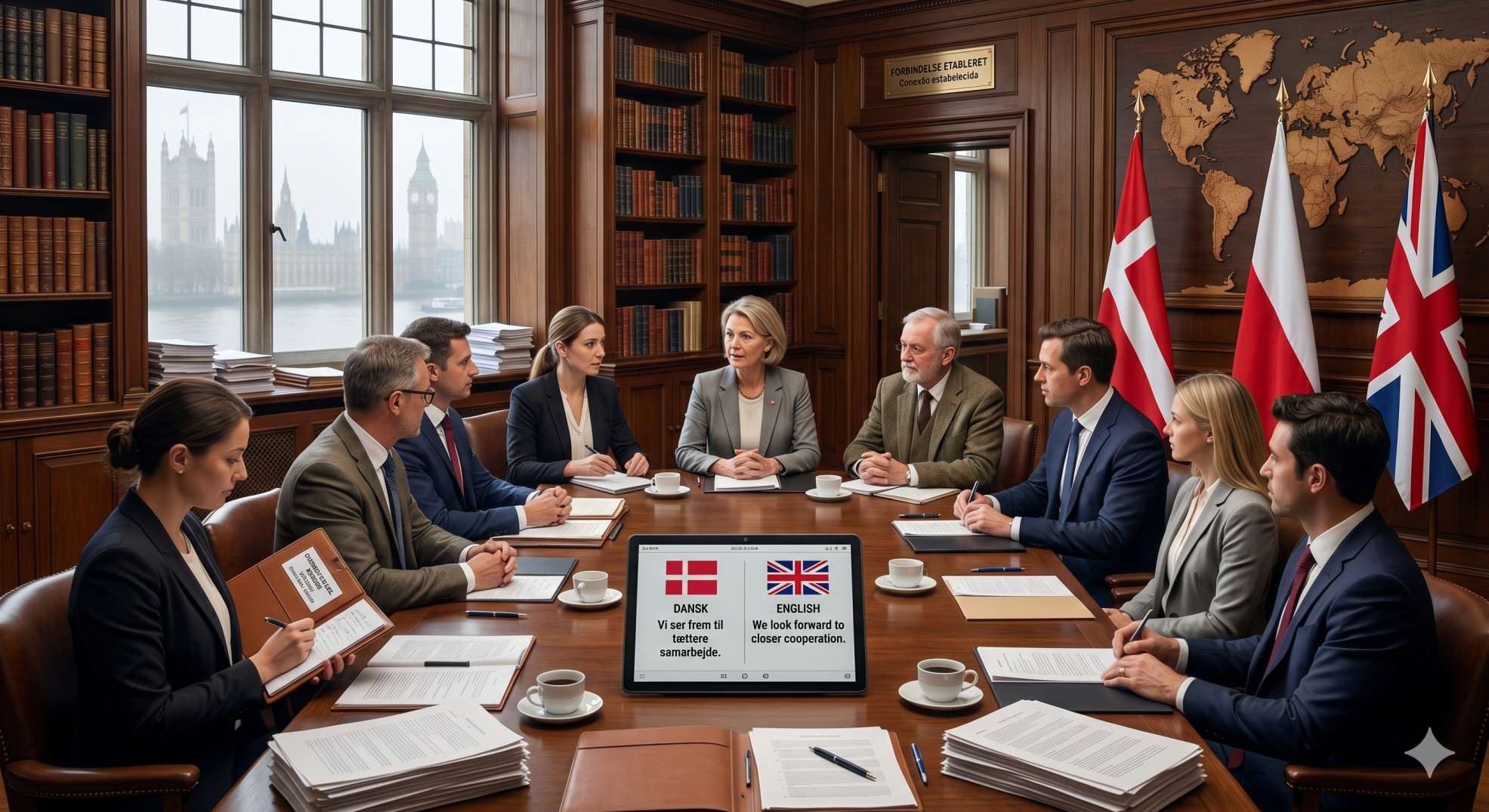
Securing a qualified Arabic interpreter in Burnley is paramount for effective communication across diverse sectors, from legal proceedings and healthcare access to business negotiations and public services. In Burnley, a town with a rich industrial heritage and a growing multicultural population, the demand for precise and culturally sensitive interpretation services is significant. This is particularly true for organisations operating within the UK’s stringent regulatory and professional frameworks, where accuracy is not just a matter of convenience but a legal and ethical imperative. For residents and institutions in Burnley, accessing reliable Arabic interpretation ensures that vital information is conveyed accurately, fostering trust and facilitating seamless interactions. This service is critical for entities such as the Lancashire & South Cumbria NHS Foundation Trust and the East Lancashire Hospitals NHS Trust, both of which serve the Burnley area and rely on effective communication to deliver high-quality patient care.
Translation vs Interpretation: Ensuring Clarity for Arabic Speakers in Burnley
While often used interchangeably, translation and interpretation are distinct disciplines, each requiring specialised skills and adherence to professional standards. Understanding this difference is crucial for any organisation seeking Arabic language support in Burnley. Interpretation involves the live, oral conversion of spoken language from one tongue to another. This requires not only linguistic proficiency but also an acute understanding of cultural nuances, non-verbal cues, and the ability to think quickly and accurately under pressure. A professional Arabic interpreter in Burnley must possess these skills to facilitate real-time communication in settings like courtrooms, hospitals, or business meetings. Conversely, translation deals with the written word, converting documents, websites, or other textual materials from one language to another. This process allows for more time for research, editing, and proofreading, ensuring a high degree of accuracy in the final written product. For businesses and legal firms in Burnley, engaging a certified Arabic translator in Burnley for official documentation, contracts, or patient information leaflets is essential for compliance and clarity. Both services are vital, but their application depends entirely on the context and the need for immediate versus documented communication.
Legal Defence, Immigration, and Courtroom Interpretation in Burnley
The UK’s justice system, governed by principles of fairness and due process, mandates that all individuals, regardless of their language proficiency, have access to justice. For Arabic speakers involved in legal matters in Burnley, this means access to qualified interpreters is a fundamental right. His Majesty’s Courts and Tribunals Service (HMCTS) requires interpreters to meet rigorous standards, ensuring that proceedings are understood by all parties. Professional Arabic interpreters play a critical role in various legal settings, including criminal trials, civil litigation, family law hearings, and asylum appeals. They are indispensable in ensuring that evidence is presented accurately, witness testimonies are understood, and legal advice is conveyed effectively. The National Register of Public Service Interpreters (NRPSI) and the Diploma in Public Service Interpreting (DPSI) are key qualifications that demonstrate an interpreter’s competence and adherence to ethical codes of conduct, which are vital for maintaining the integrity of the legal process. Immigration law, in particular, presents complex challenges where precise interpretation is non-negotiable. Individuals navigating the UK Visas and Immigration (UKVI) system, or appearing before the First-tier Immigration Tribunal, rely heavily on Arabic interpreters to articulate their cases, understand procedures, and respond to queries from Home Office officials. The accuracy provided by a professional interpreter can significantly impact the outcome of immigration applications and appeals. Furthermore, law firms in Burnley and across the UK often require Arabic translation services for legal documents, such as affidavits, court orders, and contracts, to ensure all parties are fully informed and legally bound.
Healthcare and NHS Patient Safety in Burnley
Patient safety and effective healthcare delivery are cornerstones of the National Health Service (NHS). For Arabic-speaking patients in Burnley, clear communication with healthcare professionals is essential for accurate diagnosis, treatment, and overall well-being. The NHS has established guidelines, in line with UK GDPR and the Equality Act 2010, to ensure that language barriers do not impede access to care or compromise patient safety. This includes providing access to qualified medical interpreters and translators. Arabic interpreters working within the NHS, such as those serving patients at East Lancashire Hospitals NHS Trust and Lancashire & South Cumbria NHS Foundation Trust, must not only be linguistically proficient but also understand medical terminology and the sensitive nature of healthcare interactions. They act as a vital conduit, enabling patients to articulate their symptoms, understand treatment plans, and provide informed consent. The Care Quality Commission (CQC) also emphasises the importance of effective communication in its inspections, recognising that language barriers can lead to significant risks. Professional interpreters ensure that patients’ rights are upheld and that they receive the same standard of care as their English-speaking counterparts. Beyond direct patient care, Arabic translation services are also crucial for providing health information leaflets, consent forms, and discharge instructions in Arabic, empowering patients and their families with the knowledge they need to manage their health effectively. Adherence to professional standards set by bodies like the NRPSI ensures that interpreters possess the necessary skills and ethical grounding to operate within the demanding healthcare environment.
Technical Interpretation Modalities for Burnley’s Diverse Needs
The requirement for Arabic interpretation in Burnley extends across various formats, each suited to different communication scenarios. Understanding these modalities ensures that organisations select the most appropriate service for their specific needs, maximising efficiency and effectiveness. Consecutive interpretation is commonly used in one-on-one meetings, doctor’s appointments, or small group discussions. The interpreter listens to a segment of speech, then delivers the interpretation in the target language once the speaker pauses. This allows for a natural flow of conversation, albeit with some delay. Simultaneous interpretation, often employed in conferences, large meetings, or court proceedings, involves the interpreter speaking almost concurrently with the source speaker, typically using specialised equipment like soundproof booths and headsets. This modality demands exceptional concentration and rapid processing skills. Escort interpretation is ideal for business meetings, site visits, or social functions where the interpreter accompanies a client or delegation, facilitating communication throughout an event or series of meetings. This role often requires a degree of cultural mediation. In recent years, remote interpretation (also known as telephonic or video interpretation) has become increasingly prevalent. Utilising technology, interpreters can provide services via phone or video conferencing platforms, offering flexibility and rapid access to language support for organisations across Burnley and beyond. This modality is particularly useful for urgent situations or when on-site interpreters are not readily available, ensuring continuity of communication while adhering to professional standards and data protection regulations like UK GDPR.
Economic and Social Fabric of Burnley
Corporate and Industry
Burnley’s economic landscape is a blend of its industrial past and a forward-looking approach to modern industries. Historically known for its textile manufacturing, the town has diversified into sectors such as advanced manufacturing, aerospace, and digital technology. For businesses operating in or engaging with Burnley, Arabic language services can unlock new markets and facilitate international partnerships. Companies involved in import/export, or those seeking to attract a diverse workforce, will find value in professional Arabic translation for marketing materials, technical manuals, and employment contracts. Accurate communication is key to building strong business relationships and ensuring compliance with UK commercial law. The presence of skilled Arabic interpreters and translators supports the town’s ambition to foster a globally connected economy.
Tourism
While Burnley is not traditionally a major tourist destination, its rich industrial heritage, including landmarks like the Weavers’ Triangle, and its proximity to the stunning Pennine landscape offer potential for growth in heritage and outdoor tourism. As international tourism becomes more diverse, providing information and services in multiple languages, including Arabic, can enhance the visitor experience. Brochures, signage, and visitor centre information translated into Arabic can attract a wider range of international visitors, contributing to the local economy. Professional interpretation services can also assist international delegates attending conferences or business events hosted in the region.
Legal Infrastructure
Burnley possesses a local legal infrastructure that serves its community and businesses. This includes local solicitors’ firms and potentially branches of larger legal practices. For these firms, the ability to serve clients who speak Arabic is a significant advantage. Whether assisting individuals with immigration matters, family law, or commercial disputes, having access to qualified Arabic interpreters and translators ensures that legal services are accessible and effective. The reliance on bodies like HMCTS and adherence to standards set by the NRPSI means that legal professionals must engage interpreters who meet stringent criteria, ensuring the integrity of legal advice and representation provided to Arabic-speaking clients in Burnley.
NHS Healthcare
As previously highlighted, the NHS healthcare provision in Burnley, primarily through Lancashire & South Cumbria NHS Foundation Trust and East Lancashire Hospitals NHS Trust, is a critical service. The demographic makeup of Burnley necessitates robust language support for patients. Providing Arabic interpretation and translation services is not merely a matter of convenience but a fundamental aspect of equitable healthcare delivery, as mandated by NHS England’s Language Access guidelines and overseen by the CQC. This ensures that all patients, irrespective of their linguistic background, receive safe, effective, and person-centred care, fully understanding their health conditions and treatment options.
Local Infrastructure and Transport
Burnley’s infrastructure plays a vital role in its connectivity and accessibility. The town is served by a network of roads, including the M65 motorway, which provides links to major cities like Manchester and Leeds. Public transport options include bus services and a railway station connecting to the national rail network. For businesses and individuals requiring Arabic interpretation or translation services, the town’s transport links facilitate easy access for interpreters travelling to client sites, or for clients themselves to reach interpretation appointments. Effective communication infrastructure, mirroring the physical transport network, is equally crucial. This includes the availability of reliable remote interpretation services and efficient translation workflows, ensuring that language support is accessible across Burnley, regardless of geographical constraints within the UK. The presence of robust digital infrastructure further supports the delivery of remote interpretation services, aligning with modern professional service delivery standards.
Conclusion
In conclusion, the provision of professional Arabic interpretation and translation services is indispensable for the effective functioning of legal, healthcare, and commercial sectors in Burnley. Ensuring access to a qualified Arabic interpreter in Burnley is not just about bridging a language gap; it is about upholding legal rights, ensuring patient safety, fostering economic growth, and promoting social inclusion. Organisations operating within Burnley and across the UK must prioritise engaging interpreters and translators who meet the rigorous professional standards set by UK bodies like the NRPSI and adhere to the specific requirements of institutions such as HMCTS and the NHS. By investing in high-quality language services, businesses and public bodies in Burnley can build stronger relationships, enhance service delivery, and ensure that all members of the community can participate fully and equitably.