Securing a qualified German interpreter in Flintshire is paramount for effective communication across vital sectors, including legal, healthcare, and business. In a region like Flintshire, served by NHS trusts such as Betsi Cadwaladr University Health Board and Powys Teaching Health Board (though Betsi Cadwaladr is the primary provider for Flintshire), the need for accurate language services is critical for patient safety and legal compliance. This document outlines the strategic importance of professional German interpretation and translation services, specifically tailored to the economic and regulatory landscape of the United Kingdom and Flintshire.
Translation vs Interpretation: Precision in German Language Services
While often used interchangeably, translation and interpretation are distinct disciplines, each requiring specialised skills and adherence to professional standards. Interpretation involves the live, spoken rendering of one language into another, demanding immediate comprehension, cultural nuance, and the ability to convey meaning accurately under pressure. This is crucial for face-to-face meetings, court proceedings, and medical consultations. A professional German interpreter in Flintshire must possess not only linguistic fluency but also a deep understanding of the context, whether it be the intricacies of UK law or the sensitive nature of healthcare interactions. Conversely, translation deals with the written word, converting documents, websites, and other textual materials from German to English or vice versa. This process allows for more deliberation, research, and editing to ensure accuracy and fidelity to the source text. For businesses and legal entities in Flintshire, engaging a skilled German translator in Flintshire is essential for official documentation, contracts, and marketing materials, ensuring compliance with UK regulations and effective engagement with German-speaking stakeholders.
Legal Defence, Immigration, and Courtroom Interpretation
The UK legal system, governed by His Majesty’s Courts and Tribunals Service (HMCTS), places a strong emphasis on fairness and access to justice for all individuals, regardless of their language proficiency. For German speakers involved in legal proceedings in Flintshire, whether civil, criminal, or family law matters, the provision of qualified interpreters is a statutory right. Professional interpreters must be registered with recognised bodies such as the National Register of Public Service Interpreters (NRPSI) or hold qualifications like the Diploma in Public Service Interpreting (DPSI). This ensures they meet rigorous standards of competence, impartiality, and ethical conduct. In immigration cases, which often fall under the purview of the Home Office and the First-tier Immigration Tribunal, accurate interpretation is vital for individuals seeking asylum or other immigration statuses in the UK. Misunderstandings can have profound consequences, impacting the outcome of applications and appeals. Law firms in Flintshire and across the UK rely on accredited German interpreters to facilitate communication between their clients, legal counsel, and the courts, ensuring that all parties understand the proceedings, evidence, and legal advice. The Royal Courts of Justice and other judicial centres across the UK depend on the availability of such professionals to uphold the principles of natural justice. The integrity of the legal process hinges on the interpreter’s ability to convey information precisely, without omission or addition, adhering strictly to the speaker’s intended meaning. This commitment to accuracy is a cornerstone of public service interpreting in the UK, safeguarding the rights of all individuals within the justice system.
Healthcare and NHS Patient Safety
Patient safety within the National Health Service (NHS) is a top priority, and effective communication is fundamental to achieving this. For German-speaking patients receiving care from NHS trusts serving Flintshire, such as Betsi Cadwaladr University Health Board, access to qualified medical interpreters is essential. The NHS England Language Access guidelines mandate that healthcare providers ensure patients can understand their diagnosis, treatment options, and care plans. A lapse in communication due to language barriers can lead to misdiagnosis, incorrect treatment, medication errors, and a breakdown in the patient-doctor relationship. Professional German medical interpreters must possess not only linguistic skills but also a thorough understanding of medical terminology and the cultural context of healthcare in the UK. They act as a vital conduit, ensuring that patients can fully participate in their healthcare decisions and that clinicians receive accurate information from their patients. Compliance with UK GDPR is also paramount, ensuring that patient confidentiality is maintained throughout the interpretation process. The Care Quality Commission (CQC) also inspects healthcare providers on their ability to meet the diverse needs of their patients, including those with language requirements. Engaging certified interpreters registered with bodies like the NRPSI or those holding recognised qualifications ensures that healthcare providers in Flintshire meet these stringent standards, fostering trust and improving health outcomes for German-speaking residents and visitors.
Technical Interpretation Modalities
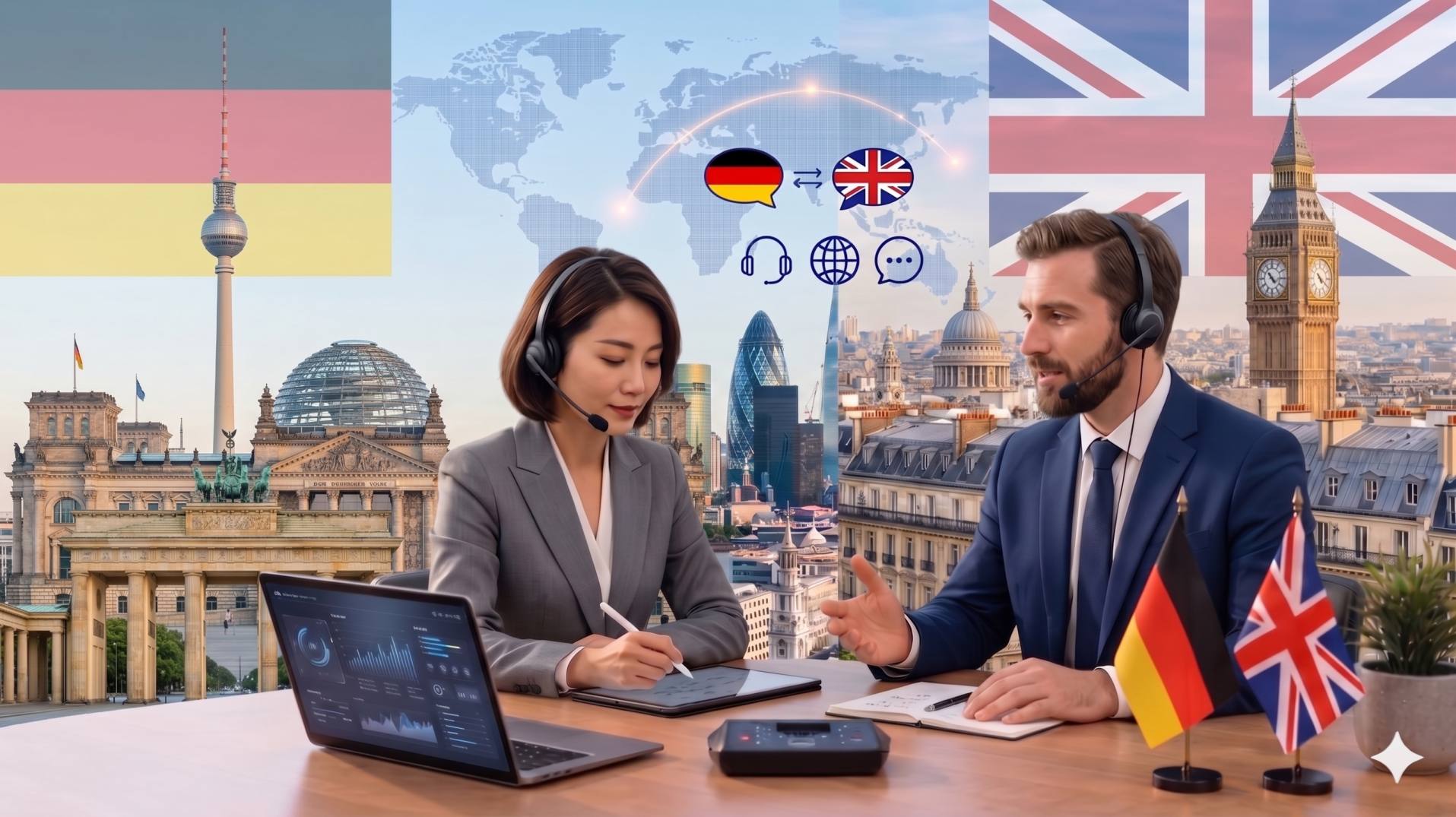
The specific requirements of a situation dictate the most appropriate mode of interpretation. For a German interpreter in Flintshire, proficiency in various modalities is key to serving a diverse clientele. Simultaneous interpretation is commonly used in conferences, large meetings, and parliamentary settings where the interpreter conveys the message with minimal delay, often using specialised equipment like booths and headsets. This allows for a continuous flow of communication. Consecutive interpretation is more suitable for smaller meetings, one-on-one discussions, or legal consultations, where the interpreter speaks after the main speaker has finished a segment of their speech. This allows for more detailed and nuanced communication. Escort interpretation (also known as liaison interpretation) facilitates communication between parties speaking different languages in social, business, or informal settings, such as factory tours, site visits, or business negotiations. The interpreter acts as a bridge, ensuring smooth dialogue. Increasingly, remote interpretation services are becoming prevalent, utilising telephone or video conferencing technology. This modality offers flexibility and cost-effectiveness, particularly for situations where an on-site interpreter is not feasible or necessary. Professional interpreters in Flintshire are adept at deploying these different techniques to meet the specific needs of their clients, ensuring clarity and accuracy regardless of the setting.
Economic and Social Fabric of Flintshire
Flintshire, a county in North East Wales, possesses a dynamic economic landscape with a growing need for professional language services. Understanding the local context is crucial for businesses and organisations seeking to engage with the German-speaking market or serve German-speaking individuals within the community.
Corporate and Industry Engagement
Flintshire is home to a range of industries, including advanced manufacturing, digital technology, and professional services. Companies operating in these sectors, particularly those with international links or aspirations to engage with German markets, require accurate German translation for marketing materials, technical manuals, and business correspondence. Furthermore, for German investors or business partners visiting or establishing operations in Flintshire, professional interpretation services are indispensable for meetings, negotiations, and site visits. This facilitates smoother business transactions and fosters stronger international commercial relationships, contributing to the economic vitality of the region.
Tourism and Hospitality
While perhaps not its primary economic driver, tourism plays a role in Flintshire’s economy, with attractions such as Flint Castle and the scenic Dee Valley drawing visitors. German tourists and business travellers may require assistance with accommodation, local information, and cultural experiences. Providing German language support in hotels, visitor centres, and hospitality venues enhances the visitor experience, encouraging repeat visits and positive word-of-mouth referrals. This can be achieved through translated brochures, multilingual staff, or readily available interpretation services, making Flintshire more accessible and welcoming to German-speaking visitors.
Legal Infrastructure and Access to Justice
The legal sector in Flintshire, like elsewhere in the UK, operates under strict protocols that necessitate clear communication. Law firms in the area, dealing with both local and international clients, often require German interpreters for consultations, client interviews, and court appearances at His Majesty’s Courts and Tribunals Service (HMCTS) facilities. Ensuring that German-speaking individuals have full access to legal advice and representation is a fundamental aspect of justice. Professional interpreters registered with bodies like the NRPSI are crucial in upholding these standards, ensuring that legal proceedings are fair and transparent for all parties involved.
NHS Healthcare Accessibility
The provision of healthcare services to all residents of Flintshire is a key responsibility of the NHS. For German-speaking individuals, accessing healthcare can be challenging without adequate language support. NHS trusts serving the area must ensure that patients can communicate effectively with medical professionals. This involves providing qualified German interpreters for consultations, hospital visits, and emergency situations. Adherence to NHS England’s Language Access guidelines and UK GDPR principles is vital for patient safety, confidentiality, and equitable access to healthcare services. The availability of professional medical interpreters ensures that German-speaking patients receive the highest standard of care.
Local Infrastructure and Transport
Flintshire benefits from a well-developed infrastructure that supports both local businesses and national connectivity. Major road networks, including the A55 North Wales Expressway, provide excellent links to the rest of the UK and ferry ports. For German businesses or individuals travelling to or within Flintshire, understanding local transport regulations, signage, and communication protocols is important. Professional interpreters can assist in navigating these aspects, whether for business logistics, personal travel, or understanding public transport information. The availability of reliable interpretation services ensures that language barriers do not impede the efficient use of Flintshire’s infrastructure, facilitating smoother operations for businesses and a more accessible experience for visitors.
In conclusion, the need for a professional German interpreter in Flintshire is multifaceted, extending across critical sectors such as law, healthcare, and commerce. By engaging certified and experienced interpreters, organisations in Flintshire can ensure compliance with UK regulations, enhance patient safety, uphold legal standards, and foster robust economic relationships. Prioritising accurate and culturally sensitive German interpretation services is not merely a matter of convenience but a strategic imperative for success and inclusivity in the region.