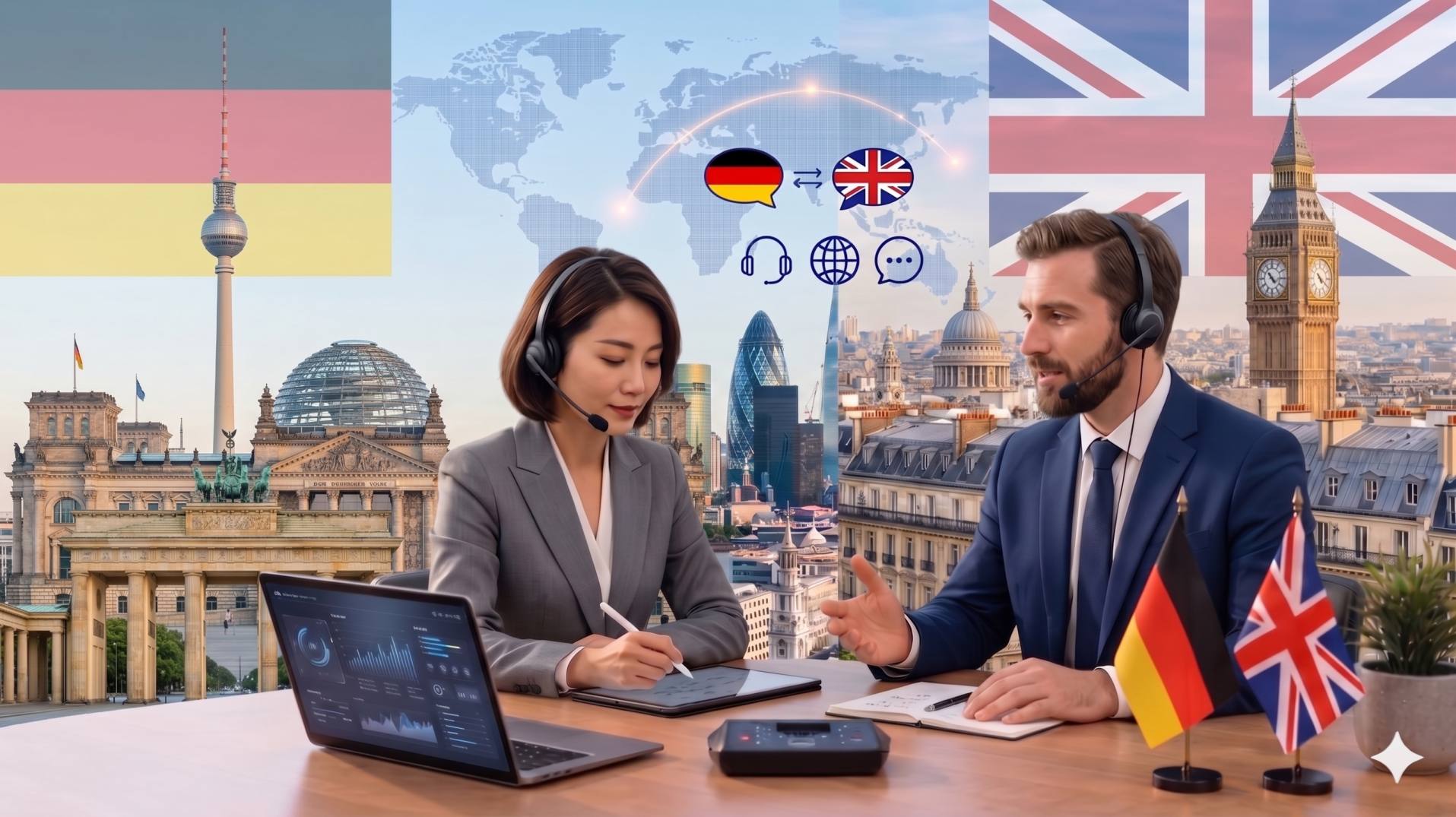
Securing a qualified German interpreter in Hereford is paramount for effective communication across a multitude of sectors, from legal proceedings and healthcare appointments to vital business negotiations. In a city like Hereford, which serves as a gateway to rural West Mercia and possesses a unique economic profile, the need for precise linguistic services is ever-present. Whether you are a legal professional requiring an interpreter for a case before His Majesty’s Courts and Tribunals Service (HMCTS), a healthcare provider needing to ensure patient understanding within the Wye Valley NHS Trust or the University Hospitals Birmingham NHS Foundation Trust (which may serve some specialist needs), or a business engaging with German-speaking partners, the availability of accredited interpreters is non-negotiable. This guide explores the critical role of German interpreters in Hereford, highlighting the standards, legal frameworks, and local context that underpin these essential services.
Translation vs Interpretation
While often used interchangeably, translation and interpretation are distinct linguistic disciplines, each requiring specialised skills and adherence to different professional standards. Understanding this difference is crucial when seeking linguistic support, particularly for official or sensitive matters. Interpretation involves the live, spoken rendering of one language into another. This can occur in real-time, as in simultaneous interpretation, or with brief pauses, as in consecutive interpretation. A German translator in Hereford, conversely, works with written text, converting documents, websites, or other written materials from German to English or vice versa. The primary keyword for this service is “German interpreter in Hereford,” and it is vital to distinguish this from the services of a German translator, although many professionals may offer both. For legal documents, official correspondence, or patient information leaflets, a certified translator is required. For face-to-face meetings, court hearings, or medical consultations, a certified interpreter is essential. Professional bodies such as the Chartered Institute of Linguists (CIOL) and the National Register of Public Service Interpreters (NRPSI) set the benchmarks for both professions, ensuring quality and ethical practice within the UK.
Legal Defence, Immigration, and Courtroom Interpretation
The administration of justice in the UK relies heavily on the principle of access to justice for all, regardless of language. For individuals who do not speak English fluently, particularly those involved in criminal or civil proceedings, the provision of competent German interpretation is a legal right. His Majesty’s Courts and Tribunals Service (HMCTS) mandates that interpreters be available for hearings where a party does not understand English. This is crucial in cases ranging from minor infractions heard at the local Magistrates’ Court to more serious matters before the Crown Court. The HM Courts and Tribunals Service operates under strict guidelines to ensure impartiality and accuracy. Professional interpreters engaged in this field must often meet stringent criteria, such as holding a Diploma in Public Service Interpreting (DPSI) or equivalent qualification, and being registered with the NRPSI. This ensures they possess not only linguistic proficiency but also a thorough understanding of legal terminology, courtroom etiquette, and the ethical obligations of an interpreter, including confidentiality and impartiality. For immigration matters, interpreters are vital for applications, interviews with the Home Office, and appeals before the First-tier Immigration Tribunal. The UK Visas and Immigration (UKVI) service relies on accurate communication to process applications fairly. A skilled German interpreter ensures that all parties, including applicants and legal representatives, can fully understand the proceedings and present their cases effectively. The integrity of the UK’s legal system is upheld through the consistent provision of high-quality interpretation services, ensuring that language barriers do not impede justice.
Healthcare and NHS Patient Safety
Patient safety and effective communication are cornerstones of the National Health Service (NHS). In Hereford, as across the UK, the NHS is committed to providing equitable care to all patients, irrespective of their primary language. For German-speaking patients, accessing healthcare services requires the support of qualified interpreters to ensure they can fully understand diagnoses, treatment options, and medical advice. The Care Quality Commission (CQC), the independent regulator of health and social care in England, emphasises the importance of effective communication in delivering safe and high-quality care. NHS trusts, including the Wye Valley NHS Trust, are expected to have robust systems in place for accessing language support. NHS England’s guidelines on language access highlight the need for interpreters to be competent, professional, and to adhere to strict confidentiality standards, in line with UK GDPR principles. This means that interpreters must not only be fluent in German and English but also understand medical terminology and the sensitive nature of patient consultations. Using untrained or unqualified interpreters can lead to misunderstandings, misdiagnoses, and potentially serious adverse outcomes. Therefore, engaging interpreters registered with bodies like the NRPSI or those vetted through approved NHS frameworks is crucial for ensuring patient safety and upholding the standards of care expected within the UK healthcare system. The NHS Business Services Authority also plays a role in providing resources and guidance for language services within the NHS. Ensuring that a German interpreter in Hereford is readily available for appointments at local GP surgeries, hospitals, or specialist clinics is a vital aspect of inclusive healthcare delivery.
Technical Interpretation Modalities
The effective delivery of interpretation services in Hereford, particularly for professional and technical contexts, depends on selecting the appropriate modality. Each mode of interpretation is suited to different situations and requires specific skills from the interpreter. Simultaneous interpretation is perhaps the most technically demanding. The interpreter listens to the speaker through a headset and renders the speech into the target language in real-time, with only a few seconds’ delay. This is commonly used in international conferences, large-scale meetings, and parliamentary sessions where efficiency and immediate understanding are critical. It requires specialised equipment, such as soundproof booths and sophisticated audio systems, and highly trained interpreters. Consecutive interpretation involves the interpreter listening to a segment of speech, then rendering it into the target language after the speaker has finished. This is more common in smaller meetings, legal depositions, or one-on-one discussions where the flow of conversation is important, and the interpreter can take notes. It requires excellent memory and note-taking skills. Escort interpretation, also known as liaison interpretation, facilitates communication between two or more parties who speak different languages. The interpreter travels with the client, assisting in conversations during business meetings, site visits, or social events. This role often involves a degree of cultural mediation. Finally, remote interpretation, including telephone interpreting and video remote interpreting (VRI), has become increasingly prevalent. This modality allows for immediate access to interpreters regardless of geographical location, making it a cost-effective and flexible solution for many situations, including urgent medical consultations or brief business calls. The choice of modality for a German interpreter in Hereford will depend entirely on the specific requirements of the event or interaction, ensuring clarity, accuracy, and efficiency.
Economic and Social Fabric of Hereford
Corporate/Industry
Hereford, while known for its agricultural heritage, is also home to a diverse range of businesses, including manufacturing, technology, and professional services. For companies operating in or looking to engage with the German market, the availability of professional German interpretation services is a significant asset. German companies may invest in or acquire local businesses, requiring interpreters for due diligence, integration, and ongoing operations. Similarly, Herefordshire businesses seeking to export to Germany or collaborate with German partners will need interpreters for meetings, negotiations, and technical exchanges. The Department for Business and Trade (DBT) supports UK businesses in international trade, and access to reliable interpreters facilitates these crucial interactions. Professional standards, as upheld by organisations like the International Association of Conference Interpreters (AIIC), ensure that these business communications are conducted with the highest degree of professionalism and accuracy.
Tourism
Hereford’s rich history, stunning countryside, and attractions like Hereford Cathedral draw visitors from across the UK and internationally. While English is the primary language for most tourists, a growing number of German visitors may require assistance. Providing German interpretation services for guided tours, visitor information centres, or hospitality businesses can enhance the visitor experience and boost local tourism revenue. Ensuring that key information is accessible in German, whether through interpreters or translated materials, can make Hereford a more welcoming destination for German-speaking travellers.
Legal Infrastructure
The legal landscape in and around Hereford includes local law firms, solicitors, and access to HMCTS facilities. These entities frequently encounter clients or require collaboration with individuals who speak German. For law firms specialising in areas such as corporate law, property, or family law, having access to a qualified German interpreter ensures that they can serve a broader client base and navigate complex legal matters involving German speakers. The Law Society, representing solicitors in England and Wales, promotes access to justice, and this includes ensuring language barriers are overcome. The presence of NRPSI-registered interpreters is vital for maintaining the integrity of legal advice and representation within the county.
NHS Healthcare
As detailed previously, the NHS in Hereford, primarily served by the Wye Valley NHS Trust, is committed to providing accessible healthcare. German-speaking residents or visitors requiring medical attention must have their needs met through professional interpretation. This ensures that consultations with GPs, hospital specialists, and other healthcare professionals are clear and effective, leading to better health outcomes and patient satisfaction. Adherence to NHS England’s language access policies and UK GDPR is paramount in all patient interactions.
Local Infrastructure and Transport
Hereford’s infrastructure, including its transport links, plays a role in facilitating the work of interpreters and the accessibility of services. The city is served by a railway station providing connections to major cities like London, Manchester, and Birmingham, and a network of roads, including the A49. For interpreters travelling to client sites, court appearances, or business meetings across the county and beyond, efficient transport is essential. Remote interpretation services, however, significantly reduce the need for travel, offering a flexible solution for clients located anywhere within the Hereford region or further afield. The availability of reliable internet connectivity and telecommunications infrastructure supports the growing demand for telephone and video remote interpreting, ensuring that a German interpreter is accessible even for urgent or geographically dispersed needs. Local authorities, such as Herefordshire Council, also contribute to the local infrastructure, supporting community services that may require language assistance.
In conclusion, the demand for a skilled German interpreter in Hereford spans critical sectors including legal, healthcare, and business. Ensuring access to accredited professionals who adhere to UK standards, such as those set by the NRPSI and CIOL, is fundamental to upholding justice, patient safety, and economic prosperity. Whether for complex legal proceedings at HMCTS, vital medical consultations within the NHS, or international business ventures, professional interpretation bridges language divides, fostering understanding and trust. Engaging a certified German interpreter in Hereford is an investment in clear communication and successful outcomes.