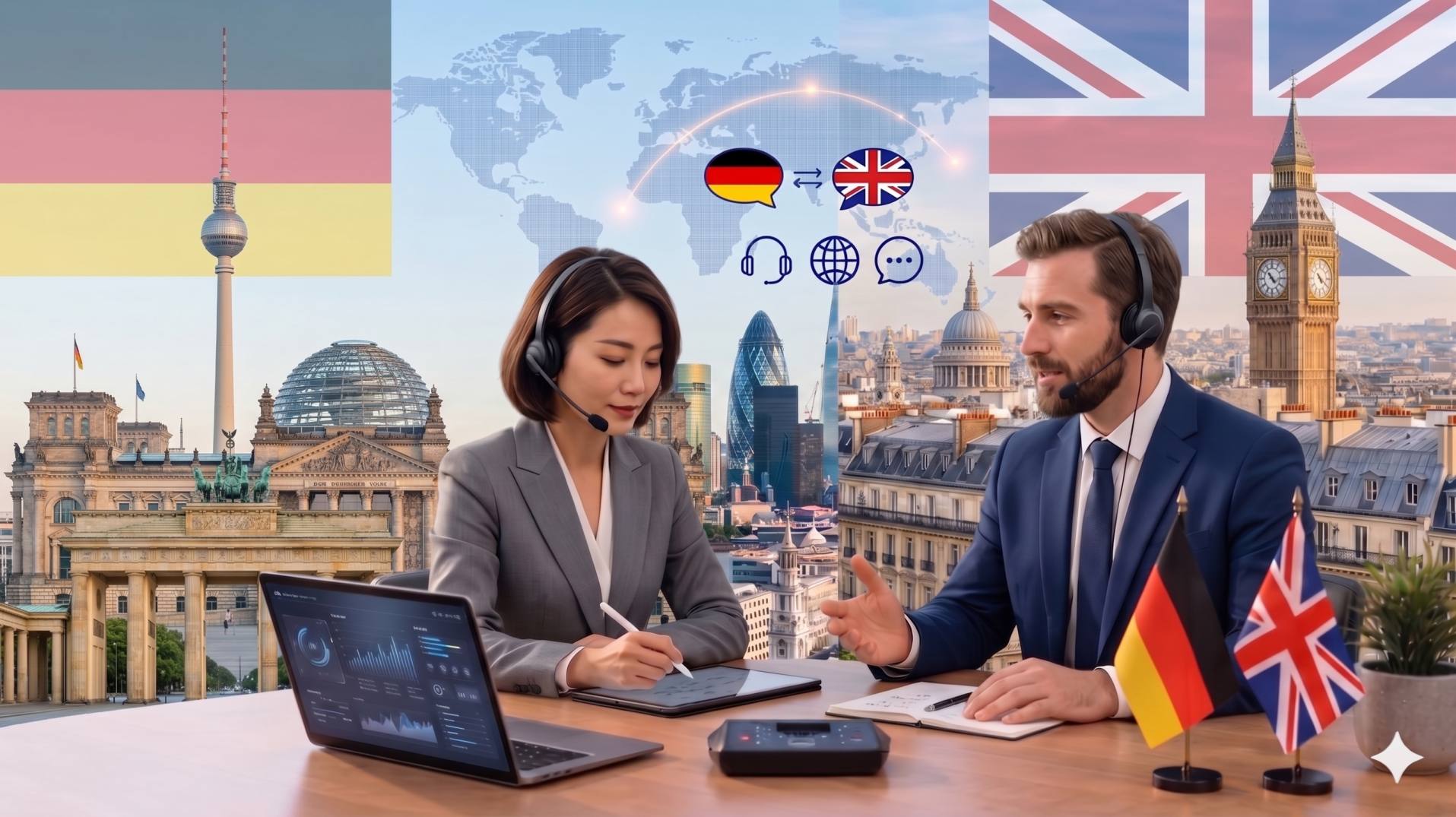
Securing a qualified German interpreter in Islington is paramount for effective communication across a diverse range of critical sectors within the UK. Whether engaging with the intricacies of His Majesty’s Courts and Tribunals Service (HMCTS), navigating the vital landscape of the National Health Service (NHS) with trusts such as University College London Hospitals NHS Foundation Trust and Whittington Health NHS Trust, or facilitating international business dealings, the need for precise and culturally nuanced interpretation is undeniable. This service ensures that legal proceedings, medical consultations, and commercial negotiations are conducted with clarity, accuracy, and adherence to UK professional standards, safeguarding the rights and well-being of all parties involved. The demand for expert German language services in Islington reflects the borough’s dynamic international connections and its role as a hub for professional services.
Translation vs Interpretation
While often used interchangeably in casual conversation, translation and interpretation are distinct disciplines, each requiring a unique skill set and adhering to different professional standards. Understanding this difference is crucial when seeking language support, particularly for sensitive or complex matters. Interpretation involves the live, oral conversion of spoken or signed language from one language to another. This requires not only linguistic fluency but also exceptional short-term memory, cultural awareness, and the ability to think quickly under pressure. A professional German interpreter in Islington must be adept at conveying not just the words, but the intent, tone, and nuances of the speaker. This is vital in settings like courtrooms, medical appointments, or business meetings where miscommunication can have significant consequences. The primary keyword, German interpreter in Islington, directly addresses this need for live, spoken language services.
Translation, conversely, deals with the written word. It involves converting written text from a source language to a target language, such as producing a German translation of an English legal document or a technical manual. This process allows for more time for research, editing, and ensuring absolute accuracy, often involving specialised glossaries and style guides. A skilled German translator in Islington will possess a deep understanding of both languages and the subject matter, ensuring that the translated text is not only linguistically correct but also culturally appropriate and legally sound within the UK context. Professional bodies like the Chartered Institute of Linguists (CIOL) set standards for both translators and interpreters, underscoring the professional nature of these roles.
Legal Defence, Immigration, and Courtroom Interpretation
The UK legal system, governed by principles of natural justice and due process, mandates that all individuals, regardless of their linguistic background, have access to fair legal representation and proceedings. For German speakers involved in legal matters in Islington, access to a qualified German interpreter in Islington is not merely a convenience but a fundamental right. His Majesty’s Courts and Tribunals Service (HMCTS) relies heavily on professional interpreters to ensure that defendants, witnesses, and legal professionals can communicate effectively. This is particularly critical in criminal cases heard at the Crown Court or Magistrates’ Court, as well as in civil litigation and family law proceedings.
The Ministry of Justice, through HMCTS, sets stringent requirements for interpreters working within the court system. Professional interpreters often hold qualifications from bodies such as the National Register of Public Service Interpreters (NRPSI) or the Diploma in Public Service Interpreting (DPSI). These qualifications ensure a high level of competence, ethical conduct, and understanding of legal terminology and procedures. The NRPSI, in particular, is a key regulator for public service interpreters in the UK, providing a benchmark for quality and reliability. Failure to provide adequate interpretation can lead to miscarriages of justice, making the role of the interpreter indispensable.
In the realm of immigration law, the UK Visas and Immigration (UKVI) department, part of the Home Office, handles applications and appeals that often require detailed communication with individuals whose first language is not English. German nationals applying for visas, seeking asylum, or appealing immigration decisions may require interpretation services for interviews, hearings before the First-tier Immigration Tribunal, or when submitting complex documentation. Ensuring accurate interpretation in these sensitive cases is vital for the integrity of the immigration process and for upholding the rights of individuals under UK law. The Home Office works with accredited interpreters to facilitate these crucial interactions.
Healthcare and NHS Patient Safety
Patient safety and effective communication are cornerstones of the National Health Service (NHS) in the UK. For German-speaking patients in Islington, accessing healthcare services without a language barrier is essential for receiving accurate diagnoses, understanding treatment plans, and providing informed consent. The NHS has a legal and ethical obligation to provide language support to patients who need it, as outlined by NHS England’s Language Access guidelines. These guidelines ensure that all patients, regardless of their primary language, can access and benefit from healthcare services.
Interpreters play a critical role in ensuring that consultations with General Practitioners (GPs), specialists, nurses, and other healthcare professionals are clear and unambiguous. This is especially important in emergency situations, when discussing complex medical histories, or when explaining treatment options and potential risks. Misunderstandings can lead to incorrect medication, delayed treatment, or a lack of patient adherence, all of which can compromise health outcomes. The Care Quality Commission (CQC), the independent regulator of health and social care services in England, monitors the quality and safety of care, including the effectiveness of communication with patients.
Adherence to UK data protection laws, specifically the UK General Data Protection Regulation (UK GDPR), is also paramount. Interpreters working within the NHS are bound by strict confidentiality agreements, ensuring that patient information remains secure. Professional interpreters often hold qualifications recognised by bodies like the NRPSI, demonstrating their commitment to ethical practice and professional standards within the healthcare setting. For German-speaking residents and visitors in Islington, having access to a reliable German interpreter in Islington ensures they can fully participate in their healthcare decisions and receive the best possible care from NHS providers such as Whittington Health NHS Trust and potentially others serving the wider North Central London Integrated Care System.
Technical Interpretation Modalities
The effective delivery of interpretation services relies on selecting the appropriate modality to suit the specific context and requirements of the communication. Different situations call for different approaches, and professional interpreters are skilled in adapting their techniques. Understanding these modalities ensures that the chosen service aligns with the communication goals.
Simultaneous Interpretation is perhaps the most demanding form, where the interpreter speaks at virtually the same time as the speaker, usually with only a few seconds’ delay. This is commonly used in international conferences, large meetings, and live broadcasts where time is of the essence. It requires specialised equipment, such as soundproof booths and headsets, and highly skilled interpreters working in pairs. The interpreter listens to the speaker through a headset and renders the speech into the target language through a microphone.
Consecutive Interpretation involves the interpreter listening to a segment of speech and then rendering it into the target language once the speaker has finished their segment. This is often used in smaller meetings, one-on-one discussions, legal depositions, and medical consultations. The interpreter takes notes using a system of symbols and abbreviations to aid recall and accuracy. This modality allows for more natural interaction and is suitable when immediate verbatim reproduction is not essential.
Escort Interpretation, also known as liaison interpretation, facilitates communication between two or more parties who speak different languages. The interpreter acts as a bridge, interpreting in both directions, often in informal settings such as business meetings, factory tours, or social events. The interpreter’s role is to ensure smooth communication and understanding between the parties, often requiring a degree of cultural mediation.
Remote Interpretation has become increasingly prevalent, especially with advancements in technology. This can encompass various forms, including telephone interpreting (over-the-phone interpretation, OPI) and video remote interpreting (VRI). OPI is useful for brief, straightforward conversations, while VRI, using platforms like Zoom or dedicated interpreting software, allows for visual cues and is suitable for a wider range of situations, including medical appointments and legal discussions, offering flexibility and cost-effectiveness while maintaining professional standards.
Economic and Social Fabric of Islington
Islington, a vibrant and diverse borough in North London, possesses a dynamic economic and social landscape that benefits from and contributes to international connections. The presence of a skilled German interpreter in Islington is integral to fostering these connections and ensuring that all residents and businesses can participate fully in the local economy and society.
Corporate and Industry
Islington is home to a growing number of businesses, particularly in the creative, tech, and professional services sectors. Many of these firms engage with German markets through trade, investment, or partnerships. For UK-based companies in Islington looking to expand into Germany, or for German businesses establishing a presence in London, accurate interpretation and translation are crucial for contract negotiations, marketing, client relations, and internal communications. Professional bodies like the International Association of Conference Interpreters (AIIC) represent professionals who can support these international business endeavours, ensuring that communication is precise and culturally sensitive, thereby avoiding costly misunderstandings and building strong commercial relationships.
Tourism
While perhaps not as prominent a tourist destination as some other London boroughs, Islington attracts visitors for its unique cultural attractions, vibrant markets, and renowned theatres. German tourists visiting Islington and the wider London area require clear communication for accommodation, dining, transport, and accessing information. While many tourist-facing businesses in London have multilingual staff, the availability of professional German interpreters ensures that German-speaking visitors can navigate their stay with ease and confidence, enhancing their experience of the city and potentially encouraging repeat visits and positive word-of-mouth referrals.
Legal Infrastructure
Islington benefits from proximity to London’s extensive legal infrastructure. While major courts are located elsewhere, local legal practices and advisory services often cater to a diverse clientele. German nationals or businesses involved in legal matters within or connected to Islington will require the services of qualified interpreters. This includes interactions with solicitors, barristers, and potentially HMCTS proceedings. The availability of accredited interpreters, registered with bodies such as the NRPSI, ensures that legal advice and representation are accessible and that court proceedings are fair and transparent, upholding the principles of justice within the UK legal framework.
NHS Healthcare
As previously detailed, the NHS provision in Islington is a critical service for its residents. The demographic diversity of the borough means that a significant number of patients may require language assistance. For German speakers, accessing primary care services, hospital appointments, and specialist treatments necessitates clear communication. The commitment of NHS trusts in and around Islington, such as University College London Hospitals NHS Foundation Trust, to providing language support through qualified interpreters is vital for equitable healthcare access and positive patient outcomes, aligning with national NHS standards and UK GDPR requirements.
Local Infrastructure and Transport
Islington’s robust local infrastructure and excellent transport links contribute to its connectivity within London and beyond. The borough is well-served by London Underground stations, bus routes, and Overground services, facilitating movement for residents, commuters, and visitors. For German-speaking individuals navigating this complex transport network, whether for daily commutes, business travel, or tourism, clear signage and accessible information are important. While English is the primary language for public transport information, the availability of professional interpretation services can assist German speakers in understanding travel updates, booking tickets, or resolving issues with transport providers. This ensures that the efficiency of London’s transport system is accessible to all, regardless of their English language proficiency. Furthermore, the presence of international transport hubs like Heathrow Airport, accessible from Islington, underscores the ongoing need for German language support for travellers arriving in or departing from the UK.
The integration of professional German interpretation services into the fabric of Islington is not merely about language bridging; it is about ensuring access to justice, healthcare, economic opportunities, and the full social and civic life of the borough and the United Kingdom. By engaging certified and experienced German interpreters, individuals and organisations in Islington can navigate complex environments with confidence, secure in the knowledge that communication barriers are effectively overcome, adhering to the highest UK professional and legal standards.
Conclusion
For any individual or organisation in Islington requiring precise and reliable communication, securing a professional German interpreter in Islington is an essential step. From the critical demands of legal proceedings at HMCTS and immigration matters with the Home Office, to the vital patient care provided by NHS trusts, and the nuanced requirements of international business, expert interpretation ensures accuracy, fairness, and understanding. We are committed to providing high-calibre German interpretation services that meet the stringent standards expected within the UK’s professional, legal, and healthcare sectors. Contact us today to discuss your specific interpretation needs and ensure your communication objectives are met with clarity and professionalism.