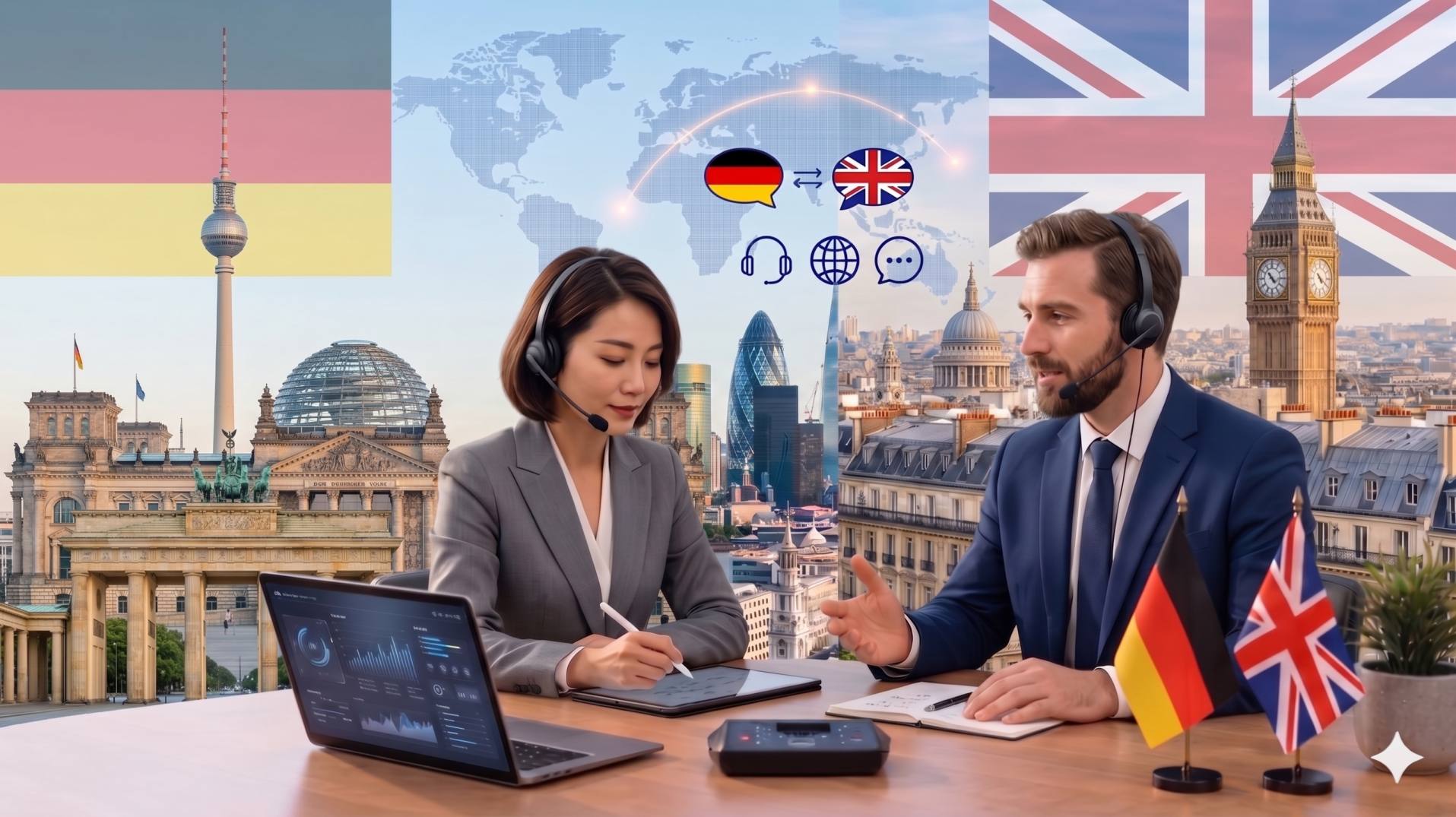
Securing a qualified German interpreter in Luton is paramount for effective communication across a diverse range of professional sectors. Luton, a vibrant and economically significant town within Bedfordshire, hosts a dynamic business environment and a growing international community, necessitating precise and culturally nuanced linguistic support. Whether engaging with UK legal frameworks, navigating the complexities of the National Health Service (NHS), or facilitating international business transactions, the availability of accredited German interpreters ensures clarity, accuracy, and adherence to UK professional standards. This is particularly crucial when interacting with vital public services such as the Bedfordshire Hospitals NHS Foundation Trust (https://www.bedfordhospital.nhs.uk/) and the East London NHS Foundation Trust (https://www.elft.nhs.uk/), both of which serve the Luton area and are committed to providing accessible healthcare for all residents, irrespective of their linguistic background. Professional interpretation services bridge these communication gaps, upholding the integrity of legal proceedings, patient care, and commercial agreements within the United Kingdom.
Translation vs Interpretation: Bridging the Linguistic Divide
While often used interchangeably, translation and interpretation are distinct linguistic disciplines, each requiring specialised skills and adherence to professional standards. Understanding this difference is fundamental for organisations seeking accurate communication solutions. Interpretation involves the real-time, oral conversion of spoken or signed language from one language to another. This requires not only fluency in both German and English but also an acute understanding of cultural nuances, idiomatic expressions, and the specific context of the communication. A professional German translator in Luton, conversely, works with written text, converting documents, websites, or other written materials from one language to another. The skills are complementary but not identical; interpretation demands immediate cognitive processing and delivery, while translation allows for research, revision, and meticulous accuracy in written form. For legal, medical, or business settings in the UK, the choice between a translator and an interpreter depends entirely on whether the communication is written or spoken. For instance, a German company looking to establish a presence in Luton might require both translation of legal documents and interpretation services for meetings with UK partners and regulatory bodies. The professional standards governing these fields in the UK, such as those set by the National Register of Public Service Interpreters (NRPSI) and the Chartered Institute of Linguists (CIOL), ensure that practitioners meet rigorous criteria for competence and ethical conduct.
Legal Defence, Immigration, and Courtroom Interpretation
The UK’s legal system is built on principles of fairness, due process, and equal access to justice. For individuals who do not speak English fluently, the provision of qualified German interpreters is not merely a convenience but a legal necessity, mandated by His Majesty’s Courts and Tribunals Service (HMCTS). In criminal and civil proceedings, accurate interpretation ensures that defendants, witnesses, and legal professionals can fully understand the proceedings, present their cases effectively, and receive justice. The Courts and Tribunals Service operates under strict guidelines to ensure impartiality and accuracy in all interpretative services. German interpreters engaged in this sector must often hold qualifications recognised by bodies such as the NRPSI or possess a Diploma in Public Service Interpreting (DPSI), demonstrating their proficiency in legal terminology and their understanding of courtroom etiquette. This is vital for cases heard before the First-tier Tribunal, Crown Courts, and Magistrates’ Courts, where misinterpretation can have severe consequences. Furthermore, in matters of immigration, the Home Office and the UK Visas and Immigration (UKVI) require precise interpretation during interviews and appeals. Solicitors and barristers rely on these interpreters to accurately convey the nuances of their clients’ situations, ensuring that all evidence and testimony are correctly understood by immigration judges and caseworkers. The integrity of the UK’s justice system depends on the availability of skilled German interpreters who can operate with the utmost professionalism and confidentiality, adhering to the strict ethical codes set forth by professional bodies.
Healthcare and NHS Patient Safety
Patient safety and effective communication are cornerstones of the UK’s National Health Service (NHS). For German-speaking patients in Luton, accessing healthcare services without a language barrier is critical for receiving appropriate diagnosis, treatment, and care. The NHS is committed to upholding the NHS England Language Access guidelines, which stipulate the need for qualified interpreters when a patient’s primary language is not English. This ensures that patients can fully understand medical advice, consent to procedures, and articulate their symptoms accurately. Luton is served by several NHS trusts, including the Bedfordshire Hospitals NHS Foundation Trust and the East London NHS Foundation Trust, both of which are responsible for ensuring language support is available. Professional German interpreters working within the NHS must possess not only linguistic skills but also a deep understanding of medical terminology and the sensitive nature of healthcare interactions. They operate under strict confidentiality agreements, in line with UK data protection laws such as the UK General Data Protection Regulation (UK GDPR). The Care Quality Commission (CQC), the independent regulator of health and social care in England, also emphasises effective communication as a key aspect of quality care. A failure to provide adequate interpretation can lead to diagnostic errors, treatment complications, and a breakdown in the patient-doctor relationship. Therefore, engaging accredited German interpreters is essential for NHS trusts and private healthcare providers in Luton to ensure equitable and safe patient care, meeting the high standards expected within the UK healthcare system.
Technical Interpretation Modalities
The effective delivery of German interpretation services in Luton encompasses various modalities, each suited to different communication scenarios. The choice of modality significantly impacts the flow and efficiency of the interaction. Simultaneous interpretation is perhaps the most demanding, requiring interpreters to speak the target language almost concurrently with the source speaker, often using specialised equipment like booths and headsets. This is ideal for large conferences, international meetings, or parliamentary sessions where time is of the essence and minimal disruption is desired. Consecutive interpretation involves the interpreter listening to a segment of speech, then rendering it into the target language once the speaker pauses. This is commonly used in smaller meetings, one-on-one discussions, or legal depositions where detailed comprehension and accuracy are paramount. Escort interpretation, also known as liaison interpretation, facilitates communication between two or more parties speaking different languages in informal settings, such as business negotiations, site visits, or social events. The interpreter acts as a bridge, ensuring smooth dialogue and cultural understanding. In recent years, remote interpretation services have gained prominence, allowing interpreters to provide services via telephone or video conferencing. This modality offers flexibility and cost-effectiveness, particularly for situations where in-person presence is not feasible or necessary. Regardless of the modality, professional German interpreters in Luton must adhere to the standards set by organisations like the Association of Police and Court Interpreters (APCI) and the International Association of Conference Interpreters (AIIC), ensuring quality and ethical practice across all forms of linguistic support.
Economic and Social Fabric of Luton
Luton’s economy is diverse and dynamic, with a significant presence in sectors ranging from advanced manufacturing and logistics to retail and professional services. The town’s strategic location, close to London and major transport hubs, makes it an attractive base for both domestic and international businesses. The presence of a German-speaking workforce and the need for cross-cultural communication are integral to its economic vitality.
Corporate and Industry
Luton is home to numerous companies, including those with ties to Germany or operating within industries where German is a key business language. Sectors such as automotive, engineering, and technology often require German interpretation and translation services for supplier negotiations, client meetings, technical documentation, and international collaborations. Professional German interpreters play a crucial role in facilitating these business interactions, ensuring that contracts are clearly understood and that partnerships can flourish. Adherence to UK business law and professional standards is essential, and accurate communication underpins successful commercial ventures. The Chamber of Commerce for the region can provide insights into local business needs and opportunities.
Tourism
While not a primary tourist destination, Luton attracts visitors for business, transit, and events. The presence of London Luton Airport means a constant flow of international travellers, including those from German-speaking countries. Providing information and services in German, whether through translated signage, multilingual websites, or interpretation services for hospitality staff, enhances the visitor experience and supports the local tourism economy. Professional interpreters can assist hotels, event organisers, and transport providers in catering to German-speaking guests, ensuring a welcoming and efficient stay.
Legal Infrastructure
Luton’s legal sector, like that across the UK, relies heavily on the accurate interpretation of legal proceedings. Law firms in Luton that handle international cases, particularly those involving German clients or German law, require qualified German interpreters. These professionals are essential for client consultations, court appearances before His Majesty’s Courts and Tribunals Service (HMCTS), and interactions with the Home Office regarding immigration matters. The availability of NRPSI-qualified interpreters ensures that the principles of justice and due process are upheld for all individuals, regardless of their language proficiency. The Law Society provides resources for legal professionals regarding the use of interpreters.
NHS Healthcare
As previously detailed, the healthcare sector in Luton, encompassing various NHS trusts and private clinics, necessitates robust language support. German-speaking residents may require interpreters for GP appointments, hospital visits, specialist consultations, and emergency care. Ensuring that these services are readily available, as mandated by NHS England and regulated by the CQC, is vital for patient safety and equitable access to healthcare. The NHS Integrated Care System for the region oversees the delivery of these services.
Local Infrastructure and Transport
Luton’s infrastructure is a key enabler of its economic activity and connectivity. The town boasts excellent transport links, most notably London Luton Airport, one of the UK’s busiest airports, facilitating international travel and trade. This direct link to continental Europe, including Germany, underscores the ongoing need for professional German interpretation and translation services. The town is also served by a major railway station, providing fast connections to London and other key UK cities, and a comprehensive road network, including proximity to the M1 motorway. This robust infrastructure supports the movement of goods and people, further integrating Luton into the national and international economic landscape. For businesses operating in or engaging with Luton, understanding and leveraging this infrastructure, supported by seamless communication facilitated by expert German interpreters, is crucial for success within the UK market.
Conclusion
In conclusion, the demand for professional German interpreter in Luton services is driven by the town’s vibrant economy, its international connections, and the UK’s commitment to accessible public services. From the critical proceedings within His Majesty’s Courts and Tribunals Service (HMCTS) and the sensitive environment of NHS healthcare trusts like Bedfordshire Hospitals NHS Foundation Trust and the East London NHS Foundation Trust, to the nuanced requirements of international business and corporate communication, the need for accurate, culturally competent German interpretation is undeniable. Engaging NRPSI-qualified or DPSI-certified interpreters ensures adherence to UK professional standards, legal mandates, and ethical guidelines. By prioritising professional linguistic support, organisations in Luton and across the UK can foster trust, ensure clarity, and achieve their objectives effectively. For your organisation’s German interpretation needs in Luton, securing the services of accredited professionals is an investment in accuracy, compliance, and successful communication.