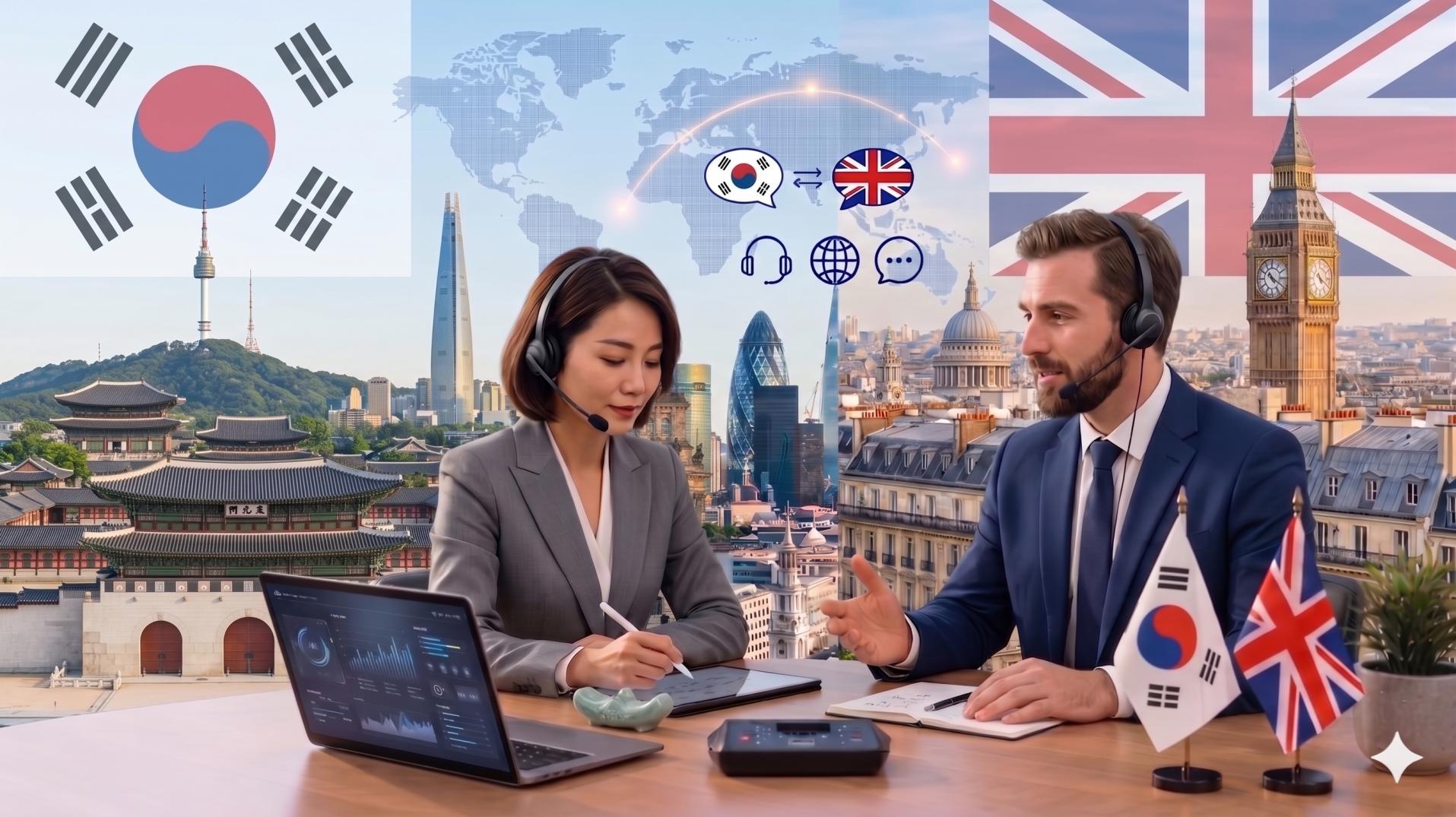
Securing a highly skilled Korean interpreter in Warwick is paramount for effective communication across a multitude of professional sectors within the United Kingdom. Whether engaging with the intricacies of UK legal proceedings, navigating the complexities of the National Health Service (NHS), or facilitating international business relations, the need for precise and culturally attuned interpretation is undeniable. For residents and organisations in Warwick, access to qualified Korean interpreters ensures that language barriers do not impede access to justice, healthcare, or economic opportunities. This is particularly crucial when interacting with key healthcare providers such as the University Hospitals Coventry and Warwickshire NHS Trust and the George Eliot Hospital NHS Trust, both of which serve the wider Warwickshire region and adhere to stringent NHS England Language Access guidelines.
Translation vs Interpretation: Understanding the Nuances
While often used interchangeably, translation and interpretation are distinct disciplines, each requiring a unique skill set and adherence to professional standards. Interpretation involves the live, oral rendition of spoken or signed language from one language to another. This demands not only linguistic fluency but also exceptional listening skills, memory recall, and the ability to think and speak in real-time, often under pressure. A professional Korean interpreter in Warwick must possess a deep understanding of both the source and target languages, including idiomatic expressions, cultural nuances, and subject-specific terminology. Conversely, translation deals with the written word, converting text from one language to another. This process allows for more time for research, editing, and refinement to ensure accuracy and fidelity to the original meaning. For businesses and legal professionals in Warwick requiring written documentation to be rendered into Korean or vice versa, a skilled Korean translator is essential. The distinction is critical in legal and medical contexts where misinterpretation can have severe consequences. For instance, a court case or a medical consultation requires immediate, accurate oral communication, making the role of a qualified Korean interpreter indispensable. The professional standards for interpreters in the UK are overseen by bodies such as the National Register of Public Service Interpreters (NRPSI), ensuring that practitioners meet rigorous competency requirements.
Legal Defence, Immigration, and Courtroom Interpretation
The UK’s legal system, governed by principles of natural justice and fairness, mandates that all individuals, regardless of their linguistic background, have access to adequate interpretation services. For Korean speakers involved in legal matters in Warwick, this means access to accredited interpreters who can facilitate communication within the framework of His Majesty’s Courts and Tribunals Service (HMCTS). Whether it is a civil dispute, a criminal trial, or an immigration hearing, the presence of a qualified Korean interpreter is often a legal necessity. The His Majesty’s Courts and Tribunals Service (HMCTS) operates under strict protocols to ensure that all parties understand proceedings and can present their case effectively. This includes providing interpreters for those who do not speak English fluently. For immigration matters, which are frequently heard at the First-tier Immigration Tribunal, accurate interpretation is vital for individuals seeking to establish their right to remain in the UK. The Home Office, through UK Visas and Immigration (UKVI), also relies on interpreters to conduct interviews and process applications. Professional interpreters working in these sensitive areas must be registered with bodies like the NRPSI or hold qualifications such as the Diploma in Public Service Interpreting (DPSI), demonstrating their competence in legal terminology and ethical conduct. The accuracy of an interpreter’s rendition can directly impact the outcome of legal proceedings, underscoring the importance of engaging only certified and experienced professionals. Law firms in Warwick and across the UK frequently require the services of a Korean interpreter to represent clients in various legal capacities, ensuring that justice is accessible to all.
Healthcare and NHS Patient Safety
Patient safety and effective communication are cornerstones of the National Health Service (NHS) in the UK. For Korean-speaking patients in Warwick, accessing healthcare services without language barriers is a fundamental right, supported by NHS England’s Language Access guidelines. These guidelines stipulate that NHS bodies must ensure that patients who have difficulty communicating in English can access appropriate interpretation and translation services. This is crucial for accurate diagnosis, informed consent, and adherence to treatment plans. The Care Quality Commission (CQC), the independent regulator of health and social care services in England, also emphasises the importance of effective communication in ensuring high-quality care. When a patient cannot communicate effectively with healthcare professionals, the risk of medical errors, misunderstandings, and adverse outcomes increases significantly. Therefore, NHS trusts serving Warwick, such as the University Hospitals Coventry and Warwickshire NHS Trust and the George Eliot Hospital NHS Trust, must have robust systems in place to provide qualified Korean interpreters. These interpreters must not only be linguistically proficient but also understand medical terminology and the sensitive nature of healthcare interactions. Compliance with UK GDPR is also essential, ensuring that patient confidentiality is maintained throughout the interpretation process. Engaging a professional Korean interpreter ensures that patients can fully participate in their healthcare decisions, leading to better health outcomes and a more positive patient experience. The NHS England Language Access policy provides a framework for how these services should be commissioned and delivered across the country.
Technical Interpretation Modalities
The effective delivery of interpretation services in professional settings in Warwick relies on selecting the appropriate modality to suit the specific context and requirements. Several technical interpretation modes are commonly employed:
- Consecutive Interpretation: This mode involves the interpreter listening to a segment of speech, pausing, and then rendering it into the target language. It is often used in one-on-one meetings, medical consultations, or small group discussions where direct communication between parties is desired. The interpreter acts as a conduit, ensuring that each speaker’s message is accurately conveyed after a brief pause.
- Simultaneous Interpretation: This is the most technically demanding form of interpretation, where the interpreter speaks the target language almost concurrently with the source language speaker, often with only a few seconds’ delay. It requires specialised equipment, such as soundproof booths, headphones, and microphones, and is typically used in large conferences, international summits, and high-stakes legal proceedings where continuous communication is essential. A skilled Korean interpreter can provide simultaneous interpretation for international business events or parliamentary sessions.
- Escort Interpretation: Also known as liaison interpretation, this mode is used for facilitating communication in more informal settings, such as business negotiations, factory tours, or social events. The interpreter travels with the client, providing interpretation as needed to bridge communication gaps between individuals or small groups. This requires a high degree of cultural awareness and flexibility.
- Remote Interpretation (ROLI): With advancements in technology, remote interpretation has become increasingly prevalent. This can take various forms, including over-the-phone interpretation (OPI) and video remote interpretation (VRI). VRI, in particular, allows clients to connect with a Korean interpreter via a video link, offering a more personal and nuanced interaction than OPI. This modality is highly effective for situations where an on-site interpreter is not feasible or cost-effective, such as routine medical appointments or business calls. Professional bodies like the Chartered Institute of Linguists (CIOL) offer guidance on best practices for various interpretation modes.
The choice of modality significantly impacts the flow of communication and the overall effectiveness of the interaction. Professional interpretation agencies in the UK will advise clients on the most suitable method based on the event’s nature, the number of participants, and the required level of formality and accuracy.
Economic and Social Fabric of Warwick
Warwick, a historic county town in Warwickshire, boasts a dynamic economic landscape and a rich cultural heritage that benefits from and contributes to the UK’s diverse society. The presence of a skilled Korean interpreter in Warwick is instrumental in fostering connections within its various sectors.
Corporate and Industry
Warwick and its surrounding areas are home to a growing number of businesses, including those in advanced manufacturing, technology, and professional services. For Korean companies looking to invest in the UK, establish partnerships, or manage operations in the region, professional Korean interpretation and translation services are indispensable. This facilitates smooth negotiations, effective client management, and compliance with UK business regulations. The Department for Business and Trade actively supports international investment, and clear communication is key to unlocking these opportunities for businesses involving Korean stakeholders.
Tourism
As a town with significant historical attractions, including Warwick Castle, the tourism sector is a vital component of the local economy. Korean tourists and business visitors benefit greatly from readily available interpretation services, enhancing their experience and engagement with local culture and heritage. This can range from guided tours to assistance with local amenities, ensuring a welcoming environment for international visitors.
Legal Infrastructure
Warwick hosts a robust legal infrastructure, including local solicitors’ offices and access to regional courts. For Korean nationals residing in or visiting Warwick, or for UK legal professionals representing Korean clients, the availability of accredited Korean interpreters is crucial. This ensures equitable access to justice, covering everything from property transactions and employment law to criminal defence and family matters, all within the purview of UK law and HMCTS.
NHS Healthcare
The National Health Service provides essential healthcare services to the residents of Warwick. For the Korean-speaking population, accessing these services requires reliable interpretation to ensure that medical advice is understood and that patients can communicate their health concerns effectively to NHS professionals. This directly impacts patient safety and the quality of care delivered by trusts like University Hospitals Coventry and Warwickshire NHS Trust.
Local Infrastructure and Transport
Warwick benefits from well-developed local infrastructure and transport links, connecting it efficiently to the wider West Midlands region and beyond. Major road networks, including the M40 and M42 motorways, provide excellent connectivity, making it accessible for both local and international visitors. Public transport options, including regular train services to London and other major cities, further enhance accessibility. For businesses and individuals requiring a Korean interpreter in Warwick, these transport links ensure that interpreters can reach any location promptly, whether it’s for an on-site interpretation at a business meeting, a court appearance at HMCTS, or a consultation at an NHS facility. The efficiency of these transport networks supports the seamless operation of professional services, including the critical role of language services in a globalised economy. The Warwickshire County Council oversees local infrastructure development, ensuring that the region remains well-connected and accessible.
Conclusion
In conclusion, the demand for professional Korean interpretation services in Warwick is significant and multifaceted, spanning legal, healthcare, business, and social domains. Ensuring access to qualified and accredited Korean interpreters is not merely a matter of convenience but a fundamental requirement for upholding justice, ensuring patient safety, and fostering economic growth within the UK. Whether you require a Korean interpreter for proceedings at His Majesty’s Courts and Tribunals Service, a consultation within the NHS, or a business negotiation, engaging certified professionals is paramount. We provide expert Korean interpretation services tailored to the specific needs of corporate buyers, law firms, NHS trusts, and government departments across Warwick and the United Kingdom, ensuring clarity, accuracy, and cultural understanding in every interaction. Contact us today to discuss your specific requirements for a Korean interpreter in Warwick.