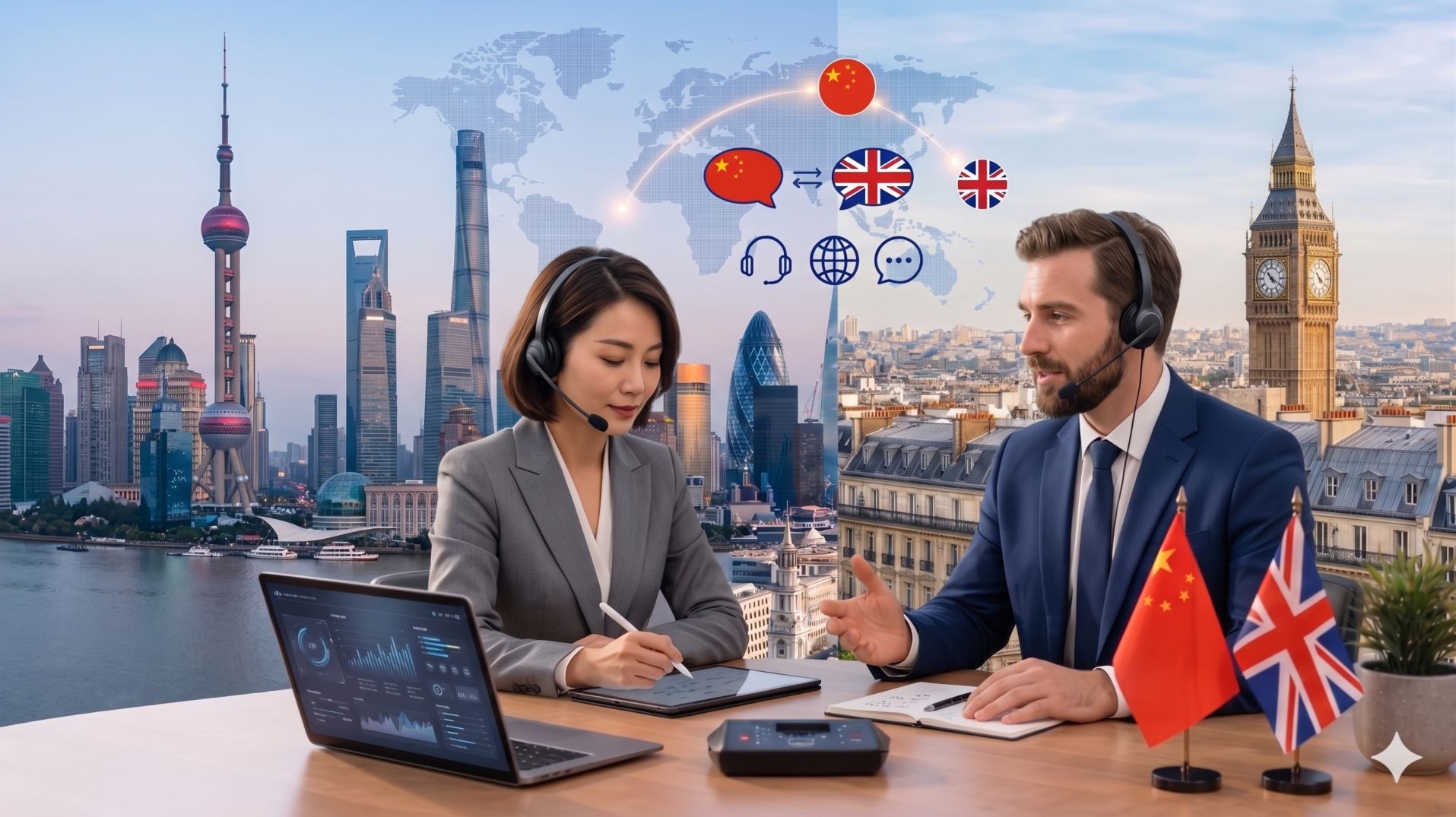
Securing a qualified Mandarin interpreter in Luton is paramount for effective communication across diverse sectors, from legal proceedings and healthcare to business and immigration. Luton, a vibrant and economically significant town in Bedfordshire, serves a diverse population, necessitating specialised language services to ensure clarity, accuracy, and compliance with UK standards. For healthcare, understanding the needs of Mandarin-speaking patients is crucial, and this is supported by local NHS trusts such as the Bedfordshire Hospitals NHS Foundation Trust and the Central Bedfordshire Council, which often work in conjunction with various healthcare providers to facilitate access to essential services. Ensuring that all parties, including Mandarin speakers, can fully understand and engage with vital public services is a cornerstone of equitable access in the UK.
Translation vs Interpretation
While often used interchangeably, translation and interpretation are distinct linguistic disciplines, each requiring specialised skills and adherence to professional standards. Interpretation involves the real-time, oral conversion of spoken language from one tongue to another. This is critical in live environments such as courtrooms, medical consultations, business meetings, and conferences. A professional Mandarin interpreter in Luton must possess not only fluency in Mandarin and English but also a deep understanding of cultural nuances, subject-specific terminology, and ethical codes of conduct. Professional bodies like the National Register of Public Service Interpreters (NRPSI) and the Chartered Institute of Linguists (CIOL) set the benchmarks for these professionals, ensuring a high standard of service delivery. Conversely, translation deals with the written word, converting documents, websites, and other textual materials from one language to another. A skilled Mandarin translator in Luton will ensure that written communications are accurate, culturally appropriate, and legally sound, adhering to UK legal and business conventions. The distinction is vital when procuring language services; for immediate spoken communication needs, an interpreter is required, while for written materials, a translator is the appropriate choice. Both roles are indispensable for bridging language barriers in Luton and beyond.
Legal Defence, Immigration, and Courtroom Interpretation
The UK’s legal system, governed by His Majesty’s Courts and Tribunals Service (HMCTS), demands absolute precision in communication. For Mandarin speakers involved in legal matters, whether as defendants, witnesses, or parties in civil disputes, access to qualified interpreters is a fundamental right. This is particularly pertinent in immigration law, where cases are heard before the First-tier Tribunal (Immigration and Asylum Chamber) and potentially appealed to the Upper Tribunal. The His Majesty’s Courts and Tribunals Service (HMCTS) mandates the use of accredited interpreters to ensure fair trials and due process. Professionals registered with the NRPSI or holding qualifications such as the Diploma in Public Service Interpreting (DPSI) are often preferred for their rigorous training and adherence to ethical guidelines. These interpreters must remain impartial, confidential, and accurately convey every utterance without omission or addition. This is crucial in criminal proceedings, family law cases, and civil litigation, where misunderstandings can have severe consequences. The Home Office, through UK Visas and Immigration (UKVI), also relies on accurate interpretation during interviews and assessments. A professional Mandarin interpreter in Luton ensures that Mandarin-speaking individuals can fully understand legal procedures, present their case effectively, and receive justice within the UK legal framework. The integrity of the justice system depends on the reliability of these language professionals, who act as a vital conduit between the courts, legal representatives, and individuals who do not speak English as a first language.
Healthcare and NHS Patient Safety
Patient safety and equitable access to healthcare are cornerstones of the UK’s National Health Service (NHS). For Mandarin-speaking patients in Luton, effective communication with medical professionals is not merely a matter of convenience but a critical component of safe and effective treatment. The Care Quality Commission (CQC), the independent regulator of health and social care in England, emphasises the importance of clear communication in ensuring patient well-being and dignity. NHS trusts serving Luton, such as the Bedfordshire Hospitals NHS Foundation Trust and East London NHS Foundation Trust (which provides mental health services in Bedfordshire), are committed to providing language support. This includes the provision of qualified Mandarin interpreters for consultations, diagnostic procedures, and treatment discussions. Adherence to NHS England’s Language Access guidelines and the principles of UK GDPR ensures that patient confidentiality is maintained while facilitating comprehensive understanding. A professional Mandarin interpreter in a healthcare setting must not only be linguistically proficient but also possess an understanding of medical terminology and the sensitive nature of health-related discussions. This ensures that patients can articulate their symptoms, understand diagnoses, and make informed decisions about their care, thereby enhancing patient safety and improving health outcomes. The absence of qualified interpreters can lead to misdiagnosis, delayed treatment, and a breakdown in the patient-doctor relationship, underscoring the indispensable role of professional Mandarin interpretation in Luton’s healthcare landscape.
Technical Interpretation Modalities
The effective delivery of interpretation services in Luton requires an understanding of various modalities, each suited to different contexts and communication needs. Simultaneous interpretation is perhaps the most demanding, where the interpreter conveys the speaker’s message in the target language with minimal delay, often using specialised equipment like booths and headsets. This is ideal for large conferences, international meetings, and parliamentary sessions where seamless flow of information is crucial. Consecutive interpretation involves the interpreter speaking after the original speaker has finished their thought or sentence, allowing for more natural pauses and detailed explanations. This is commonly used in smaller meetings, one-on-one discussions, and legal depositions. Escort interpretation, also known as liaison interpretation, facilitates communication between two or more parties who speak different languages, often accompanying clients to business meetings, site visits, or social events. The interpreter acts as a bridge, ensuring smooth dialogue and cultural understanding. In recent years, remote interpretation, including telephone interpreting (OPI) and video remote interpreting (VRI), has become increasingly prevalent. This modality offers flexibility and cost-effectiveness, particularly for situations where in-person interpreters are not readily available or for brief, urgent communications. Platforms like the Government guidance on remote interpreting services highlights its growing importance. Each modality requires a distinct skill set and often specific technological proficiency, underscoring the need for specialised Mandarin interpreters in Luton who can adapt to diverse requirements and settings, ensuring that communication barriers are effectively overcome.
Economic and Social Fabric of Luton
Luton’s dynamic economic landscape and diverse social fabric present a growing demand for professional language services, including Mandarin interpretation and translation. The town’s strategic location and developing infrastructure have attracted a variety of businesses and industries, fostering an environment where cross-cultural communication is increasingly vital.
Corporate and Industry
Luton boasts a significant presence in sectors such as advanced manufacturing, logistics, retail, and aviation, with London Luton Airport being a major economic driver. Businesses operating in these fields, especially those engaging with international markets or serving a diverse local customer base, require robust language support. Mandarin-speaking professionals are essential for facilitating trade negotiations, managing supply chains, providing customer service, and ensuring effective internal communication within multinational corporations. The Luton Borough Council’s business support services often highlight the importance of international connectivity. Accurate Mandarin interpretation and translation services enable Luton-based companies to expand their reach, build stronger relationships with Chinese partners and clients, and navigate the complexities of global commerce, thereby contributing to the local economy.
Tourism
While not its primary economic focus, Luton does attract visitors, and its proximity to London and major transport hubs means it plays a role in the wider tourism ecosystem. For Mandarin-speaking tourists, having access to information and services in their native language enhances their experience. This can range from translated signage and brochures to interpretation services for guided tours or assistance with local amenities. Local businesses, hotels, and attractions that cater to international visitors can gain a competitive edge by offering Mandarin language support, fostering a more welcoming environment and encouraging repeat visits. The VisitBritain organisation, while national, often promotes multilingual resources that benefit local areas like Luton.
Legal Infrastructure
Luton has a well-established legal community, with numerous law firms specialising in various areas, including immigration, family law, and corporate law. The presence of Mandarin speakers within the community necessitates that these legal services are accessible. Law firms in Luton require qualified Mandarin interpreters for client consultations, court appearances before HMCTS, and document translation to ensure that justice is served equitably. The Law Society, representing solicitors in England and Wales, advocates for access to justice, which inherently includes language access. Professional Mandarin interpreters play a critical role in upholding the principles of fairness and due process for all individuals interacting with the UK legal system.
NHS Healthcare
As previously detailed, the healthcare sector in Luton, served by trusts like the Bedfordshire Hospitals NHS Foundation Trust, relies heavily on effective communication. The diverse population of Luton means that Mandarin speakers are significant users of NHS services. Qualified Mandarin interpreters are indispensable for ensuring that patients understand their medical conditions, treatment options, and healthcare instructions. This not only improves patient outcomes and satisfaction but also enhances the efficiency of healthcare delivery by reducing misunderstandings and errors. The commitment to providing language support is a key aspect of the NHS England‘s mission to provide high-quality, accessible care to all.
Local Infrastructure and Transport
Luton’s strategic location, with its international airport and excellent rail and road links, positions it as a key hub within the UK’s transport network. London Luton Airport is a significant gateway, facilitating international travel and business connections, particularly with Asia. The town benefits from direct rail services to London and other major cities, and its road network connects it efficiently to the M1 motorway. This robust infrastructure is crucial for the seamless operation of businesses and public services. For professional Mandarin interpreters and translators based in or serving Luton, this connectivity ensures they can readily travel to client sites, attend meetings, or provide remote services efficiently across the region and beyond. The availability of reliable transport links supports the economic activity that drives the need for specialised language services, making Luton an accessible and practical location for professional services.
In conclusion, the need for professional Mandarin interpretation and translation services in Luton is multifaceted and deeply integrated into the town’s economic, legal, and social infrastructure. Whether for the intricacies of the UK legal system, the critical demands of NHS healthcare, or the opportunities presented by corporate and international business, ensuring clear and accurate communication is paramount. Engaging qualified, accredited Mandarin interpreters and translators is not merely a service provision but a commitment to fairness, safety, and effective engagement. For organisations and individuals in Luton requiring expert language support, seeking out NRPSI-registered or similarly qualified professionals guarantees adherence to the highest UK standards, ensuring that all communication is precise, confidential, and culturally sensitive.