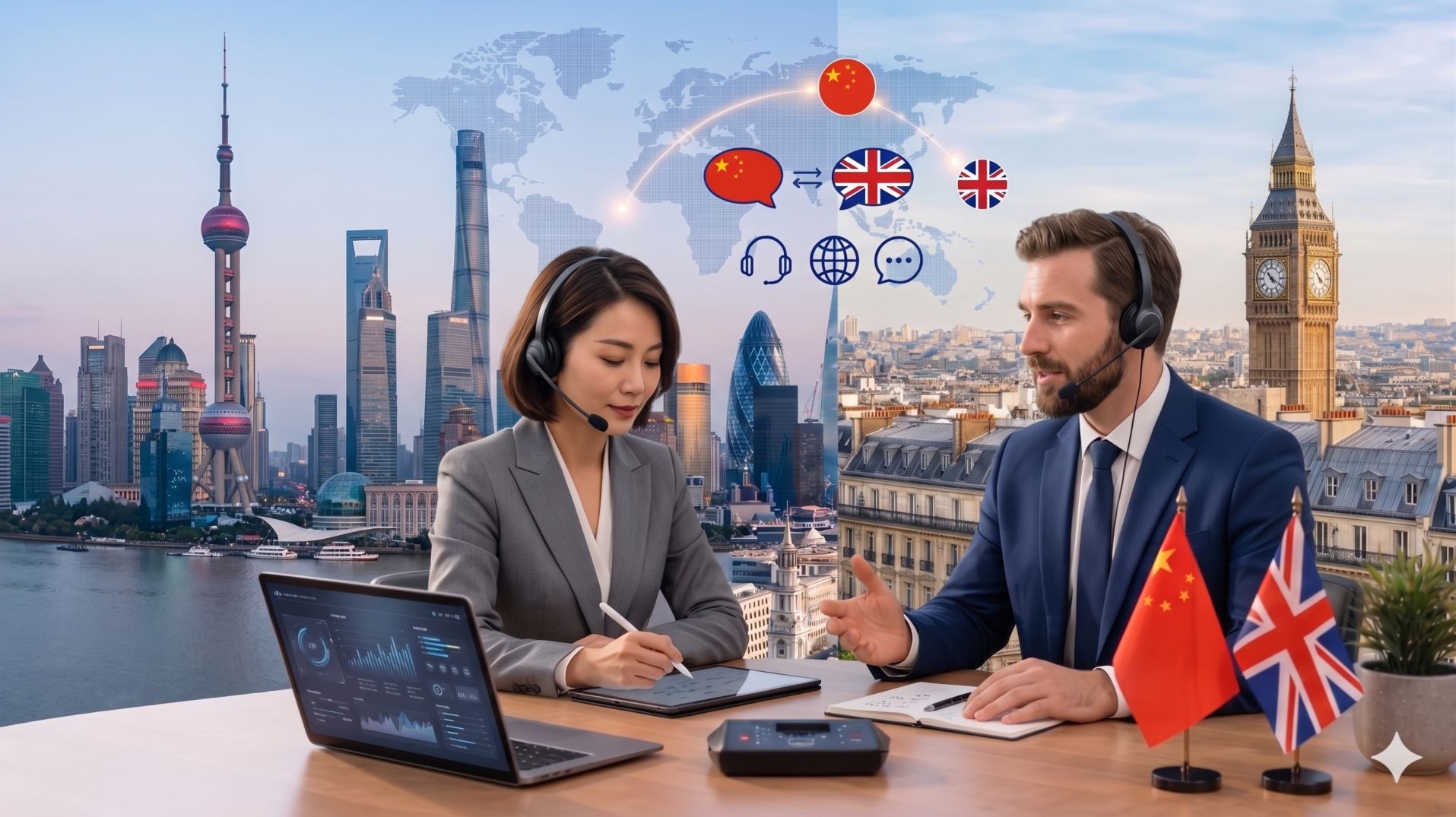
Securing a qualified Mandarin interpreter in Nottingham is paramount for effective communication across diverse sectors, from legal proceedings within His Majesty’s Courts and Tribunals Service (HMCTS) to critical healthcare interactions within the Nottinghamshire Healthcare NHS Foundation Trust and Nottingham University Hospitals NHS Trust. In an increasingly globalised economy, the demand for precise and culturally nuanced language services is growing, particularly for businesses and public services operating in or engaging with the vibrant East Asian market. This guide explores the critical role of professional Mandarin interpreters and translators in Nottingham, ensuring compliance with UK standards and facilitating seamless communication in vital areas of public and private life.
Translation vs Interpretation: Understanding the Nuances
While often used interchangeably, translation and interpretation are distinct linguistic disciplines, each requiring specialised skills and adherence to professional standards. A Mandarin translator in Nottingham works with written text, converting documents, contracts, websites, and other materials from Mandarin to English or vice versa. This process demands meticulous attention to detail, a deep understanding of written nuances, and often, subject-specific terminology. Translators typically work offline, allowing for research and revision to ensure accuracy and fidelity to the source text. Conversely, a Mandarin interpreter facilitates spoken communication in real-time. This can involve consecutive interpretation, where the interpreter speaks after the source speaker has finished, or simultaneous interpretation, where the interpreter speaks concurrently with the source speaker, often using specialised equipment. The role of an interpreter is dynamic, requiring not only linguistic proficiency but also excellent short-term memory, cultural awareness, and the ability to remain neutral and objective. For professionals seeking accurate document conversion, engaging a qualified Mandarin translator is essential. For live communication needs, particularly in sensitive environments like legal settings or medical consultations, a certified Mandarin interpreter is indispensable.
Legal Defence, Immigration, and Courtroom Interpretation
The UK’s justice system relies heavily on clear and accurate communication, especially in cases involving individuals who do not speak English as a first language. For Mandarin speakers navigating the complexities of UK law, access to professional interpreters is a fundamental right. His Majesty’s Courts and Tribunals Service (HMCTS) mandates the provision of qualified interpreters to ensure fair trials and due process. This applies to all levels of the court system, from magistrates’ courts to the Crown Court and various tribunals, including the First-tier Immigration Tribunal. A Mandarin interpreter working within this sphere must possess a deep understanding of legal terminology and procedures, adhering strictly to the professional standards set by bodies such as the National Register of Public Service Interpreters (NRPSI). Membership with the NRPSI or holding a Diploma in Public Service Interpreting (DPSI) is often a prerequisite for working in official capacities. Immigration law, overseen by the Home Office and UK Visas and Immigration (UKVI), also presents significant communication challenges. Mandarin-speaking individuals seeking to enter, remain, or naturalise in the UK require interpreters for interviews, appeals, and the submission of complex documentation. The accuracy provided by a professional interpreter ensures that individuals can fully understand their rights, obligations, and the proceedings against them, preventing miscarriages of justice. Law firms in Nottingham, specialising in criminal defence, family law, or immigration, frequently require the services of a Mandarin interpreter to represent their clients effectively. The integrity of the legal process hinges on the interpreter’s ability to convey information accurately and impartially, upholding the principles of justice as administered by HMCTS and other UK legal institutions.
Healthcare and NHS Patient Safety
Patient safety within the National Health Service (NHS) is a cornerstone of UK healthcare policy, and effective communication is integral to achieving this. For Mandarin-speaking patients in Nottingham, accessing healthcare services can be challenging without professional linguistic support. The NHS England Language Access guidelines stipulate that all patients have the right to receive care in a language they understand. This is particularly crucial for consultations, diagnoses, treatment plans, and obtaining informed consent. Misunderstandings arising from language barriers can lead to delayed diagnoses, incorrect treatments, and adverse patient outcomes. Therefore, engaging a qualified Mandarin interpreter is not merely a matter of convenience but a critical component of patient safety and clinical governance. NHS trusts serving Nottingham, such as the Nottinghamshire Healthcare NHS Foundation Trust and Nottingham University Hospitals NHS Trust, are committed to providing accessible services. Professional interpreters ensure that patients can articulate their symptoms, understand medical advice, and participate actively in their care decisions. Furthermore, compliance with the UK General Data Protection Regulation (UK GDPR) requires that patient confidentiality is maintained, a standard that professional interpreters are bound to uphold. The Care Quality Commission (CQC), the independent regulator of health and social care in England, also emphasises the importance of effective communication in ensuring high-quality care. A Mandarin interpreter plays a vital role in bridging the language gap, ensuring that Mandarin-speaking individuals receive equitable and safe healthcare, consistent with UK standards and patient rights.
Technical Interpretation Modalities
The effective delivery of Mandarin interpretation services in Nottingham depends on selecting the appropriate modality to suit the specific context and requirements. Each modality demands a distinct set of skills and often, specialised equipment. Simultaneous interpretation is perhaps the most technically demanding, requiring interpreters to listen, comprehend, and render the message into Mandarin or English almost instantaneously, often with only a few seconds’ delay. This is typically employed in large conferences, international meetings, or parliamentary sessions where seamless flow of information is critical. It necessitates the use of soundproof booths, headsets, and microphones. Consecutive interpretation involves the interpreter listening to a segment of speech, then rendering it into the target language once the speaker pauses. This is common in smaller meetings, legal depositions, medical appointments, and one-on-one discussions where a more natural conversational pace is desired. It does not typically require specialised equipment, though a notepad and pen are essential for note-taking. Escort interpretation, also known as liaison interpretation, facilitates communication between two or more parties who speak different languages. The interpreter acts as a bridge, interpreting in both directions to ensure understanding. This is often used during business negotiations, site visits, or social events where fluid interaction is key. Finally, remote interpretation, facilitated by advances in technology, allows interpreters to provide services via telephone (Video Remote Interpreting – VRI) or audio conferencing platforms. This modality offers flexibility and can be cost-effective, particularly for situations where an interpreter is not physically present. Choosing the correct interpretation modality, whether for a court hearing, a business meeting, or a medical consultation, is crucial for ensuring clarity, accuracy, and efficiency, and a professional interpreter will advise on the best approach.
Economic and Social Fabric of Nottingham
Nottingham, a city with a rich industrial heritage and a forward-looking economy, benefits significantly from the presence of skilled Mandarin interpreters and translators. The city’s diverse economic landscape and its role as a hub for innovation and international trade necessitate robust communication channels.
Corporate and Industry
Nottingham’s economy is bolstered by a strong presence in sectors such as advanced manufacturing, creative industries, and professional services. Businesses engaged in international trade, particularly with China, find that Mandarin language services are indispensable for market entry, negotiation, and maintaining client relationships. From drafting import/export contracts to facilitating discussions with Chinese partners, professional Mandarin translators and interpreters ensure that business objectives are met without linguistic barriers. The presence of skilled professionals supports Nottingham’s ambition to attract foreign investment and foster global partnerships.
Tourism
As a city with significant historical and cultural attractions, Nottingham draws tourists from around the globe. While English is the primary language, providing Mandarin language support, including translated visitor information and on-site interpretation services, can significantly enhance the experience for Chinese visitors. This not only improves visitor satisfaction but also boosts the local tourism economy, encouraging repeat visits and positive word-of-mouth referrals. Mandarin interpretation can be vital for tour operators, hotels, and cultural institutions aiming to cater to this growing market segment.
Legal Infrastructure
Nottingham boasts a well-established legal sector, with numerous law firms and access to HMCTS facilities. The increasing diversity of the population and the global nature of legal cases mean that Mandarin interpretation is frequently required. Whether for immigration matters, commercial disputes, or criminal defence, legal professionals in Nottingham rely on certified interpreters to ensure justice is accessible to all. The availability of qualified Mandarin interpreters supports the city’s reputation as a centre for legal excellence and fairness, ensuring compliance with UK legal standards.
NHS Healthcare
The healthcare system in Nottingham, encompassing major trusts like Nottingham University Hospitals NHS Trust and Nottinghamshire Healthcare NHS Foundation Trust, serves a diverse population. Mandarin-speaking patients require access to competent interpreters to ensure they receive safe, effective, and patient-centred care. Professional interpreters facilitate communication between patients and healthcare providers, ensuring accurate diagnosis, treatment, and adherence to UK GDPR principles. This commitment to linguistic accessibility is vital for maintaining high standards of patient care and promoting health equity across the city.
Local Infrastructure and Transport
Effective communication is also essential for navigating Nottingham’s local infrastructure and transport networks. For Mandarin-speaking residents and visitors, accessing public transport information, understanding travel advisories, or communicating with transport authorities can be challenging. Professional Mandarin translation services can ensure that essential information, such as bus timetables, train schedules, and safety instructions, is readily available and understandable. Interpreters can assist in situations requiring communication with transport officials, emergency services, or when dealing with administrative processes related to travel. Nottingham’s integrated transport system, including bus services operated by companies like trentbarton and rail services managed by operators such as East Midlands Railway, benefits from clear communication strategies. Ensuring that Mandarin speakers can access and understand transport information contributes to their mobility, independence, and overall integration into the city’s life. This extends to navigating local council services and understanding civic information provided by Nottingham City Council, further embedding the importance of professional language services within the city’s operational framework.
Conclusion
In Nottingham, the need for professional Mandarin interpretation and translation services spans critical public services, legal frameworks, and the dynamic commercial landscape. Ensuring access to a qualified Mandarin interpreter in Nottingham is not just about overcoming a language barrier; it is about upholding legal rights, ensuring patient safety within the NHS, facilitating international business, and fostering social inclusion. By engaging certified professionals who adhere to UK standards and professional codes of conduct, individuals and organisations can guarantee accuracy, confidentiality, and cultural sensitivity. Whether you require interpretation for court proceedings at HMCTS, a medical consultation with a local NHS trust, or translation of vital business documents, investing in expert language services is an investment in clarity, compliance, and successful outcomes. For all your Mandarin language needs in Nottingham and across the UK, seek out accredited professionals who understand the intricacies of both languages and the specific demands of the UK’s professional and public sectors.