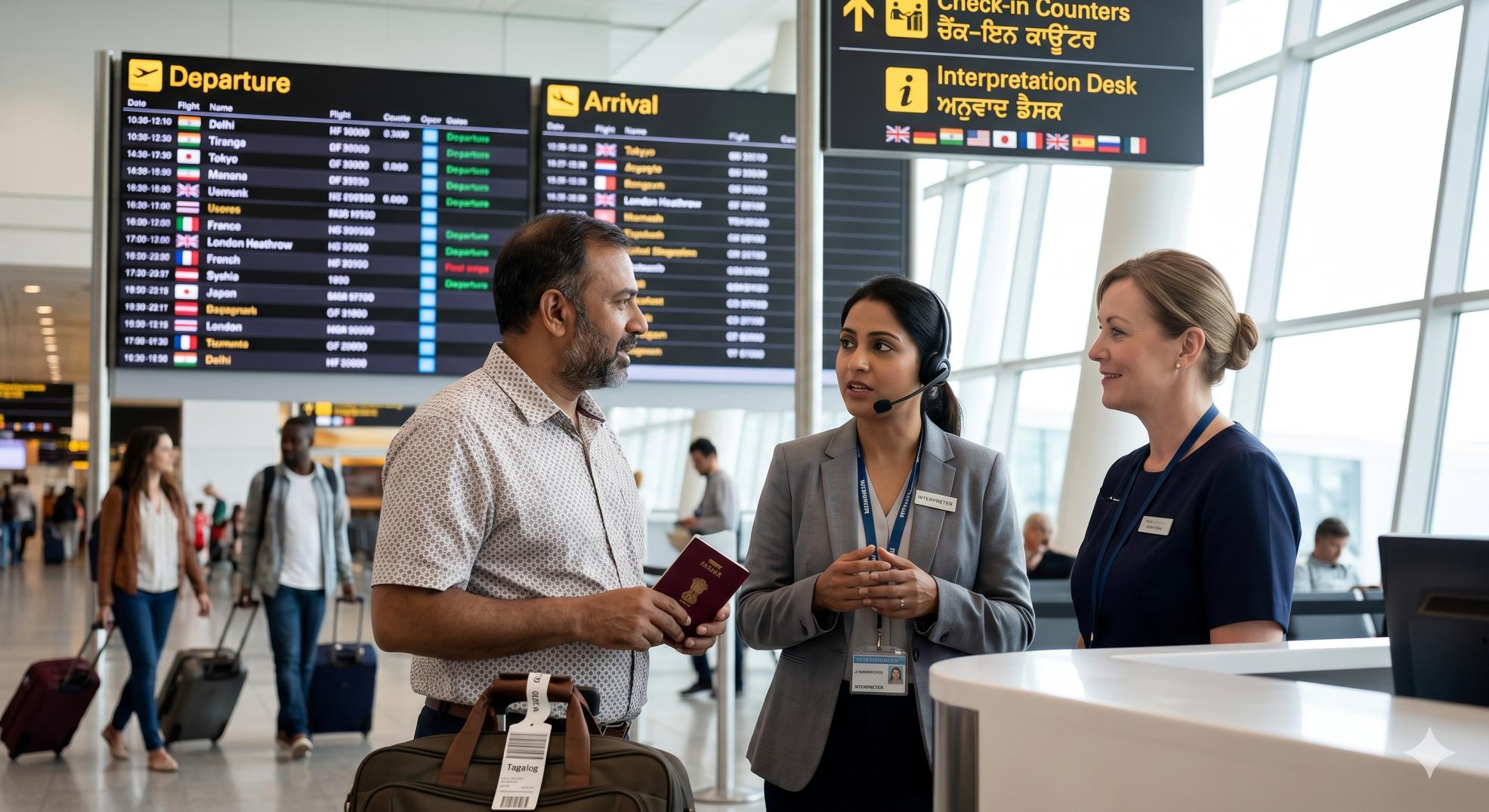
Securing a qualified Punjabi interpreter in Milton Keynes is paramount for effective communication across diverse sectors, from legal proceedings and healthcare access to business negotiations and public services within the United Kingdom. The demand for accurate and culturally sensitive linguistic support is growing, reflecting Milton Keynes’ dynamic population and its role as a significant economic hub. Ensuring that individuals can access vital services and that organisations can operate efficiently requires a robust network of professional interpreters. This is particularly crucial when navigating the complexities of the UK’s legal and healthcare systems, where miscommunication can have severe consequences. For residents and businesses in Milton Keynes, access to reliable Punjabi interpretation ensures that language barriers do not impede justice, health outcomes, or commercial success. The local NHS trusts, such as Milton Keynes University Hospital NHS Foundation Trust and Bedford Hospital NHS Trust (which serves a wider area including parts of Milton Keynes), rely on skilled interpreters to provide equitable care.
Translation vs Interpretation
While often used interchangeably, translation and interpretation are distinct linguistic services, each requiring specialised skills and methodologies. Understanding this difference is crucial for selecting the right professional for your needs, especially when seeking a Punjabi translator in Milton Keynes or a Punjabi interpreter. Interpretation involves the real-time, oral conversion of spoken or signed language from one language to another. This demands not only fluency in both Punjabi and English but also exceptional listening skills, memory, cultural understanding, and the ability to think quickly under pressure. Interpreters work in live environments, such as courtrooms, hospitals, business meetings, or community events. In contrast, translation deals with the written word. A translator converts written text from a source language to a target language, such as translating legal documents, medical reports, or business correspondence from Punjabi to English or vice versa. This process allows for more time for research, editing, and proofreading to ensure accuracy and stylistic fidelity. For official documents, certified translations are often required, adhering to strict UK standards. Professional bodies like the Chartered Institute of Linguists (CIOL) and the National Register of Public Service Interpreters (NRPSI) set the benchmarks for both professions, ensuring quality and ethical practice within the UK.
Legal Defence, Immigration, and Courtroom Interpretation
The UK justice system is built on the principle of fairness and equal access to justice for all, regardless of linguistic background. For individuals who speak Punjabi, access to qualified interpreters is not a luxury but a fundamental right, particularly within the remit of His Majesty’s Courts and Tribunals Service (HMCTS). Whether facing criminal charges, engaging in civil disputes, or navigating the complexities of immigration law, accurate interpretation is essential. Professional Punjabi interpreters working within the legal sphere must adhere to stringent codes of conduct, often requiring registration with bodies like the NRPSI or holding qualifications such as the Diploma in Public Service Interpreting (DPSI). These qualifications ensure a high level of linguistic competence and ethical understanding, crucial for maintaining the integrity of legal proceedings. The Home Office and UK Visas and Immigration (UKVI) also rely heavily on accurate interpretation during interviews and assessments. Individuals applying for visas, asylum, or citizenship may require Punjabi interpreters to fully understand the questions asked and to articulate their responses clearly. Failure to provide adequate interpretation can lead to misunderstandings, miscarriages of justice, and significant delays in legal processes. The First-tier Immigration Tribunal and Upper Tribunal regularly hear cases where language proficiency is a key factor, underscoring the need for accredited interpreters. Law firms specialising in immigration, family law, and criminal defence in Milton Keynes and across the UK frequently engage professional Punjabi interpreters to represent their clients effectively. These interpreters ensure that all parties, including judges, barristers, solicitors, and defendants or witnesses, can communicate seamlessly, upholding the principles of natural justice as overseen by institutions like the Royal Courts of Justice.
Healthcare and NHS Patient Safety
Patient safety and effective healthcare delivery in the UK are critically dependent on clear communication between healthcare professionals and patients. For the Punjabi-speaking population in Milton Keynes, access to professional medical interpreters is vital for ensuring they receive the best possible care from the NHS. Misunderstandings due to language barriers can lead to incorrect diagnoses, medication errors, delayed treatment, and a general erosion of trust in the healthcare system. The Care Quality Commission (CQC), the independent regulator of health and social care in England, emphasises the importance of effective communication in its standards. NHS England’s Language Access guidelines mandate that providers must ensure patients have access to interpreters when needed, in line with UK GDPR principles regarding the processing of sensitive personal data. Interpreters working in healthcare settings must possess not only linguistic skills but also a deep understanding of medical terminology, cultural nuances related to health beliefs, and the ethical responsibilities involved. They must maintain strict confidentiality, as mandated by UK law and professional standards. The NHS Business Services Authority provides resources and frameworks for language services, aiming to ensure equitable access for all patients. Professional bodies like the NRPSI and the International Association of Conference Interpreters (AIIC), which also has UK members, promote high standards for medical interpreters. In Milton Keynes, hospitals and clinics serving a diverse population must have robust systems in place to book qualified Punjabi interpreters for appointments, consultations, and emergency situations, ensuring that every patient, regardless of their language, receives safe, effective, and person-centred care.
Technical Interpretation Modalities
The effective delivery of Punjabi interpretation services in Milton Keynes encompasses a range of modalities, each suited to different contexts and requirements. Understanding these technical aspects ensures that the most appropriate form of interpretation is deployed, maximising clarity and efficiency. Consecutive interpretation is commonly used in one-on-one settings, such as doctor’s appointments, legal consultations, or small business meetings. The interpreter listens to a segment of speech, then renders it in the target language once the speaker has finished. This allows for a natural flow of conversation but can extend the duration of the interaction. Simultaneous interpretation is employed in larger settings like conferences, seminars, or formal hearings where speed and efficiency are paramount. The interpreter listens to the speaker through specialised equipment (e.g., headphones) and speaks the interpretation into a microphone in real-time, with only a few seconds’ delay. This requires highly skilled interpreters and sophisticated technical setups. Escort interpretation, also known as liaison interpretation, facilitates communication between parties speaking different languages in informal settings, such as factory tours, site visits, or social events. The interpreter acts as a bridge, interpreting short segments of speech and facilitating smoother interactions. Increasingly, remote interpretation services are becoming prevalent, utilising telephone or video conferencing platforms. This modality offers flexibility and can be cost-effective, allowing access to interpreters regardless of geographical location. For businesses and organisations in Milton Keynes, choosing the right modality is key to successful communication, whether for international business deals, multilingual conferences, or essential public service access.
Economic and Social Fabric of Milton Keynes
Milton Keynes, a rapidly growing city in Buckinghamshire, boasts a vibrant and diverse economic and social landscape. Its strategic location and modern infrastructure have attracted a wide array of businesses and residents, creating a multicultural environment where linguistic services are increasingly in demand. The city’s economic dynamism is reflected in its various sectors, its growing tourism appeal, its established legal infrastructure, and its comprehensive NHS healthcare provision.
Corporate and Industry
Milton Keynes is a significant economic centre, home to numerous national and international companies, particularly in sectors such as finance, logistics, technology, and retail. The presence of a substantial Punjabi-speaking business community and workforce necessitates professional Punjabi interpretation and translation services for internal communications, client meetings, training sessions, and international collaborations. Companies operating in Milton Keynes understand that effective communication is key to productivity, employee engagement, and market penetration. Access to skilled Punjabi interpreters facilitates smoother business operations, ensuring that all employees can participate fully and that business relationships are built on clear understanding. The Milton Keynes Chamber of Commerce plays a role in supporting local businesses, many of which operate in a multilingual environment.
Tourism
As a destination, Milton Keynes attracts visitors from across the UK and internationally. Its unique modern architecture, extensive parklands, and cultural attractions, such as the MK Gallery and Bletchley Park, draw a diverse range of tourists. Providing multilingual support, including Punjabi interpretation services, enhances the visitor experience, making it easier for Punjabi-speaking tourists to navigate the city, access information, and enjoy their stay. This inclusive approach benefits the local tourism economy and promotes Milton Keynes as a welcoming destination.
Legal Infrastructure
Milton Keynes possesses a well-developed legal infrastructure, with numerous law firms and legal service providers catering to a broad spectrum of needs, from corporate law to family and immigration matters. The city’s courts, under the purview of HMCTS, handle a significant caseload. For legal professionals and their clients, the availability of accredited Punjabi interpreters is indispensable for ensuring fair representation and access to justice. This includes services for solicitors, barristers, and individuals interacting with the police or other legal bodies. The presence of a reliable pool of Punjabi interpreters supports the city’s commitment to legal accessibility.
NHS Healthcare
The National Health Service (NHS) in Milton Keynes, primarily served by Milton Keynes University Hospital NHS Foundation Trust and surrounding integrated care systems, provides essential healthcare services to a diverse population. A significant portion of the population speaks Punjabi, making professional medical interpretation a critical component of patient care. Ensuring that Punjabi-speaking patients can communicate effectively with doctors, nurses, and other healthcare professionals is fundamental to patient safety, treatment adherence, and overall health outcomes, aligning with the standards set by NHS England and the CQC.
Local Infrastructure and Transport
Milton Keynes benefits from excellent transport links and modern infrastructure, contributing to its status as a thriving economic hub. Situated strategically between London and Birmingham, it is well-connected by road via the M1 motorway and by rail, with a direct train service to London Euston. This connectivity facilitates business travel, logistics, and access to services for residents. The city itself features a distinctive grid road system, making navigation relatively straightforward. Public transport, including bus services, further enhances accessibility within the city and surrounding areas. For businesses and individuals requiring Punjabi interpretation services, the city’s excellent infrastructure ensures that interpreters can reach various locations efficiently, whether for on-site interpretation at corporate offices, legal chambers, or healthcare facilities, or for facilitating communication at transport hubs and public service points. The availability of professional Punjabi interpreters is integral to ensuring that all residents and visitors can fully engage with the opportunities and services Milton Keynes offers, supported by the UK’s commitment to inclusive public services.
Conclusion
For any organisation or individual in Milton Keynes requiring precise and professional linguistic support, engaging a certified Punjabi interpreter in Milton Keynes is essential. Whether for the critical demands of the UK legal system, the life-saving necessities of NHS healthcare, or the nuanced requirements of international business, qualified interpreters ensure clarity, accuracy, and compliance with UK professional standards. By prioritising professional interpretation services, businesses, legal firms, and healthcare providers in Milton Keynes can uphold their commitment to inclusivity, effective communication, and the highest standards of service delivery. Contacting a reputable agency or directly engaging accredited interpreters is the first step towards breaking down language barriers and fostering stronger connections within this dynamic UK city.