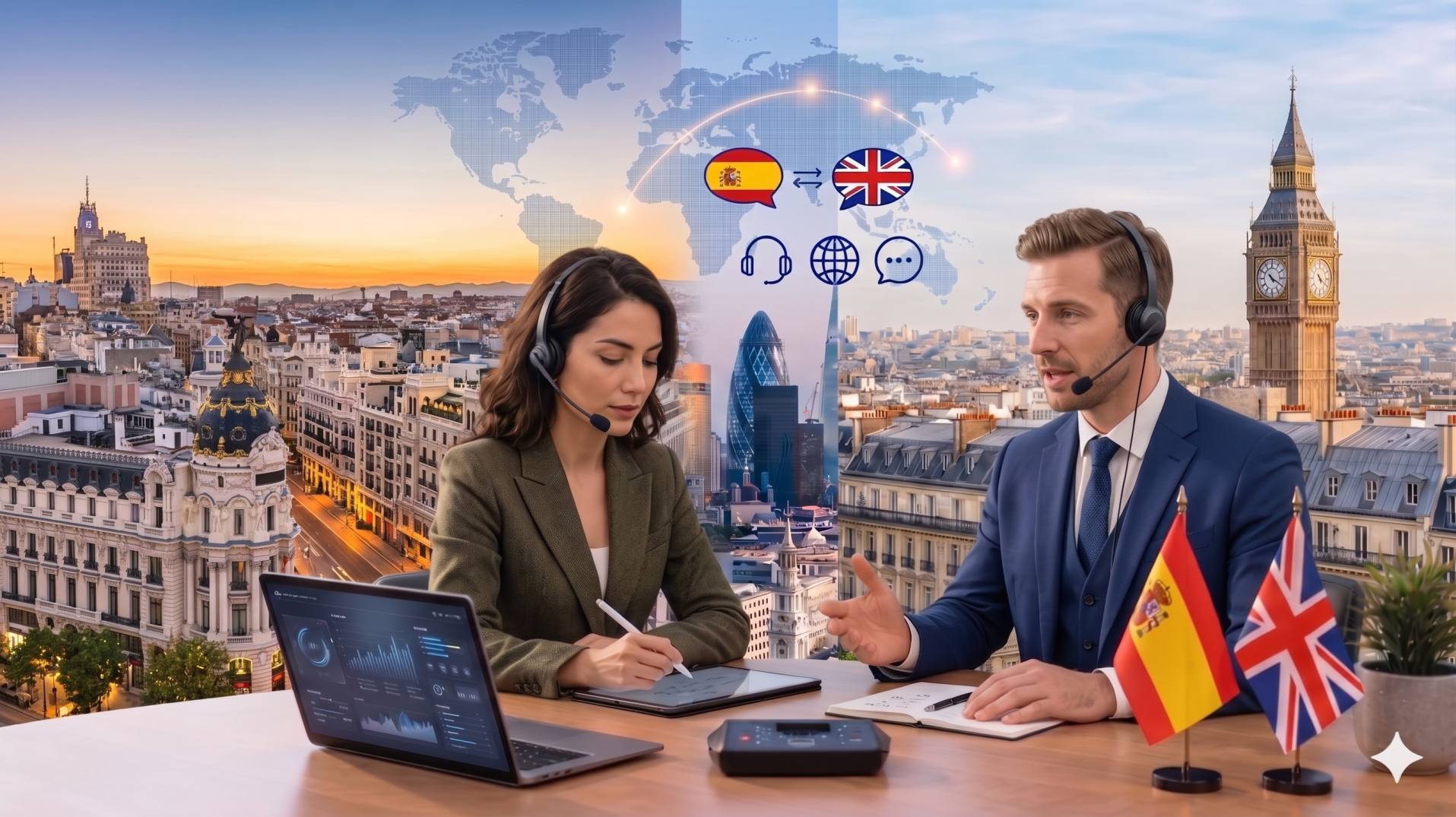
Securing a qualified Spanish interpreter in Ballymena is paramount for effective communication across diverse sectors, from legal proceedings and healthcare consultations to vital business interactions within the United Kingdom. The demand for professional linguistic services in Northern Ireland, specifically in areas like Ballymena, reflects the increasing interconnectedness of our society and economy. Ensuring accurate and culturally sensitive interpretation is not merely a matter of convenience but a critical requirement for upholding legal standards, patient safety, and business integrity. For residents and businesses in Ballymena, accessing reliable Spanish interpretation ensures that language barriers do not impede access to justice, essential medical care, or commercial opportunities. This is particularly relevant when engaging with key NHS providers such as the Northern Health and Social Care Trust (https://www.northerntrust.hscni.net/) and the Western Health and Social Care Trust (https://www.westerntrust.hscni.net/), both of which serve the wider region and adhere to strict NHS England Language Access guidelines.
Translation vs Interpretation: Understanding the Nuances
While often used interchangeably, translation and interpretation are distinct linguistic disciplines, each requiring specialised skills and qualifications. Interpretation involves the live, oral conversion of spoken or signed language from one language to another. This demands not only fluency in both the source and target languages but also exceptional listening comprehension, memory recall, and the ability to convey meaning accurately and instantaneously. A professional interpreter must also possess cultural competence, understanding the nuances of idiomatic expressions, social etiquette, and contextual implications that can significantly alter meaning. In contrast, translation deals with the written word, converting text from one language to another. This process allows for more deliberation, research, and revision to ensure accuracy and fidelity to the original document. For professional services in Ballymena, understanding this distinction is crucial when selecting the appropriate linguistic support. Whether you require a Spanish translator in Ballymena for official documents or a skilled interpreter for a live interaction, choosing the right professional ensures the integrity of your communication.
Legal Defence, Immigration, and Courtroom Interpretation
The UK legal system operates under stringent protocols where precision in language is non-negotiable. For individuals involved in legal matters, whether civil, criminal, or immigration-related, the services of a qualified Spanish interpreter are indispensable. His Majesty’s Courts and Tribunals Service (HMCTS) mandates that all parties have a clear understanding of proceedings, which necessitates professional interpretation when language barriers exist. This includes appearances in Magistrates’ Courts, Crown Courts, and various tribunals under the HMCTS umbrella. Immigration law is another area where accurate interpretation is vital. Individuals navigating the complex UK visa and immigration system, interacting with the Home Office and UK Visas and Immigration (UKVI), require interpreters who understand the specific terminology and legal frameworks. Professional bodies such as the National Register of Public Service Interpreters (NRPSI) and the Diploma in Public Service Interpreting (DPSI) set the standards for interpreters working in these sensitive environments. These qualifications ensure that interpreters possess the necessary legal knowledge, ethical grounding, and linguistic proficiency to handle cases involving potentially life-altering decisions. The Royal Courts of Justice, as the home of the High Court and Court of Appeal, also relies on the expertise of accredited interpreters to ensure fairness and due process for all litigants. Engaging a certified interpreter ensures compliance with UK legal standards and upholds the fundamental right to a fair hearing.
Healthcare and NHS Patient Safety
Patient safety and effective communication are cornerstones of the National Health Service (NHS). In Ballymena, as across the UK, the NHS is committed to providing equitable care to all patients, irrespective of their linguistic background. The NHS England Language Access guidelines stipulate that healthcare providers must ensure that patients with limited English proficiency have access to appropriate interpretation and translation services. This is critical for accurate diagnosis, informed consent, and adherence to treatment plans. For Spanish-speaking patients interacting with healthcare professionals within the Northern Health and Social Care Trust or other regional trusts, a qualified interpreter ensures that medical information is conveyed clearly and that patient concerns are fully understood by clinicians. The Care Quality Commission (CQC) also emphasises the importance of effective communication in its inspections, recognising that language barriers can pose significant risks to patient safety and the quality of care. Compliance with UK GDPR is also essential, ensuring that sensitive patient data is handled with the utmost confidentiality, a principle that extends to the interpretation process. Professional interpreters working within the NHS are often required to hold qualifications recognised by bodies like the NRPSI or possess equivalent demonstrable expertise, guaranteeing a high standard of service and ethical conduct. This commitment to linguistic accessibility ensures that all patients receive the best possible care, fostering trust and improving health outcomes.
Technical Interpretation Modalities
The effective delivery of interpretation services relies on selecting the appropriate modality to suit the specific context and requirements of the interaction. Several key modes of interpretation are employed, each with its unique application:
- Simultaneous Interpretation: This is the most demanding form, where the interpreter conveys the message in the target language almost instantaneously as the speaker delivers it in the source language. It typically requires specialised equipment, such as soundproof booths and headsets, and is commonly used in large conferences, international meetings, and high-stakes legal proceedings where real-time communication is essential.
- Consecutive Interpretation: In this mode, the interpreter listens to a segment of speech, then renders it into the target language after the speaker has finished their segment. This requires excellent note-taking skills and a strong memory. It is often used in smaller meetings, one-on-one consultations, and legal depositions where direct, sequential communication is more practical.
- Escort Interpretation (Liaison Interpretation): This involves facilitating communication between two or more parties who speak different languages. The interpreter acts as a bridge, interpreting in both directions, often in informal settings such as business meetings, site visits, or social events. The focus is on smooth, natural conversation flow.
- Remote Interpretation (Video/Telephone): With advancements in technology, remote interpretation has become increasingly prevalent. This allows interpreters to provide services via telephone or video conferencing platforms, offering flexibility and cost-effectiveness. It is particularly useful for situations where in-person interpretation is not feasible or necessary, such as routine medical appointments or brief business calls, while still adhering to professional standards and data protection regulations.
Choosing the correct modality ensures that the communication objectives are met efficiently and effectively, whether in a corporate boardroom, a hospital consultation, or a courtroom setting in Ballymena.
Economic and Social Fabric of Ballymena
Ballymena, a vibrant market town in County Antrim, Northern Ireland, possesses a dynamic economic and social landscape that benefits significantly from robust communication infrastructure. The presence of professional Spanish interpretation services plays a crucial role in supporting its growth and integration within the wider UK economy.
Corporate and Industry
Ballymena has a strong industrial heritage, particularly in engineering and manufacturing, with companies like Wrightbus being a notable example. As businesses in the region increasingly engage with international markets, including those in Spanish-speaking countries, the need for accurate translation and interpretation services becomes paramount. This facilitates smoother negotiations, enhances client relationships, and opens up new commercial opportunities. Professional Spanish interpreters can assist local businesses in expanding their reach, ensuring that marketing materials, technical documentation, and business communications are culturally and linguistically appropriate for Spanish-speaking partners and customers.
Tourism
Northern Ireland, and the Causeway Coast region accessible from Ballymena, is a growing tourist destination. While English is the primary language, providing information and services in Spanish can attract a larger segment of the international travel market. Spanish-speaking tourists visiting Ballymena and its surrounding attractions, such as the Giant’s Causeway or Carrick-a-Rede Rope Bridge, would benefit from interpretation services at visitor centres, hotels, and heritage sites. This enhances the visitor experience, encourages positive reviews, and contributes to the local tourism economy. Professional Spanish translators can also assist in developing multilingual promotional materials and websites.
Legal Infrastructure
The legal sector in Ballymena, like elsewhere in the UK, requires precise communication. Local law firms and legal professionals may encounter clients or cases involving Spanish speakers. Ensuring access to qualified Spanish interpreters is essential for providing effective legal advice, representing clients in His Majesty’s Courts and Tribunals Service (HMCTS) proceedings, and assisting with immigration matters handled by the Home Office. Professional bodies like the NRPSI and DPSI ensure that interpreters working within the legal framework meet the highest standards of accuracy and impartiality, upholding the principles of justice within the UK legal system.
NHS Healthcare
The healthcare services available to the residents of Ballymena, primarily through the Northern Health and Social Care Trust, must be accessible to all. For the Spanish-speaking population, this means having access to qualified interpreters during medical appointments, hospital stays, and when accessing community health services. This ensures that patients can fully understand their conditions, treatment options, and discharge instructions, thereby improving health outcomes and patient satisfaction. Adherence to NHS England Language Access guidelines and UK GDPR principles is critical in maintaining patient trust and safety.
Local Infrastructure and Transport
Ballymena is well-connected by road, with the A26 providing a direct link to Belfast and its international airport, as well as to the North Coast. The town also has a railway station offering services to Belfast and Londonderry. This robust transport infrastructure facilitates the movement of people and goods, supporting both local businesses and the provision of services. For professional interpreters, this means that accessing clients across Ballymena and the wider Northern Ireland region is generally straightforward, whether they are travelling for in-person assignments or providing remote services. The availability of reliable transport networks ensures that essential services, including professional interpretation, can be delivered efficiently to meet the needs of the community and businesses operating within the area, contributing to the overall economic vitality and social cohesion of Ballymena.
Conclusion
In conclusion, the need for a professional Spanish interpreter in Ballymena is multifaceted, extending across critical sectors such as legal, healthcare, and commerce. Ensuring access to qualified and certified interpreters is not merely a logistical requirement but a fundamental aspect of upholding fairness, safety, and effective communication within the UK’s established frameworks. By engaging with accredited professionals who adhere to UK standards, individuals and organisations in Ballymena can confidently navigate linguistic challenges, fostering stronger relationships and achieving their objectives. For reliable and expert linguistic support tailored to the specific demands of the UK professional services market, seek out interpreters qualified to serve the needs of HMCTS, the NHS, and the broader corporate environment.