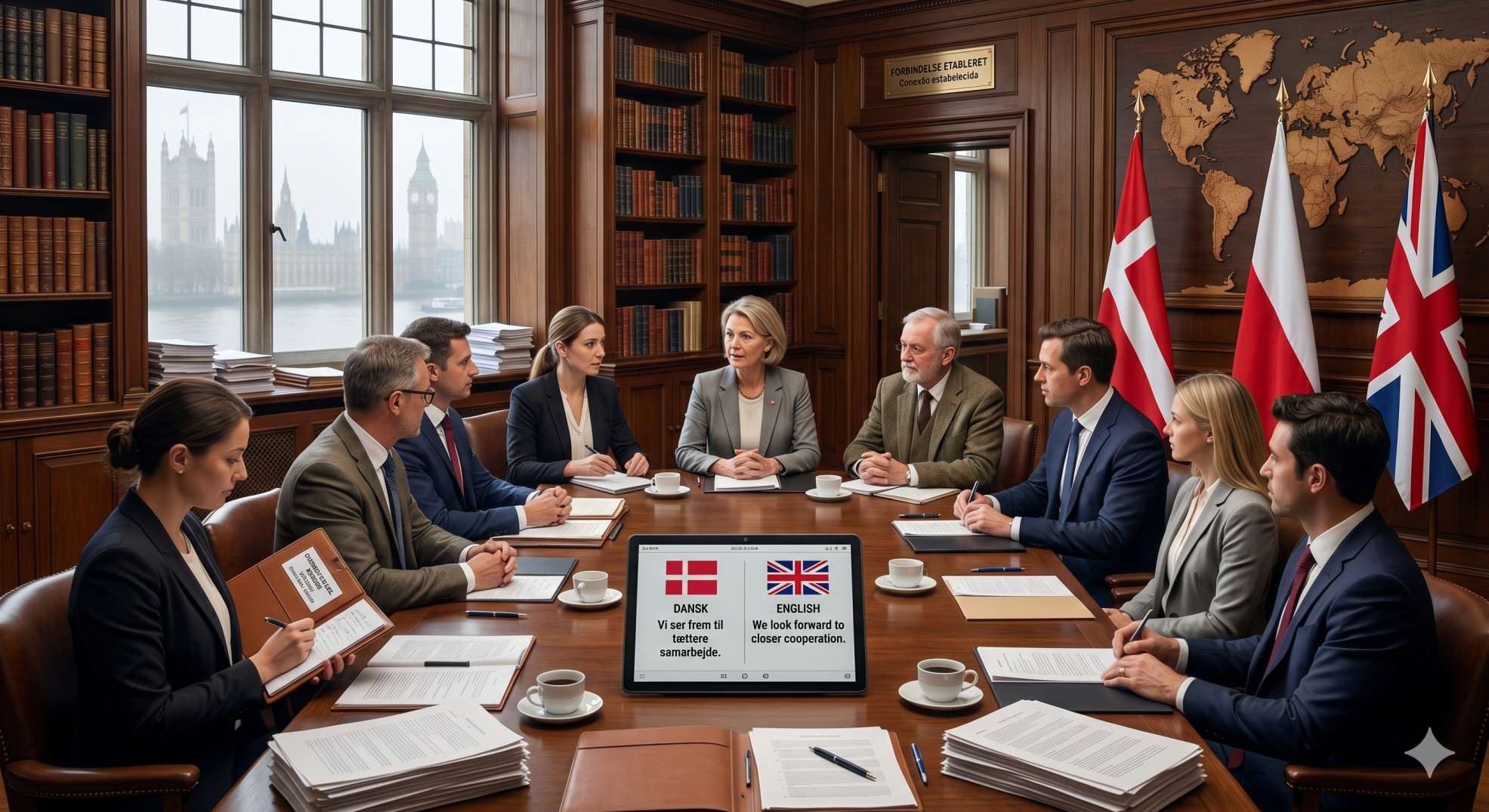
Securing a qualified Swedish interpreter in Slough is paramount for effective communication across diverse professional sectors, from legal proceedings and healthcare consultations to vital business interactions within the UK. The demand for precise and culturally nuanced interpretation services underscores the importance of engaging professionals who understand the intricacies of both languages and the specific regulatory and cultural landscapes of the United Kingdom. For residents and businesses in Slough, accessing reliable Swedish interpretation ensures that legal rights are upheld, patient care is optimised, and commercial opportunities are fully realised. This is particularly critical when dealing with public services, such as those provided by the Royal Berkshire NHS Foundation Trust and the University Hospitals Sussex NHS Foundation Trust, both of which serve the broader Berkshire region and may have patients requiring Swedish language assistance. Ensuring clear communication with these and other NHS providers is a cornerstone of equitable healthcare access.
Translation vs Interpretation
While often used interchangeably, translation and interpretation are distinct disciplines, each requiring specialised skills and training. Interpretation involves the real-time, oral conversion of spoken language from one tongue to another. This can occur in various settings, including face-to-face meetings, telephone calls, or video conferences. A Swedish translator in Slough, conversely, works with written text, converting documents, websites, or other written materials from Swedish to English or vice versa. The skills required for each are different: interpreters need exceptional listening comprehension, immediate recall, and the ability to speak fluently and accurately under pressure, often in high-stakes environments. Translators require strong writing skills, a deep understanding of grammar and syntax in both languages, and often subject-matter expertise to ensure the accurate conveyance of complex information in written form. For legal and medical contexts in the UK, the distinction is critical. For instance, a court document requires translation, while a live court hearing necessitates interpretation. Engaging the correct professional ensures that the integrity of the communication is maintained, adhering to UK professional standards set by bodies like the National Register of Public Service Interpreters (NRPSI).
Legal Defence, Immigration, and Courtroom Interpretation
The UK’s legal system is built on principles of justice and fairness, which are fundamentally dependent on clear and accurate communication. For individuals who do not speak English as a first language, access to qualified legal representation and fair hearings is impossible without professional interpretation. This is where a skilled Swedish interpreter in Slough plays an indispensable role. Whether assisting a client in a police station interview, a preliminary hearing, or a full trial before His Majesty’s Courts and Tribunals Service (HMCTS), the interpreter acts as a vital conduit for justice. UK law mandates that individuals have the right to understand proceedings and to be understood by the court. This right is enshrined in various legal frameworks, including those governing criminal and civil justice. The His Majesty’s Courts and Tribunals Service (HMCTS) oversees the administration of justice across England and Wales, and requires interpreters to meet stringent standards of accuracy and impartiality. Professionals often hold qualifications such as the Diploma in Public Service Interpreting (DPSI) or are registered with the NRPSI, ensuring they possess the necessary linguistic proficiency and ethical understanding. In immigration matters, the UK Visas and Immigration (UKVI), part of the Home Office, relies on interpreters for interviews and appeals. The First-tier Immigration Tribunal also requires interpreters to facilitate fair hearings for asylum seekers and other visa applicants. A failure to provide adequate interpretation can lead to miscarriages of justice, impacting individuals’ rights and the integrity of the UK’s legal processes. Professional bodies like the Chartered Institute of Linguists (CIOL) also set standards for linguistic professionals working within the UK.
Healthcare and NHS Patient Safety
Patient safety and effective healthcare delivery within the UK’s National Health Service (NHS) are critically dependent on clear communication between healthcare professionals and patients. For Swedish-speaking individuals in Slough, accessing healthcare services without a qualified interpreter can lead to misunderstandings, delayed diagnoses, incorrect treatment, and ultimately, compromised patient safety. The NHS is committed to providing equitable care to all, regardless of language. NHS England’s Language Access guidelines stipulate the need for professional interpretation services when a patient’s understanding of English is insufficient. This is not merely a matter of courtesy but a legal and ethical imperative, underpinned by regulations such as the UK General Data Protection Regulation (UK GDPR), which mandates the secure and accurate handling of patient information, including ensuring patients understand their care. The Care Quality Commission (CQC), the independent regulator of health and social care in England, inspects services to ensure they are safe, effective, and caring, with communication being a key aspect of this assessment. Interpreters working within the NHS must adhere to strict codes of conduct, ensuring confidentiality and impartiality. They facilitate consultations, explain diagnoses, discuss treatment options, and ensure patients can give informed consent. For Slough, this means ensuring that Swedish speakers can access services from local NHS trusts, such as the Royal Berkshire NHS Foundation Trust, and receive the same standard of care as English speakers. Professional interpreters often hold qualifications recognised by bodies like the NRPSI or possess specific healthcare interpreter certifications, demonstrating their competence in medical terminology and ethical practice.
Technical Interpretation Modalities
The effectiveness of interpretation hinges on selecting the appropriate modality for the specific situation. A professional Swedish interpreter in Slough will be proficient in several techniques, each suited to different communication needs:
- Simultaneous Interpretation: This is the most demanding form, where the interpreter speaks the target language almost concurrently with the source language speaker, typically with a slight delay of a few seconds. It requires specialised equipment (booths, headsets, microphones) and is used in large conferences, international meetings, or parliamentary sessions where real-time communication is essential.
- Consecutive Interpretation: Here, the interpreter waits for the speaker to pause or finish a thought before rendering the message in the target language. This is common in smaller meetings, legal depositions, medical consultations, and one-on-one discussions where direct interaction is key. It allows for more natural turn-taking and clarification.
- Escort Interpretation: Also known as liaison interpretation, this involves accompanying a client (e.g., a business visitor, a tourist, or someone attending a series of appointments) to provide interpretation throughout their engagements. The interpreter facilitates communication in various settings, from business meetings to social events.
- Remote Interpretation (Telephone/Video): With advancements in technology, remote interpretation has become increasingly prevalent. This modality allows interpreters to provide services via phone (Voice over Internet Protocol – VoIP) or video conferencing platforms. It offers flexibility, cost-effectiveness, and rapid access to interpreters, particularly useful for urgent situations or when in-person interpreters are not readily available. This is governed by standards ensuring data security and privacy, aligning with UK GDPR principles.
The choice of modality depends on factors such as the number of participants, the formality of the setting, the need for real-time communication, and the technical resources available. Professional interpreting agencies and individual interpreters will advise on the most suitable option to ensure clarity and efficiency.
Economic and Social Fabric of Slough
Slough, a vibrant and economically significant town in Berkshire, boasts a dynamic economic landscape and a rich, diverse social fabric. Its strategic location, excellent transport links, and a strong business environment make it an attractive hub for both domestic and international enterprises. Understanding this local context is crucial for professional service providers, including Swedish interpreters and translators, to effectively serve the community and its businesses.
Corporate and Industry Presence
Slough is renowned as a major commercial centre, hosting the headquarters or significant operations of numerous multinational corporations. Industries ranging from technology and media to logistics and retail have a strong presence. This concentration of international business creates a consistent demand for high-quality Swedish interpretation and translation services. Companies operating in or trading with Sweden require seamless communication for negotiations, client meetings, technical support, and internal communications. Professional linguists are essential to bridge language barriers, fostering stronger business relationships and ensuring operational efficiency. The presence of companies like Practical Law, a Thomson Reuters company, indicates a strong professional services ecosystem that often requires multilingual support.
Tourism and Cultural Exchange
While primarily known as a business destination, Slough and its surrounding areas also attract visitors for leisure and cultural purposes. The town’s proximity to London and Windsor means it benefits from the wider region’s tourism appeal. For Swedish tourists or business visitors, having access to local interpretation services can enhance their experience and facilitate smoother interactions, whether for business or personal matters. This contributes to a welcoming environment and supports the town’s role in fostering international connections.
Legal Infrastructure
Slough benefits from a well-developed legal infrastructure, including local law firms and access to courts. The presence of His Majesty’s Courts and Tribunals Service (HMCTS) facilities within or near the town means that legal interpretation services are frequently required. Swedish-speaking individuals involved in legal matters, whether civil disputes, criminal proceedings, or family law cases, rely on qualified interpreters to ensure their rights are protected and they can fully participate in the legal process. Law firms in Slough and the wider Berkshire area often partner with professional interpreting agencies to meet the needs of their diverse clientele, adhering to the stringent requirements of UK legal practice.
NHS Healthcare Provision
As mentioned, Slough is served by key NHS trusts, providing essential healthcare services to its residents. The commitment of the NHS to accessible care means that Swedish-speaking patients must be able to communicate effectively with doctors, nurses, and other healthcare professionals. This necessitates the availability of professional Swedish interpreters within the local healthcare system. Ensuring that patients understand their conditions, treatment plans, and medication instructions is vital for positive health outcomes and patient satisfaction, aligning with the standards set by the CQC and NHS England.
Local Infrastructure and Transport
Slough’s strategic location is further enhanced by its robust infrastructure and excellent transport links, making it an accessible and well-connected town. Situated within the Thames Valley corridor, it benefits from close proximity to London, Heathrow Airport, and major motorway networks. The M4 motorway runs directly through Slough, providing rapid access to the M25, M3, and M40 motorways, facilitating efficient travel across the South East of England and beyond. Rail connectivity is also a significant asset. Slough railway station is a major hub on the Great Western Main Line, offering frequent services to London Paddington, Reading, Bristol, and other key destinations. The Elizabeth Line (Crossrail) service from Slough provides direct, fast access to central London, the West End, and East London, significantly improving connectivity for commuters and business travellers. This excellent transport network not only supports the local economy by facilitating the movement of goods and people but also makes Slough an accessible location for clients and professionals requiring interpretation services. Whether meeting in a corporate office, attending a legal appointment at HMCTS, or visiting an NHS facility, the ease of access via public transport or private vehicle is a considerable advantage. The town’s infrastructure also includes reliable digital connectivity, supporting the increasing demand for remote interpretation services.
Conclusion
For businesses, legal professionals, healthcare providers, and individuals in Slough and the surrounding UK regions, the need for accurate and professional Swedish interpretation is undeniable. Whether navigating the complexities of the UK legal system, ensuring patient safety within the NHS, or fostering international business relationships, a qualified Swedish interpreter in Slough is an indispensable asset. Engaging certified professionals who adhere to UK standards guarantees that communication is not only clear but also confidential, impartial, and legally compliant. We provide expert Swedish interpretation services tailored to meet the rigorous demands of the UK’s professional landscape, ensuring your communication objectives are met with precision and integrity.