
With 20 years of experience as a senior simultaneous interpreter in the Brazilian market, an active member of ABRATES, and a specialist in corporate events and international conferences, I have a deep understanding of the factors that influence the investment in high-quality interpretation services. The question of how much does simultaneous interpretation cost is central to any event organizer seeking effective communication in multiple languages. This article aims to demystify this cost by presenting the determining factors and offering a realistic overview for your planning.
Key Factors That Determine the Cost of Simultaneous Interpretation
The final cost of hiring a simultaneous interpretation service is not fixed and depends on a number of crucial elements. Understanding each of them is the first step toward an accurate budget and ensuring that your event runs smoothly without language barriers. The complexity of the subject matter, the interpreter’s required expertise, the event’s duration, and the number of languages involved are just a few of the key factors that determine pricing.
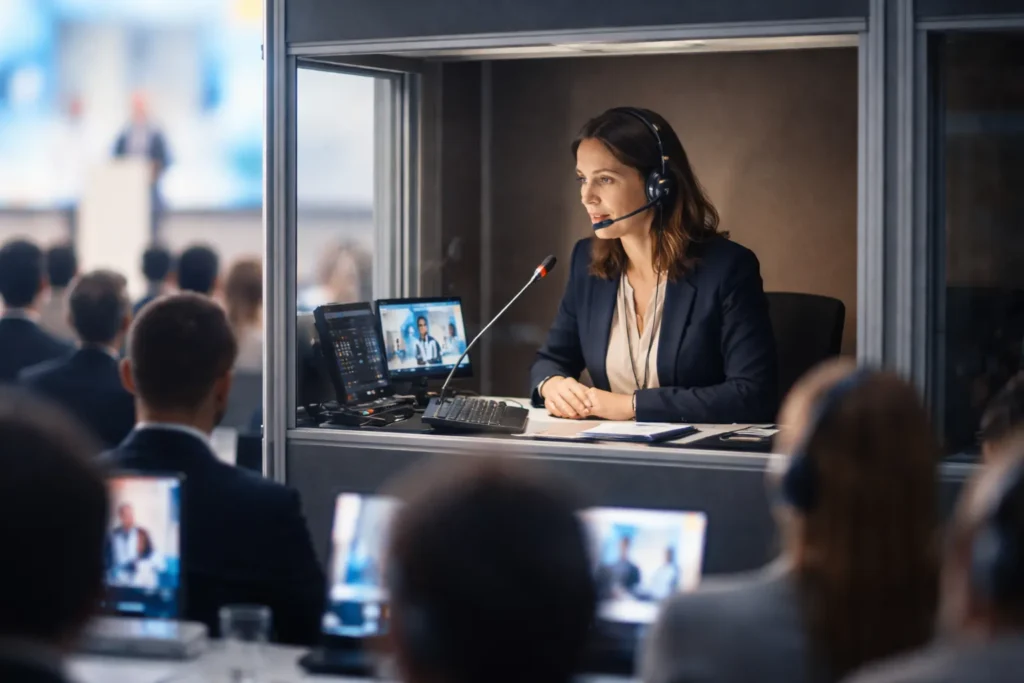
Simultaneous interpretation requires a high level of concentration and technical skill. The interpreter works in real time, translating the speaker’s remarks almost instantly for an audience that speaks another language. This cognitive demand and the need for specific equipment, such as soundproof booths, audio consoles, and headphones, justify the investment. Furthermore, the professional’s qualifications and experience are key factors. Interpreters with recognized certifications, such as those from ABRATES (Brazilian Association of Translators and Interpreters), and with extensive experience in corporate events and international conferences, tend to charge higher fees, reflecting the quality and reliability they provide.
The Influence of Languages and Duration on the Budget
The choice of languages is one of the main factors in calculating the cost of simultaneous interpretation. More common languages, such as English and Spanish, generally have a larger pool of qualified professionals, which can influence price competitiveness. On the other hand, languages with lower demand or fewer specialized interpreters available in the Brazilian market may come at a higher cost. The need to cover multiple languages simultaneously also impacts the cost, as it may require assembling larger teams of interpreters and configuring more audio channels on the equipment.
The duration of the event is another factor directly proportional to the cost. Longer events require more working hours from the interpreters, who must maintain a high level of performance throughout the entire period. It is common for contracts to be established on a per-day or per-session basis (morning/afternoon). For events that span several days, it is essential to schedule breaks for the interpreters, as fatigue can compromise the quality of the interpretation. This may mean the need for more professionals to cover the shifts, increasing the total cost. The complexity of the content to be interpreted is also a relevant factor; technical or highly specialized topics may require prior research by the interpreter, which can be reflected in the price. How much does simultaneous interpretation cost
Required Equipment and Associated Costs
The technological infrastructure is an indispensable component of simultaneous interpretation and, consequently, of the total cost of the service. Renting professional-grade equipment is essential to ensure audio clarity and the comfort of interpreters and participants. Basic items include:
- Interpretation Booths: These must be soundproofed and climate-controlled to ensure acoustic isolation and thermal comfort for the interpreters.
- Audio Consoles and Microphones: Equipment that allows the interpreter to hear the speaker and transmit the interpretation to the audio channels.
- Receivers and Headphones: Distributed to participants so they can tune in to their preferred language.
- Transmitters and Audio Infrastructure: To ensure the sound signal is distributed throughout the event venue.
The cost of renting this equipment varies depending on the number of languages to be offered, the duration of the event, and the supplier. It is crucial to choose reliable suppliers who offer technical support throughout the event. The quality of the equipment directly impacts the experience of everyone involved, from the interpreter to the end participant. Good sound systems and well-maintained equipment prevent noise and technical glitches, which can hinder communication and the perception of the event’s professionalism.
Estimated Price Table for Simultaneous Interpretation
To provide a clearer picture of how much does simultaneous interpretation costs, we present a table with estimated price ranges. It is important to note that these figures are for reference only and may vary significantly depending on the region, the interpretation agency, the complexity of the event, and the interpreters’ experience. I always recommend requesting detailed quotes tailored to your specific needs.
| Language(s) | Duration (per day) | Full Equipment (per language) | Interpreter Fees (per day/language) |
| English / Spanish | Up to 8 hours | R$ 800 – R$ 1,500 | $1,200 – $2,500 |
| English / Spanish | Up to 12 hours (includes overtime) | $1,200 – $2,000 | $1,800 – $3,500 |
| French / German / Italian | Up to 8 hours | $1,000 – $1,800 | $1,500 – $3,000 |
| French / German / Italian | Up to 12 hours (includes overtime) | $1,500 – $2,500 | $2,200 – $4,000 |
| Asian Languages (Mandarin, Japanese, Korean) | Up to 8 hours | $1,200 – $2,200 | $1,800 – $3,800 |
| Asian Languages (Mandarin, Japanese, Korean) | Up to 12 hours (includes overtime) | $1,800 – $3,000 | $2,800 – $5,000 |
| Rare or Less Common Languages | Up to 8 hours | Upon request (additional logistics costs may apply) | Starting at R$ 2,500 |
These figures are only estimates. Factors such as the need for interpreters with specific technical expertise (medical, legal, engineering), the urgency of the assignment, and the reputation of the agency or professional may influence the final price. For large-scale events or those with very specific needs, it is common to negotiate customized packages. The quality of interpretation is an investment in the credibility and success of your international event.
How to Optimize Your Investment in Simultaneous Interpretation
Maximizing the return on investment in simultaneous interpretation involves strategic planning and clear communication with suppliers. One of the first steps is to precisely define the languages required and the number of participants per language. This prevents the hiring of unnecessary equipment and services. Additionally, the earlier you book, the better your chances of securing high-quality professionals and equipment at more competitive prices. Companies like ABRATES can provide guidance on hiring qualified and ethical professionals. How much does simultaneous interpretation cost
Another valuable tip is to consolidate service contracts. Many specialized agencies offer packages that include interpreters, equipment, and technical support, which can save money and simplify event management. Requesting references and verifying the agency’s or interpreters’ prior experience with events similar to yours is also essential. Remember that effective communication is the backbone of any successful event, and investing in quality interpretation is investing in the experience and satisfaction of all participants. The International Telecommunication Union (ITU), for example, frequently organizes multilingual events that require state-of-the-art interpretation services, demonstrating the importance of this practice in global forums.
The Role of Professional Qualifications in Cost
The qualifications and experience of the simultaneous interpreter are factors that directly impact the cost of the service. A professional with a college degree in Translation and Interpretation, specializing in specific fields and with years of experience at corporate events and international conferences, possesses technical knowledge and resourcefulness that justify higher fees. The ability to handle complex terminology, maintain neutrality and accuracy, and manage real-time pressure are skills that are honed through practice and continuous study.
Certified professionals and members of renowned associations, such as the International Association of Conference Interpreters (AIIC), undergo rigorous selection processes and adhere to codes of ethics that guarantee the quality and confidentiality of the service. When you hire an interpreter with these credentials, you are investing not only in the translation of words, but in the assurance that the message will be conveyed with clarity, nuance, and professionalism, preserving the integrity of the content and the image of your event. Diplomacy, for example, is an area where the accuracy of simultaneous interpretation is absolutely critical.
Frequently Asked Questions About the Cost of Simultaneous Interpretation
1. What is the average cost of hiring a simultaneous interpreter?
The average cost can vary widely. For a full day of work (approximately 8 hours) with a common language such as English or Spanish, a senior interpreter’s fee can range from R$ 1,200 to R$ 3,500. Rarer languages or those with high technical demands may have higher rates. It is important to remember that this amount is for the professional only; equipment and venue rental costs are additional.
2. What is included in the price of simultaneous interpretation?
Generally, the price charged by agencies includes the interpreter’s fee (or the team of interpreters, as they work in pairs), service coordination, and, in full packages, the rental of necessary equipment (booth, console, headphones, microphones) and technical support. When hiring a freelance professional, the fees cover the interpreter’s services, and equipment is generally rented separately.
3. Why is simultaneous interpretation more expensive than consecutive interpretation?
Simultaneous interpretation requires a much higher level of technical skill and concentration, as the interpreter works in real time, speaking almost simultaneously with the speaker. This requires specialized training and specific equipment (booth, headphones, microphones). Consecutive interpretation, while also requiring skill, allows for pauses and does not require the same technological infrastructure, making it a lower-cost service.
4. What factors can increase the cost of simultaneous interpretation?
Several factors can increase the cost: the need for rare languages or languages with few qualified professionals in the market; the requirement for in-depth technical knowledge in specific fields (medical, legal, engineering); the extended duration of the event, which may require more interpreters to cover shifts; the need for state-of-the-art equipment or large quantities of it; and the urgency of hiring.
5. Is it possible to reduce costs without compromising quality?
Yes, it is possible to optimize your investment. Planning ahead, clearly defining language needs, negotiating packages with agencies that offer integrated services (interpreters + equipment), and choosing professionals with a good reputation and proven experience can help. Avoid hiring services at the last minute and always seek references. Choosing a good equipment supplier is also crucial to avoid technical glitches that could ruin the experience.
Conclusion: Investing in Global Communication
Understanding how much does simultaneous interpretation cost is essential for the success of corporate events and international conferences. While costs vary, they reflect the technical complexity, the expertise of the professionals, and the infrastructure required to ensure fluid and accurate communication across different cultures and languages. By analyzing factors such as language, duration, equipment, and professional qualifications, you’ll be better prepared to plan your budget and make informed decisions.
Remember that quality simultaneous interpretation is not an expense, but a strategic investment that enhances your event, strengthens international relationships, and ensures your message reaches the intended audience without noise or misunderstandings. If you are organizing an event and need professional interpretation solutions, contact us to discuss your needs and receive a customized quote. Ensure your event becomes a milestone in global communication.
