Securing a qualified Arabic interpreter in Portsmouth is paramount for effective communication across diverse sectors, from legal proceedings within His Majesty’s Courts and Tribunals Service (HMCTS) to critical healthcare interactions within the NHS. Portsmouth, a city with a rich maritime history and a dynamic modern economy, requires seamless linguistic support to ensure all residents and visitors can access essential services. This includes navigating complex legal frameworks, understanding medical advice from trusts such as Solent NHS Trust and Portsmouth Hospitals University NHS Trust, and facilitating business interactions. Our services provide certified, professional Arabic interpreters who understand the nuances of UK professional standards, legal requirements, and healthcare protocols, ensuring accuracy, confidentiality, and cultural sensitivity in every engagement.
Understanding the Nuances: Translation vs. Interpretation
While often used interchangeably, translation and interpretation are distinct linguistic disciplines, each requiring specialised skills and training. Understanding this difference is crucial when seeking professional language support, particularly when engaging an Arabic translator in Portsmouth or an interpreter. Interpretation involves the live, oral conversion of spoken or signed language from one language to another. This demands not only fluency in both Arabic and English but also exceptional active listening skills, immediate recall, and the ability to convey meaning accurately and instantaneously, often under pressure. Interpreters must also possess a deep understanding of the context, be it a courtroom, a hospital ward, or a business meeting, to ensure cultural appropriateness and precision. Conversely, translation deals with the written word, converting text from one language to another. This process allows for more time for research, editing, and proofreading, ensuring a high degree of accuracy in written documents such as legal contracts, medical reports, or technical manuals. For legal and medical contexts in the UK, the distinction is critical; for instance, court proceedings require live interpretation, while translating legal documents necessitates a skilled translator adhering to UK legal terminology standards.
Legal Defence, Immigration, and Courtroom Interpretation
The UK’s legal system, governed by His Majesty’s Courts and Tribunals Service (HMCTS), places a strong emphasis on access to justice for all, irrespective of their linguistic background. For Arabic speakers involved in legal matters in Portsmouth, securing a qualified interpreter is not merely a convenience but a fundamental right. This applies to criminal and civil court cases, family law proceedings, and administrative hearings before tribunals. Professional interpreters play a vital role in ensuring that defendants, witnesses, and litigants fully understand the proceedings, can present their case effectively, and are treated fairly. Standards for legal interpreters in the UK are rigorous, often requiring accreditation from bodies such as the National Register of Public Service Interpreters (NRPSI) or holding qualifications like the Diploma in Public Service Interpreting (DPSI). These qualifications ensure interpreters possess the necessary linguistic proficiency, ethical understanding, and knowledge of legal terminology and procedures specific to the UK. Immigration law, a significant area requiring linguistic support, involves interactions with the Home Office and the UK Visas and Immigration (UKVI) service, as well as appeals heard at the First-tier Immigration Tribunal. Accurate interpretation is essential for asylum claims, visa applications, and deportation hearings, where misunderstandings can have profound consequences. Law firms and legal aid providers in Portsmouth rely on professional Arabic interpreters to bridge these communication gaps, ensuring clients’ rights are protected and that justice is served impartially. The integrity of the legal process hinges on the interpreter’s ability to convey spoken words faithfully, without omission, addition, or interpretation of the speaker’s intent, adhering strictly to the principles of impartiality and confidentiality mandated by professional bodies and UK law.
Healthcare and NHS Patient Safety
Patient safety and effective communication are cornerstones of the National Health Service (NHS) in the UK. For Arabic-speaking patients in Portsmouth, accessing healthcare services without linguistic barriers is crucial for receiving accurate diagnoses, understanding treatment plans, and providing informed consent. The NHS is committed to providing equitable care, and this includes ensuring that language differences do not impede the quality of service. NHS trusts serving Portsmouth, such as Solent NHS Trust and Portsmouth Hospitals University NHS Trust, are obligated to provide access to professional interpreters when needed. The Care Quality Commission (CQC) monitors the quality and safety of health and social care services across England, and effective communication is a key aspect of their inspections. Professional Arabic interpreters facilitate vital interactions between healthcare professionals and patients, covering everything from initial consultations and emergency room visits to complex surgical procedures and ongoing chronic disease management. They ensure that patients understand medical terminology, treatment options, medication instructions, and discharge summaries. Adherence to UK GDPR is paramount, ensuring that all patient information shared during interpretation sessions remains confidential. Professional interpreters are trained not only in language but also in the ethical considerations of medical interpretation, understanding the importance of neutrality and accuracy in conveying sensitive health information. This commitment to clear communication directly impacts patient outcomes, reduces the risk of medical errors, and enhances the overall patient experience within the NHS framework.
Technical Interpretation Modalities
The effective delivery of interpretation services in Portsmouth relies on understanding and applying various technical modalities, tailored to the specific needs of the situation. The choice of modality significantly impacts the flow of communication and the required skill set of the interpreter. Consecutive interpretation is commonly used in one-on-one meetings, doctor-patient consultations, or small group discussions. The interpreter listens to a segment of speech, then renders it into the target language once the speaker pauses. This method allows for a more natural conversational flow but can extend the duration of the interaction. Simultaneous interpretation is employed in larger settings such as conferences, formal meetings, or court proceedings where time is critical. The interpreter listens to the speaker through a headset and renders the speech into the target language with minimal delay, often speaking into a microphone in a soundproof booth. This requires highly specialised skills and often involves a team of interpreters working in shifts. Escort interpretation, also known as liaison interpretation, is used in more informal settings, such as business negotiations, site visits, or social events. The interpreter facilitates communication between parties, often travelling with them and interpreting in a consecutive or whispered manner, acting as a cultural bridge. For situations where face-to-face interaction is not feasible, remote interpretation services, including telephone interpreting (OPI) and video remote interpreting (VRI), have become increasingly prevalent. These services leverage technology to connect clients with qualified interpreters instantly, offering flexibility and cost-effectiveness, particularly for urgent or infrequent language needs. Each modality demands specific training and equipment, and selecting the appropriate method is key to achieving successful communication in any professional context in Portsmouth.
Economic and Social Fabric of Portsmouth
Portsmouth’s vibrant economy and diverse society necessitate robust linguistic support to foster inclusivity and facilitate growth. The city’s unique blend of historical significance, modern industry, and a strong community base creates a demand for professional Arabic interpretation and translation services across multiple domains.
Corporate and Industry
As a significant economic hub, Portsmouth hosts a range of industries, including defence, marine, technology, and retail. International trade and collaboration are increasingly common, requiring businesses to communicate effectively with partners, clients, and employees from diverse linguistic backgrounds. Professional Arabic interpreters and translators are essential for facilitating business meetings, contract negotiations, technical documentation, marketing materials, and internal communications. This ensures that UK businesses operating in or with Arabic-speaking markets can build strong relationships, comply with regulations, and operate efficiently. The presence of skilled language professionals supports the city’s economic competitiveness on a national and international stage.
Tourism
Portsmouth’s rich maritime heritage, including the historic dockyard, the Spinnaker Tower, and its status as a major cruise port, attracts visitors from around the globe. Arabic-speaking tourists and business travellers require accessible information and services. Professional interpretation and translation services can enhance the visitor experience by providing multilingual signage, information leaflets, guided tours, and customer service support in Arabic. This not only benefits the tourists but also boosts the local tourism economy by making Portsmouth a more welcoming and accessible destination for a wider range of international visitors.
Legal Infrastructure
The city’s legal infrastructure, encompassing local law firms, police services, and branches of His Majesty’s Courts and Tribunals Service (HMCTS), requires reliable access to qualified Arabic interpreters. Whether for criminal defence, civil litigation, family law matters, or immigration advice, ensuring that Arabic speakers can fully participate in legal processes is a matter of fundamental justice. Professional interpreters accredited by bodies like the NRPSI or holding a DPSI qualification are crucial for maintaining the integrity and fairness of the UK legal system within Portsmouth. This ensures compliance with legal obligations and upholds the principles of equal access to justice.
NHS Healthcare
The National Health Service (NHS) in Portsmouth, including trusts like Portsmouth Hospitals University NHS Trust and Solent NHS Trust, serves a diverse population. Providing culturally competent and linguistically appropriate healthcare is a priority. Professional Arabic interpreters are indispensable for ensuring that Arabic-speaking patients receive clear explanations of medical conditions, treatment options, and post-care instructions. This supports informed consent, improves patient adherence to medical advice, and enhances overall health outcomes, aligning with the NHS’s commitment to equitable care for all residents.
Local Infrastructure and Transport
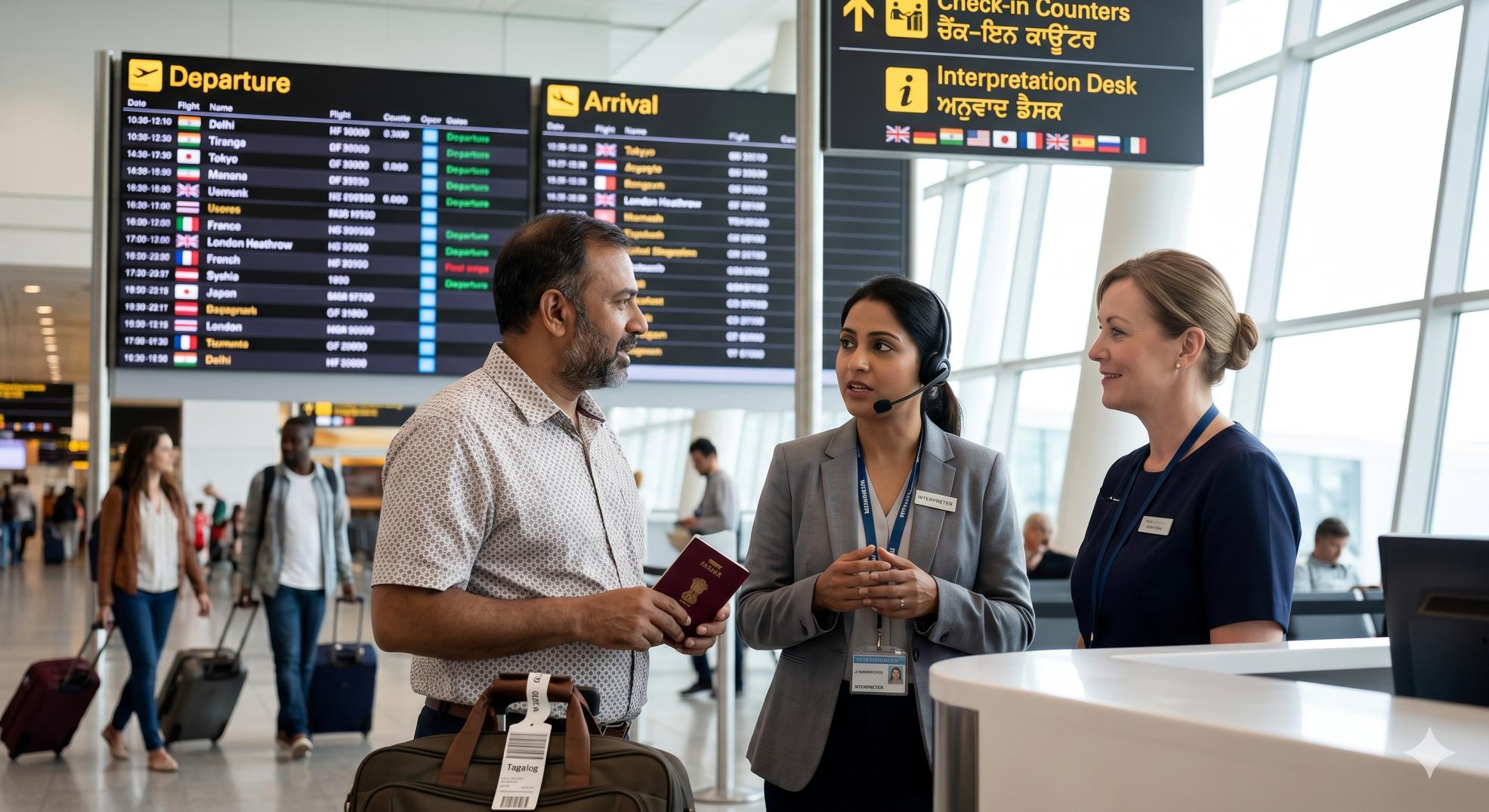
Portsmouth’s infrastructure, including its transport networks, plays a crucial role in its connectivity and accessibility. As a major port city and a significant urban centre in the South East of England, efficient transport links are vital for residents, businesses, and visitors. The city is served by road networks, including the M27 and A3, connecting it to London and other major cities. Rail services provide direct links to London Waterloo and other key destinations, managed by South Western Railway. For international travel, proximity to major airports like London Heathrow and Gatwick is advantageous. Effective communication across these transport hubs and within the city is essential. This includes providing multilingual information at transport stations, for public transport services, and for emergency services. Professional Arabic interpreters and translators contribute to ensuring that all individuals, including Arabic speakers, can navigate the city safely and efficiently, access public services, and participate fully in community life. This linguistic support is integral to the seamless functioning of Portsmouth’s urban environment and its integration into the wider UK economic landscape.
Conclusion
For any organisation or individual in Portsmouth requiring precise and reliable communication, engaging a professional Arabic interpreter in Portsmouth is essential. Whether navigating the complexities of the UK legal system, ensuring patient safety within the NHS, or fostering international business relationships, the accuracy and cultural understanding provided by certified interpreters are invaluable. We offer expert Arabic interpretation and translation services that adhere to the highest professional standards, ensuring clarity, confidentiality, and compliance with all UK regulations. Contact us today to discuss your specific language needs and experience the difference that professional, locally-attuned linguistic support can make.