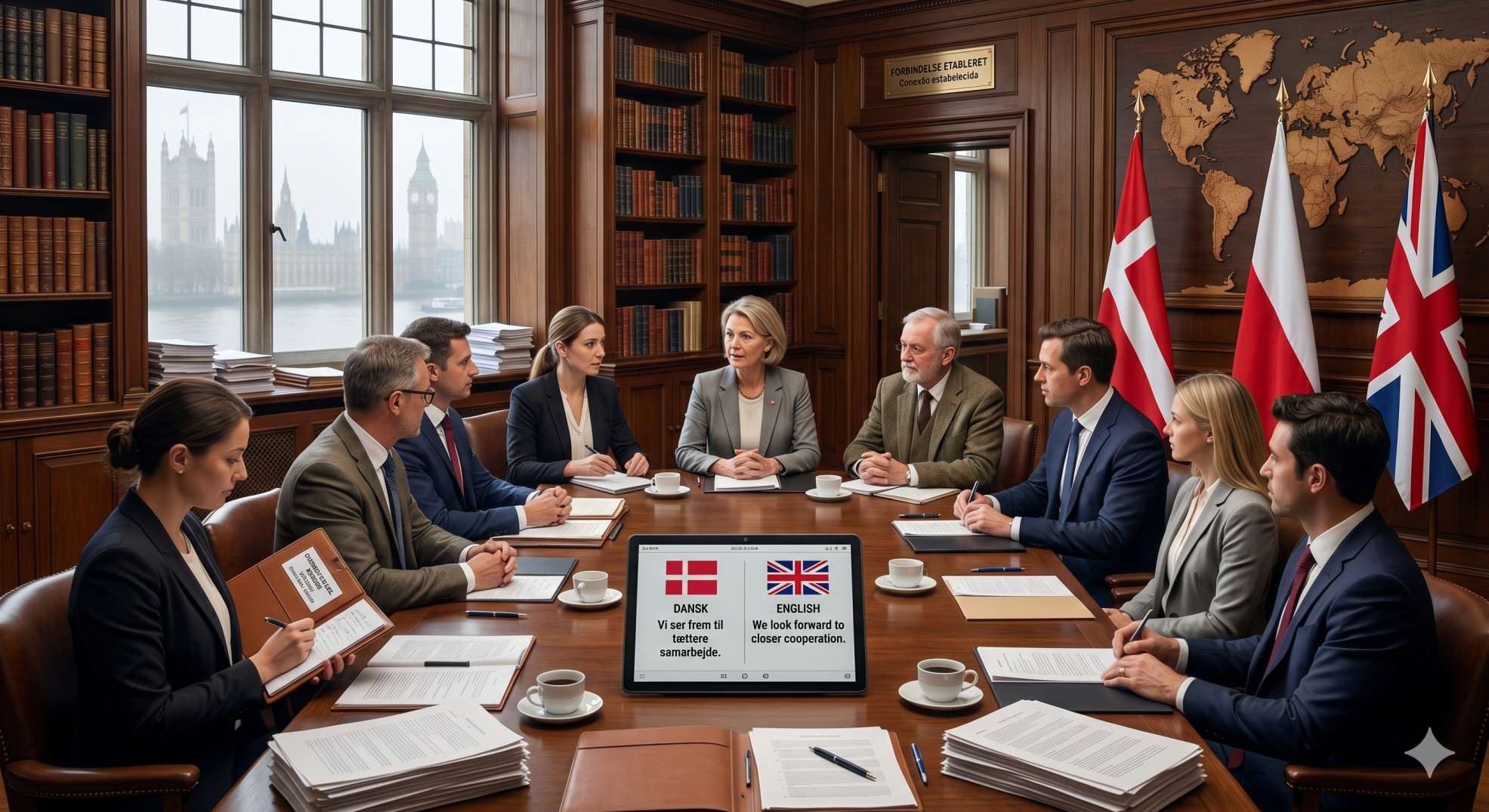
Securing a qualified Danish interpreter in Nottingham is paramount for effective communication across critical sectors within the UK’s professional landscape. Whether navigating the complexities of His Majesty’s Courts and Tribunals Service (HMCTS), ensuring patient safety within the National Health Service (NHS) via trusts such as Nottingham University Hospitals NHS Trust and Nottinghamshire Healthcare NHS Foundation Trust, or facilitating vital business interactions, the need for precise linguistic support cannot be overstated. This service bridges cultural and linguistic divides, upholding the integrity of legal proceedings, healthcare delivery, and commercial agreements, all while adhering strictly to UK standards and regulations.
Translation vs Interpretation
While often used interchangeably, translation and interpretation are distinct linguistic disciplines, each requiring specialised skills and adherence to different professional standards. Interpretation involves the live, oral conversion of spoken or signed language from one language to another. This demands not only fluency in both Danish and English but also an acute understanding of cultural nuances, immediate contextual comprehension, and the ability to convey meaning accurately and instantaneously. A skilled Danish interpreter in Nottingham must possess excellent listening skills, a strong memory, and the composure to perform under pressure, particularly in high-stakes environments like courtrooms or medical consultations. Professional bodies such as the National Register of Public Service Interpreters (NRPSI) and the Chartered Institute of Linguists (CIOL) set rigorous standards for public service interpreters, ensuring competence and ethical conduct. Conversely, translation focuses on the written word, converting text from one language to another. This process allows for more deliberation, research, and refinement to ensure accuracy and fidelity to the source material. A Danish translator in Nottingham, therefore, would typically handle documents, contracts, official correspondence, and technical manuals, requiring a deep understanding of both source and target languages’ written forms, grammar, and specialised terminology. Both roles are crucial for seamless communication, but the immediacy and live nature of interpretation necessitate a unique skill set, particularly when engaging a Danish translator in Nottingham for written documentation.
Legal Defence, Immigration, and Courtroom Interpretation
The UK legal system, governed by principles of natural justice and the right to a fair trial, mandates that individuals who do not speak English fluently have access to qualified interpreters. For Danish speakers involved in legal matters in Nottingham, this means access to interpreters who understand the specific terminology and procedures of His Majesty’s Courts and Tribunals Service (HMCTS). These interpreters must be impartial, confidential, and possess a thorough understanding of legal frameworks, including civil, criminal, and family law. The NRPSI and the DPSI (Diploma in Public Service Interpreting) qualification are benchmarks for public service interpreters in the UK, ensuring a high level of professional competence. In immigration cases, where individuals may be interacting with the Home Office, UK Visas and Immigration (UKVI), or the First-tier Immigration Tribunal, accurate interpretation is vital. Misunderstandings can have profound consequences on asylum claims, visa applications, and residency status. Professional interpreters ensure that all parties, including legal representatives and adjudicators, fully comprehend the statements and evidence presented. The Royal Courts of Justice and other judicial centres across the UK rely on these linguistic professionals to uphold the integrity of legal proceedings. A Danish interpreter engaged for these purposes must be adept at handling sensitive information and maintaining strict confidentiality, aligning with the professional standards expected within the UK legal sector.
Healthcare and NHS Patient Safety
Effective communication is a cornerstone of patient safety and quality care within the NHS. For Danish-speaking patients in Nottingham, access to professional interpreters is essential for accurate diagnosis, informed consent, and adherence to treatment plans. The NHS, guided by NHS England’s Language Access Guidelines, recognises the critical role of interpreters in overcoming language barriers. Trusts like Nottingham University Hospitals NHS Trust and Nottinghamshire Healthcare NHS Foundation Trust are committed to providing equitable access to healthcare services for all patients, irrespective of their language proficiency. Interpreters in healthcare settings must not only be linguistically competent but also possess a nuanced understanding of medical terminology, cultural sensitivities surrounding health, and the ethical considerations inherent in patient care. They must adhere to strict confidentiality, as mandated by UK law and the UK General Data Protection Regulation (UK GDPR). The Care Quality Commission (CQC) also emphasises the importance of effective communication in its inspections, ensuring that providers meet the needs of all patients. A Danish interpreter working within the NHS framework must be trained to facilitate clear and accurate communication between clinicians and patients, ensuring that patients can fully participate in their care decisions and that their rights are protected.
Technical Interpretation Modalities
The nature of the communication dictates the interpretation modality required. For conferences, large meetings, or broadcasts where the speaker addresses a wide audience, simultaneous interpretation is employed. Interpreters, typically working in soundproof booths, translate the speaker’s words in real-time, with the audience listening via headsets. This requires exceptional concentration and rapid processing. Consecutive interpretation is used in smaller settings, such as one-on-one meetings, interviews, or legal consultations. Here, the interpreter listens to a segment of speech, then renders it into the target language after the speaker has finished. This allows for pauses and a more deliberate delivery. Escort interpretation, also known as liaison interpretation, facilitates communication between two or more parties who speak different languages in informal settings, such as business negotiations, site visits, or social events. The interpreter acts as a cultural bridge, ensuring smooth dialogue. In the modern era, remote interpretation, including telephone interpreting (OPI) and video remote interpreting (VRI), has become increasingly prevalent. This modality offers flexibility and cost-effectiveness, allowing access to interpreters regardless of geographical location. For a Danish interpreter in Nottingham, proficiency in these various modalities ensures they can meet the diverse needs of clients, from intricate legal depositions to international business calls, always maintaining the highest standards of accuracy and professionalism.
Economic and Social Fabric of Nottingham
Nottingham, a city with a rich industrial heritage and a dynamic modern economy, presents a diverse landscape for professional services. The presence of international businesses, a thriving legal sector, and a world-class healthcare system necessitates robust linguistic support. A skilled Danish interpreter and translator are invaluable assets in this environment, facilitating seamless operations and fostering stronger relationships.
Corporate and Industry
Nottingham’s economy is supported by a range of industries, including advanced manufacturing, life sciences, and creative industries. International trade and investment are key drivers of growth. For Danish companies looking to establish a presence in Nottingham, or UK firms engaging with Danish partners, accurate communication is vital for contract negotiations, technical discussions, and market entry strategies. Professional Danish interpreters and translators ensure that business dealings are conducted with clarity and precision, avoiding costly misunderstandings and building trust. The Nottinghamshire Growth Hub can provide insights into the local business ecosystem, highlighting opportunities where linguistic expertise can be leveraged.
Tourism
As a city with significant historical and cultural attractions, Nottingham attracts visitors from around the globe. While English is the primary language, providing information and services in Danish can enhance the experience for Danish tourists and business travellers. This includes translated visitor guides, multilingual signage, and interpretation services for guided tours or hospitality interactions. Ensuring Danish speakers feel welcomed and understood contributes positively to the city’s reputation as a tourist destination.
Legal Infrastructure
Nottingham boasts a well-established legal sector, with numerous law firms specialising in various fields, including corporate law, immigration, and commercial litigation. The presence of HMCTS facilities means that Danish speakers may require interpreters for court appearances, client consultations, and legal document review. The demand for qualified Danish interpreters who understand the intricacies of UK law, including civil procedure rules and criminal justice processes, is consistently high. Professional bodies like the NRPSI play a crucial role in certifying interpreters who can meet these demanding requirements.
NHS Healthcare
The healthcare landscape in Nottingham is dominated by major NHS trusts, including Nottingham University Hospitals NHS Trust and Nottinghamshire Healthcare NHS Foundation Trust. These institutions serve a diverse population, and ensuring equitable access to healthcare for Danish speakers is a priority. Professional medical interpreters are essential for patient consultations, hospital admissions, and the explanation of complex medical information. Adherence to UK GDPR and NHS language access policies ensures patient confidentiality and effective care delivery.
Local Infrastructure and Transport
Nottingham’s infrastructure supports its economic and social functions. The city is well-connected by road and rail, with East Midlands Airport nearby providing international links. Public transport within the city includes extensive bus services and a tram network. For businesses and individuals requiring interpretation services, the city’s transport links facilitate easy access to various locations, whether for on-site interpretation at a corporate office, a legal consultation, or a hospital visit. The efficiency of these transport networks ensures that a Danish interpreter can reach their assignment promptly, contributing to the overall seamless delivery of professional services across Nottingham and the wider East Midlands region.
In conclusion, the need for a professional Danish interpreter in Nottingham is multifaceted, spanning legal, medical, and commercial domains. Ensuring access to qualified, accredited interpreters is not merely a matter of convenience but a fundamental requirement for upholding justice, ensuring patient safety, and fostering successful business relationships within the UK’s stringent regulatory framework. Engaging with certified professionals guarantees accuracy, confidentiality, and adherence to the highest ethical standards, providing peace of mind for all parties involved.