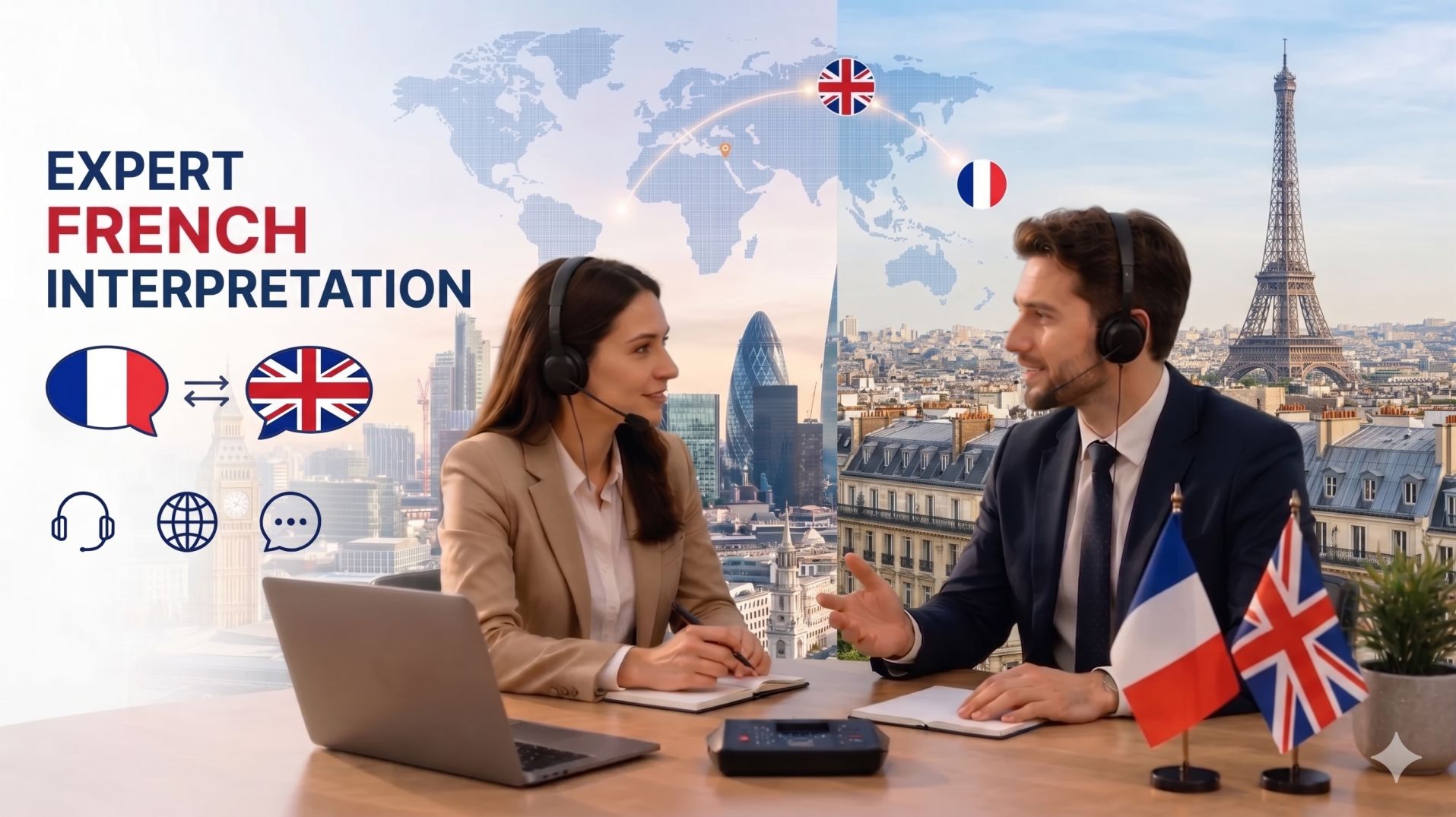
Securing a qualified French interpreter in Basildon is paramount for effective communication across a multitude of critical sectors within the UK’s professional landscape. Whether navigating the complexities of His Majesty’s Courts and Tribunals Service (HMCTS), ensuring patient safety within the National Health Service (NHS) via trusts such as the North East London NHS Foundation Trust or the East Suffolk and North Essex NHS Foundation Trust, or facilitating international business dealings, the need for precise linguistic support cannot be overstated. This guide delves into the essential considerations for engaging French interpretation and translation services in Basildon, highlighting the regulatory frameworks, professional standards, and local economic context that underpin these vital services.
Translation vs Interpretation
While often used interchangeably, translation and interpretation are distinct linguistic disciplines, each requiring specialised skills and adhering to different professional standards. Interpretation involves the live, oral conversion of spoken language from one tongue to another, demanding immediate comprehension, recall, and accurate rendering. This is crucial in real-time interactions such as court hearings, medical consultations, or business meetings. A skilled French interpreter in Basildon must possess not only fluency in both French and English but also a deep understanding of cultural nuances, legal terminology, and the specific context of the communication. Conversely, translation deals with the written word, converting documents, reports, and other textual materials from one language to another. This process allows for more deliberation, research, and editing to ensure accuracy and fidelity to the source text. For legal documents, medical records, or corporate literature, a professional French translator in Basildon is essential, ensuring that written information is conveyed with the same precision as spoken communication. Both professions are vital, but their application and required skill sets differ significantly, with interpreters often needing to be registered with bodies like the National Register of Public Service Interpreters (NRPSI) for public sector work, while translators might seek accreditation from organisations like the Chartered Institute of Linguists (CIOL).
Legal Defence, Immigration, and Courtroom Interpretation
The administration of justice in the UK relies heavily on the principle of equal access to legal representation and fair trial, regardless of a party’s linguistic background. For individuals involved in legal proceedings in Basildon or elsewhere in the UK who speak French, the provision of qualified interpreters is a statutory right. His Majesty’s Courts and Tribunals Service (HMCTS) mandates the use of accredited interpreters for criminal and civil cases, ensuring that defendants, witnesses, and victims can fully understand proceedings and express themselves clearly. This includes cases heard in Magistrates’ Courts, Crown Courts, and various tribunals under the HMCTS umbrella. The His Majesty’s Courts and Tribunals Service (HMCTS) operates under strict guidelines to ensure the impartiality and competence of interpreters. Professional interpreters working in this domain are typically registered with the NRPSI or hold qualifications such as the Diploma in Public Service Interpreting (DPSI), demonstrating their proficiency in legal terminology and ethical conduct. Immigration law is another area where French interpretation is critical. The Home Office and the First-tier Immigration Tribunal frequently require interpreters for asylum claims, visa applications, and deportation hearings. Ensuring accurate communication between French-speaking individuals and immigration officials or legal representatives is vital for fair processing and adherence to UK immigration law. The Immigration and Asylum Chamber relies on interpreters to bridge language barriers, preventing miscarriages of justice. Furthermore, solicitors and barristers in Basildon often require interpreters for client consultations, police station interviews, and case preparation, underscoring the indispensable role of professional French interpreters in the UK legal system. The Ministry of Justice oversees many of these services, ensuring standards are met.
Healthcare and NHS Patient Safety
Patient safety and equitable access to healthcare are cornerstones of the UK’s National Health Service (NHS). For French-speaking patients in Basildon, effective communication with healthcare professionals is not merely a matter of convenience but a fundamental requirement for accurate diagnosis, treatment, and informed consent. The Care Quality Commission (CQC), the independent regulator of health and social care in England, emphasizes the importance of effective communication in ensuring high-quality care. NHS trusts, including those serving Basildon, are obligated to provide language support services to patients who require them. This includes ensuring access to qualified French interpreters for consultations, hospital admissions, emergency care, and the explanation of complex medical information. The NHS Business Services Authority provides guidance on language services, aligning with NHS England’s Language Access guidelines. These guidelines stress the need for interpreters to be competent, impartial, and professional, particularly when dealing with sensitive medical information. The use of unqualified interpreters or family members can lead to misunderstandings, errors in diagnosis, and compromised patient safety, violating the principles of UK GDPR regarding data protection and consent. Therefore, engaging professional French interpreters who understand medical terminology and ethical protocols is crucial for all healthcare interactions. This ensures that French-speaking patients receive the same standard of care and have the same opportunity to make informed decisions about their health as their English-speaking counterparts. The Department of Health and Social Care sets the overarching policy framework for the NHS.
Technical Interpretation Modalities
The effectiveness of interpretation hinges on selecting the appropriate modality for the specific situation. French interpreters in Basildon employ several techniques, each suited to different communication environments:
- Simultaneous Interpretation: This is the most demanding form, where the interpreter speaks the translated message almost concurrently with the original speaker, typically with only a few seconds’ delay. It requires intense concentration and is often used in conferences, large meetings, or live broadcasts where immediate understanding is critical. Specialist equipment, such as soundproof booths and headsets, is usually required.
- Consecutive Interpretation: In this mode, the interpreter waits for the speaker to pause or finish a segment of speech before rendering the message in the target language. This allows for greater accuracy and is suitable for smaller meetings, legal depositions, medical appointments, or one-on-one discussions where the flow of conversation is less rapid.
- Escort Interpretation (Liaison Interpretation): This involves the interpreter accompanying a client to meetings, site visits, or social events, facilitating communication between parties who do not share a common language. The interpreter acts as a bridge, interpreting in both directions, often in a more informal setting. This is common for business delegations or international visitors.
- Remote Interpretation (Video/Telephone): With advancements in technology, remote interpretation has become increasingly prevalent. Using video conferencing platforms or telephone lines, interpreters can provide services to clients anywhere, offering flexibility and cost-effectiveness. This modality is suitable for a wide range of situations, from quick phone calls to longer virtual meetings, provided there is a stable internet connection and appropriate audio/visual quality. Professional bodies like the International Association of Conference Interpreters (AIIC) provide standards for these modalities.
Economic and Social Fabric of Basildon
Basildon, a significant economic hub within Essex, possesses a diverse and dynamic economic landscape that necessitates robust linguistic support. Understanding the local context is key for professional service providers, including French interpreters and translators.
Corporate and Industry
Basildon has a strong industrial and commercial heritage, with a notable presence in sectors such as advanced manufacturing, logistics, and retail. Many international companies operate within or have strong ties to the region, creating a demand for French language services in business negotiations, contract finalisation, technical documentation, and inter-company communication. The Basildon Council actively supports local businesses, and international trade is a key component of its economic strategy. Professional French interpreters and translators are vital for facilitating these cross-border business activities, ensuring that UK companies can effectively engage with French-speaking markets and vice versa.
Tourism
While perhaps not a primary international tourist destination, Basildon and its surrounding areas attract visitors from various countries, including France. The hospitality sector, local attractions, and event organisers may require French language support to cater to these visitors, enhancing their experience and promoting local businesses. This can range from translated marketing materials to on-site interpretation services for tours or events.
Legal Infrastructure
Basildon has a well-established legal infrastructure, including local law firms and access to HMCTS facilities. These legal entities frequently encounter clients or cases involving French speakers, necessitating the services of qualified French interpreters and translators. This is particularly true for areas of law such as family law, property conveyancing, and commercial disputes, where clear communication is essential for client representation and case resolution. The presence of His Majesty’s Courts and Tribunals Service (HMCTS) in the vicinity means that interpreters are frequently required for court proceedings.
NHS Healthcare
As previously detailed, the NHS is a significant employer and service provider in Basildon. The diverse population served by local NHS trusts, such as the North East London NHS Foundation Trust and the East Suffolk and North Essex NHS Foundation Trust, means that French-speaking patients are a reality. Ensuring these patients receive comprehensive and understandable healthcare requires a consistent supply of professional French interpreters, supporting both patient well-being and the operational efficiency of healthcare services. The Care Quality Commission (CQC) monitors the quality of these services.
Local Infrastructure and Transport
Basildon benefits from strong transport links, being strategically located within Essex with good road and rail connections to London and other major centres. The A127 and A13 provide key arterial routes, while National Rail services offer frequent connections. This accessibility is crucial for professional interpreters and translators who may need to travel to various locations within Basildon and the wider region for assignments. Reliable transport infrastructure ensures that interpreters can reach courtrooms, hospitals, corporate offices, and client premises promptly, maintaining the punctuality and professionalism expected in public service and business contexts. The Essex Highways department manages the local road network, and National Rail Enquiries provides train service information, both vital for understanding local connectivity.
Conclusion
For any organisation or individual requiring linguistic assistance in Basildon, engaging a professional French interpreter in Basildon is not merely a logistical step but a critical investment in clarity, accuracy, and compliance with UK standards. From the stringent requirements of HMCTS and the vital patient safety protocols of the NHS to the nuanced demands of international business, the role of a qualified interpreter is indispensable. By understanding the different modalities, adhering to professional standards set by bodies like the NRPSI and CIOL, and appreciating the local economic context, clients can ensure they receive the highest quality of French interpretation and translation services. This commitment to professional linguistic support underpins fair legal processes, effective healthcare delivery, and successful commercial ventures throughout the UK.