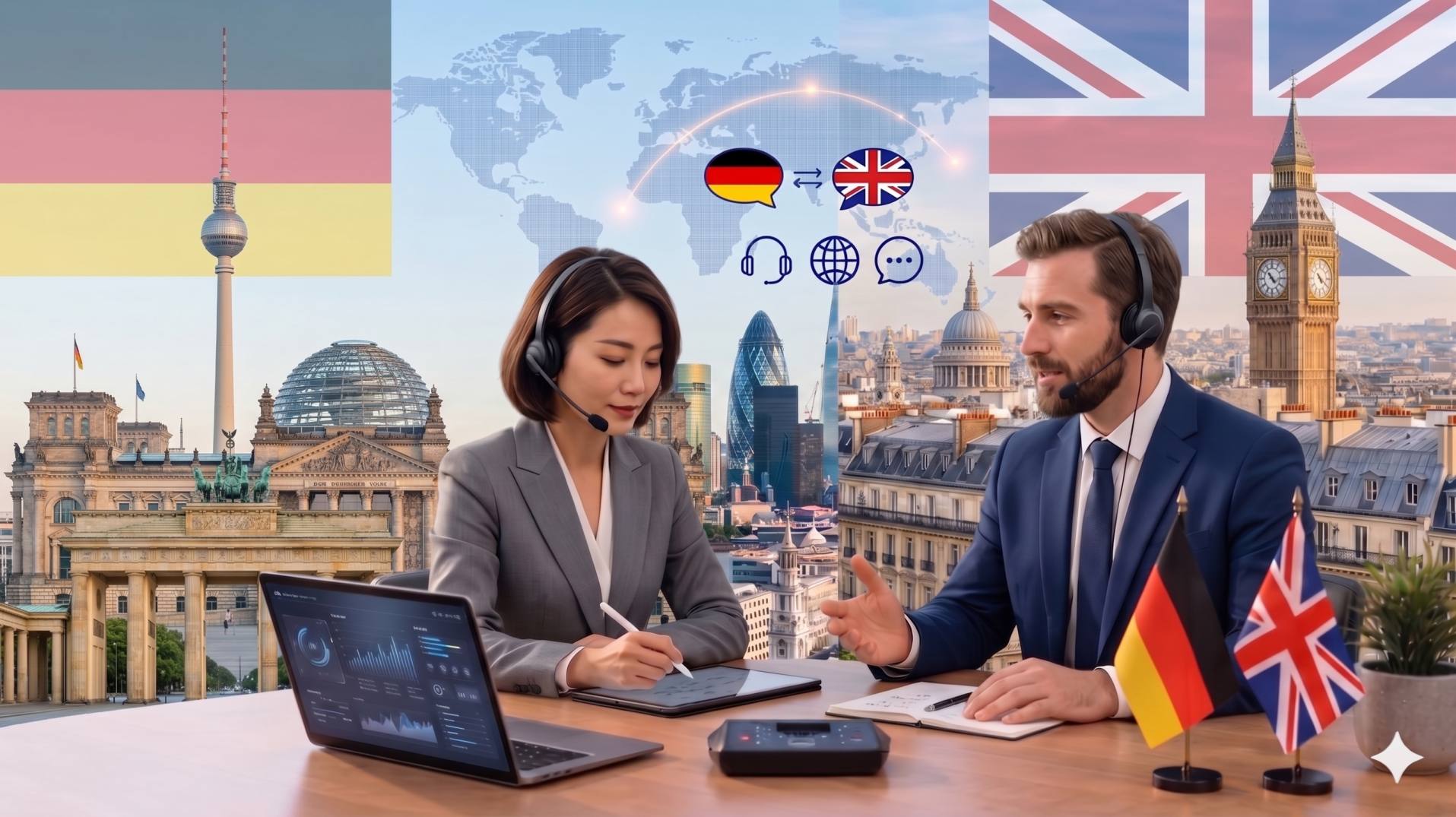
Securing a qualified German interpreter in Blackburn with Darwen is paramount for effective communication across critical sectors within the UK’s professional landscape. Whether navigating the complexities of legal proceedings, ensuring patient safety within the National Health Service (NHS), or facilitating international business transactions, the need for precise and culturally nuanced language services cannot be overstated. Blackburn with Darwen is served by vital NHS trusts, including East Lancashire Hospitals NHS Trust and Blackburn with Darwen Teaching NHS Trust (though the latter is now integrated into the East Lancashire Hospitals NHS Trust structure, its legacy and local focus remain significant), underscoring the importance of accessible language support for all residents. This guide explores the multifaceted role of German interpreters and translators in Blackburn with Darwen, highlighting their indispensable contribution to justice, healthcare, and commerce, all within the framework of UK regulations and standards.
Translation vs Interpretation
While often used interchangeably in casual conversation, translation and interpretation are distinct linguistic disciplines, each requiring specialised skills and training. Understanding this difference is crucial when seeking language support for your specific needs in Blackburn with Darwen. Interpretation involves the real-time, oral conversion of spoken or signed language from one language to another. This demands not only fluency in both German and English but also exceptional listening comprehension, memory recall, and the ability to think quickly under pressure. A German interpreter in Blackburn with Darwen must be adept at conveying not just the words but also the tone, intent, and cultural context of the speaker. This is vital in high-stakes environments such as courtrooms, medical consultations, or business negotiations where miscommunication can have severe consequences. Conversely, translation deals with the written word. A German translator in Blackburn with Darwen works with documents, converting written text from German to English or vice versa. This process allows for more deliberate reflection, research, and editing to ensure accuracy and fidelity to the original text. Professional translators often specialise in specific fields, such as legal, medical, or technical translation, ensuring that terminology is precise and appropriate for the target audience. For instance, translating a legal contract requires a different skillset and knowledge base than translating a marketing brochure. Both services are essential for businesses and organisations operating in Blackburn with Darwen, but their application depends entirely on whether the communication is spoken or written.
Legal Defence, Immigration, and Courtroom Interpretation
The administration of justice in the United Kingdom relies heavily on the principle of fairness and equal access to legal representation, regardless of an individual’s linguistic background. For German speakers involved in legal matters in Blackburn with Darwen, access to qualified interpreters is a fundamental right. His Majesty’s Courts and Tribunals Service (HMCTS) mandates the provision of interpreters in criminal and civil proceedings where a language barrier exists. This ensures that defendants, witnesses, and victims can fully understand the proceedings and participate effectively. Professional interpreters working within the UK legal system must adhere to strict codes of conduct, often requiring accreditation from bodies such as the National Register of Public Service Interpreters (NRPSI) or holding qualifications like the Diploma in Public Service Interpreting (DPSI). These qualifications signify a high level of competence and ethical understanding, essential for maintaining the integrity of court proceedings. Immigration law is another area where precise interpretation is critical. The UK Visas and Immigration (UKVI) department, part of the Home Office, processes applications and conducts interviews where German speakers may need to provide evidence or explanations. Accurate interpretation ensures that all information is conveyed correctly to UKVI officials, preventing misunderstandings that could impact visa applications or asylum claims. The First-tier Immigration Tribunal also relies on skilled interpreters to ensure that appellants can present their cases effectively. Law firms in Blackburn with Darwen that represent clients with German language needs must engage interpreters who are not only linguistically proficient but also familiar with legal terminology and procedures as defined by UK law. The role of the interpreter extends beyond mere word-for-word conversion; it involves facilitating clear communication between legal professionals and their German-speaking clients, ensuring that legal rights are protected and understood. The professional standards set by the NRPSI and the DPSI are benchmarks for quality and impartiality in this sensitive domain.
Healthcare and NHS Patient Safety
Patient safety within the NHS is a cornerstone of healthcare delivery in the UK, and effective communication is integral to achieving this. For German-speaking patients in Blackburn with Darwen, accessing healthcare services without a language barrier is crucial for accurate diagnosis, treatment, and informed consent. The NHS is committed to providing language support to ensure that all patients, regardless of their primary language, receive equitable care. This commitment is guided by NHS England’s Language Access guidelines and underpinned by the principles of the UK General Data Protection Regulation (UK GDPR), which mandates the protection of sensitive personal information. Interpreters play a vital role in consultations with General Practitioners (GPs), specialists, nurses, and other healthcare professionals. They facilitate communication during appointments, ensuring that patients understand medical advice, treatment options, and medication instructions. This is particularly important in complex cases or when discussing sensitive health issues. The Care Quality Commission (CQC), the independent regulator of health and social care services in England, emphasizes the importance of effective communication in its inspections, recognising that language barriers can pose significant risks to patient safety. Blackburn with Darwen’s healthcare providers, including those within the East Lancashire Hospitals NHS Trust, are expected to have robust systems in place for accessing qualified interpreters. This may involve in-house language services or partnerships with professional interpreting agencies. The use of unqualified interpreters, such as family members or friends, is strongly discouraged due to potential conflicts of interest, lack of professional training, and the risk of misinterpreting crucial medical information. Professional medical interpreters are trained to handle confidential information with discretion and to convey medical terminology accurately, ensuring that both the patient and the healthcare provider have a clear and complete understanding. This adherence to professional standards ensures that the quality of care provided to German-speaking patients in Blackburn with Darwen is on par with that of English-speaking patients, upholding the core values of the NHS.
Technical Interpretation Modalities
The effective delivery of interpretation services in Blackburn with Darwen, particularly for professional settings, requires an understanding of various modalities, each suited to different communication contexts. The choice of modality significantly impacts the flow of conversation and the level of engagement. Consecutive interpretation is perhaps the most common form used in one-on-one meetings, small group discussions, or medical appointments. In this mode, the interpreter listens to a segment of speech, waits for the speaker to pause, and then renders the message in the target language. This allows for a natural conversational flow, though it inherently doubles the time required for communication. Simultaneous interpretation is employed in larger settings such as conferences, seminars, or formal presentations where speed and efficiency are paramount. Here, the interpreter listens to the speaker and renders the message into the target language with minimal delay, often speaking into a microphone while the original speaker continues. This requires highly specialised skills and often involves the use of soundproof booths and specialised equipment. For business travel or less formal but important meetings, escort interpretation (also known as liaison interpretation) is often used. The interpreter accompanies clients, facilitating communication in various settings, from factory visits to social events. This role requires not only linguistic skill but also cultural awareness and discretion. In recent years, remote interpretation (also known as telephonic or video interpretation) has become increasingly prevalent, especially for situations where face-to-face interaction is not feasible or cost-effective. This modality leverages technology to connect interpreters with clients via phone or video conferencing platforms. While offering flexibility and accessibility, it requires reliable technology and careful consideration of potential technical challenges. For businesses and organisations in Blackburn with Darwen, selecting the appropriate interpretation modality is key to achieving their communication objectives. Whether it’s a crucial legal deposition, a complex medical consultation, or an international business negotiation, the right modality, delivered by a qualified professional, ensures clarity, accuracy, and success.
Economic and Social Fabric of Blackburn with Darwen
Blackburn with Darwen, a borough in Lancashire, possesses a rich industrial heritage and a dynamic contemporary economy. Understanding its economic and social fabric is essential for businesses and organisations seeking to engage with the local community and leverage its resources. The presence of a German-speaking population, however small, necessitates language services to ensure inclusivity and facilitate economic participation. The borough’s economic landscape is diverse, with strengths in manufacturing, advanced engineering, and the digital sector, alongside a growing service economy. Professional language services, including German interpretation and translation, play a crucial role in supporting these sectors.
Corporate/Industry
The industrial base of Blackburn with Darwen, historically strong in textiles, has evolved to encompass advanced manufacturing, engineering, and technology. Companies operating in these sectors, particularly those with international supply chains or export markets that include German-speaking countries, require professional German language support. This can range from translating technical manuals and product specifications to facilitating negotiations with German suppliers or clients. The availability of a skilled German interpreter in Blackburn with Darwen can provide a competitive edge, enabling local businesses to forge stronger international partnerships and tap into new markets. Furthermore, as the region attracts foreign investment, German-speaking investors or business partners will require reliable interpretation services to understand local opportunities and regulations.
Tourism
While perhaps not a primary international tourism hub, Blackburn with Darwen and the wider Lancashire region attract visitors for various reasons, including historical sites, cultural events, and business-related travel. German tourists or business visitors may require assistance with navigation, accommodation, or accessing local services. Providing information in German, or having access to interpreters, can enhance the visitor experience and encourage repeat visits. Local businesses in the hospitality and retail sectors can benefit from having multilingual staff or readily available interpretation services to cater to a diverse clientele.
Legal Infrastructure
Blackburn with Darwen has a well-established legal infrastructure, including local law firms and access to His Majesty’s Courts and Tribunals Service (HMCTS) facilities. For German-speaking individuals or businesses involved in legal disputes, contractual agreements, or property transactions within the borough, access to qualified German legal interpreters is indispensable. Law firms specialising in areas such as corporate law, family law, or conveyancing need to ensure their German-speaking clients fully comprehend all legal documentation and proceedings. The presence of accredited interpreters ensures that justice is accessible and that legal processes are conducted fairly, adhering to UK legal standards.
NHS Healthcare
As previously detailed, the National Health Service (NHS) is a critical component of the local infrastructure. The East Lancashire Hospitals NHS Trust and other local health providers serve a diverse population. For German-speaking residents, ensuring they can communicate effectively with healthcare professionals is a matter of patient safety and quality of care. The availability of professional German interpreters facilitates accurate diagnosis, treatment adherence, and informed consent, aligning with the CQC’s standards for effective communication and the NHS’s commitment to equitable care for all.
Local Infrastructure and Transport
Blackburn with Darwen benefits from a robust local infrastructure that supports its economic and social functions. The borough is well-connected by road, with the M65 motorway providing easy access to the wider motorway network, including links to major cities like Manchester and Leeds. This connectivity is vital for businesses involved in logistics, distribution, and national operations. Public transport services, including local bus routes and train services connecting to national rail networks, further enhance accessibility. For businesses requiring the services of a German interpreter in Blackburn with Darwen, these transport links ensure that interpreters can reach various locations efficiently, whether it’s a corporate office, a legal firm, or a healthcare facility. The availability of reliable transport infrastructure also supports remote interpretation services, allowing interpreters to connect with clients across the region or even nationally without the need for extensive travel. Understanding the local infrastructure helps in planning and executing language support services seamlessly, ensuring that communication barriers are minimised across all professional interactions within Blackburn with Darwen and beyond.
Conclusion
In conclusion, the need for a professional German interpreter in Blackburn with Darwen extends across numerous vital sectors, from the courtroom to the hospital ward and the corporate boardroom. Ensuring access to qualified, accredited interpreters is not merely a matter of convenience but a fundamental requirement for upholding justice, safeguarding patient health, and fostering economic growth within the UK’s regulatory framework. Organisations and individuals requiring German language services in Blackburn with Darwen should prioritise engaging interpreters who adhere to the stringent professional standards set by bodies like the NRPSI and DPSI, and who understand the specific legal, medical, and cultural contexts of the United Kingdom. By investing in high-quality interpretation and translation services, businesses and public sector bodies can ensure clear, accurate, and effective communication, ultimately contributing to the success and well-being of the community.