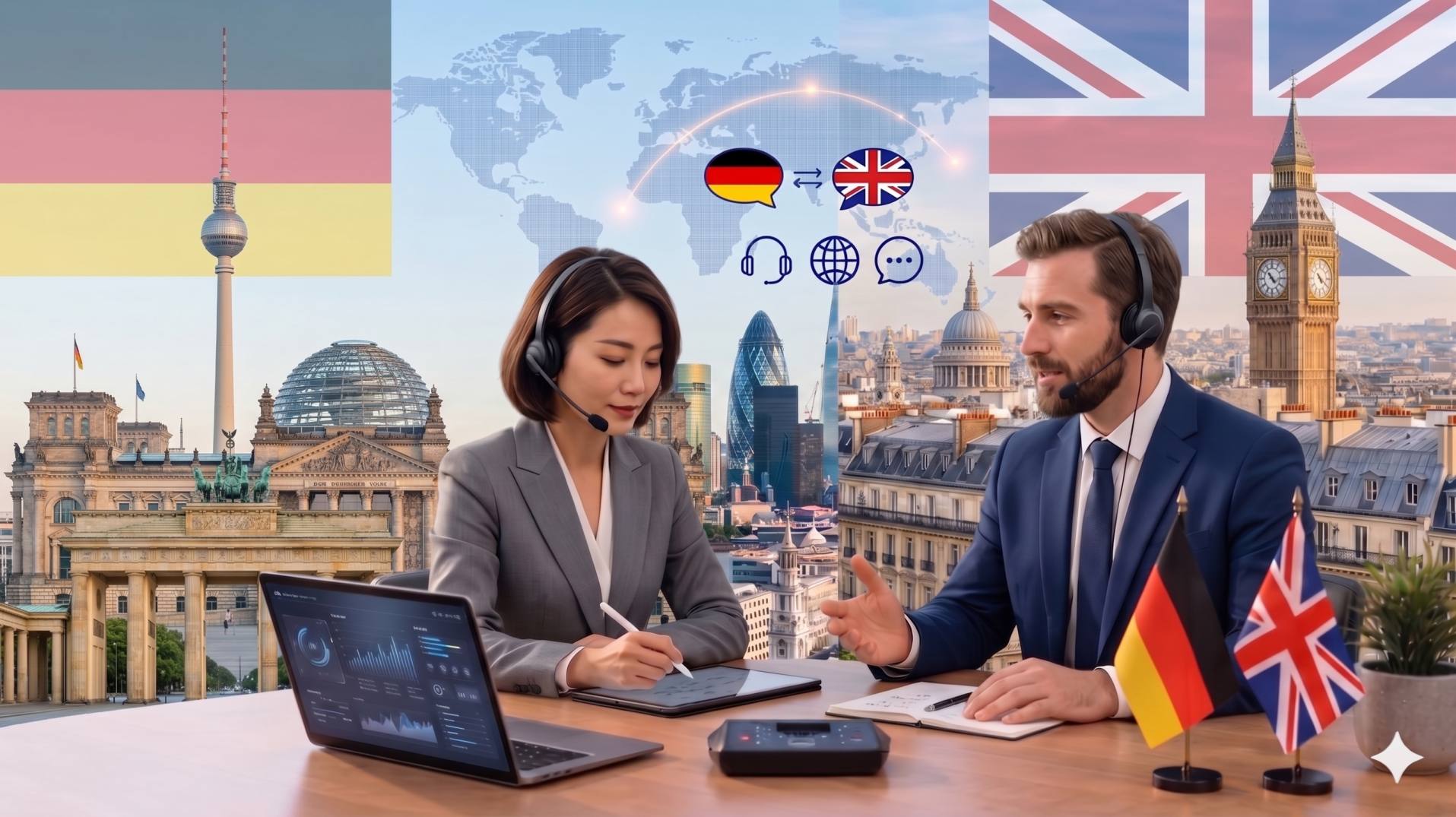
Securing a qualified German interpreter in Bristol is paramount for effective communication across diverse professional sectors within the United Kingdom. Whether engaging with legal proceedings, navigating complex healthcare scenarios, or fostering international business relationships, the need for precise and culturally nuanced interpretation is non-negotiable. Bristol, a vibrant hub of commerce and innovation, relies heavily on seamless communication to maintain its economic dynamism and ensure equitable access to essential services. This is particularly true for individuals and organisations requiring German language expertise, whether for intricate legal matters heard before His Majesty’s Courts and Tribunals Service (HMCTS), critical consultations within the National Health Service (NHS) – such as those provided by University Hospitals Bristol and Weston NHS Foundation Trust or North Bristol NHS Trust – or vital interactions with the Home Office. Our services ensure that language barriers do not impede justice, patient safety, or commercial success.
Translation vs Interpretation: Understanding the Nuances
While often used interchangeably, translation and interpretation are distinct disciplines requiring different skill sets and methodologies. Understanding this difference is crucial when seeking linguistic support, especially when the primary keyword is “German interpreter in Bristol.” Interpretation involves the real-time, spoken rendition of a message from one language to another. It demands not only linguistic proficiency but also exceptional memory, cultural awareness, and the ability to think on one’s feet. Interpreters must convey not just the words, but the tone, intent, and cultural context of the speaker. This is vital in live settings such as courtrooms, medical examinations, or business negotiations. Conversely, translation deals with the written word, converting documents, websites, or other textual materials from one language to another. This process allows for more time for research, editing, and refinement to ensure accuracy and fidelity to the source text. For legal documents, medical records, or technical manuals, a skilled German translator in Bristol is essential, ensuring that the written word accurately reflects its original meaning and adheres to UK legal and professional standards. The demand for both services underscores Bristol’s international connections and its commitment to inclusivity.
Legal Defence, Immigration, and Courtroom Interpretation
The UK legal system is built on principles of fairness and access to justice for all. For individuals who do not speak English as a first language, this principle is upheld through the provision of qualified interpreters. In Bristol, as across the UK, the need for accurate German interpretation in legal settings is critical. This spans a wide range of proceedings, from initial police interviews conducted under the Police and Criminal Evidence Act 1984 (PACE), to appearances before His Majesty’s Courts and Tribunals Service (HMCTS), including the Magistrates’ Court, Crown Court, and civil courts. Professional interpreters are bound by strict codes of conduct, often regulated by bodies such as the National Register of Public Service Interpreters (NRPSI) or holding qualifications like the Diploma in Public Service Interpreting (DPSI). These qualifications ensure a high standard of impartiality, confidentiality, and accuracy. In immigration matters, interpreters are crucial for applications processed by the UK Visas and Immigration (UKVI), appeals heard at the First-tier Immigration Tribunal, and asylum seeker interviews. The integrity of the legal process, from initial contact with solicitors to final judgments delivered from institutions like the Royal Courts of Justice, hinges on the clarity and precision provided by a competent German interpreter.
Healthcare and NHS Patient Safety
Patient safety and equitable access to healthcare are cornerstones of the UK’s National Health Service (NHS). For German-speaking patients in Bristol, effective communication with healthcare professionals is not merely a matter of convenience but a fundamental aspect of receiving safe and appropriate care. The NHS is committed to ensuring that all patients, regardless of their linguistic background, can understand their diagnosis, treatment options, and care plans. This commitment is guided by NHS England’s Language Access guidelines. Qualified German interpreters play a vital role in facilitating these crucial interactions within hospitals such as University Hospitals Bristol and Weston NHS Foundation Trust and North Bristol NHS Trust, as well as in community health settings and General Practitioner (GP) surgeries. Interpreters must adhere to strict confidentiality protocols, aligning with UK General Data Protection Regulation (UK GDPR) principles and the professional standards set by bodies like the NRPSI. The Care Quality Commission (CQC), which monitors and rates health and social care services, also emphasises the importance of effective communication in ensuring high-quality patient care. A failure in communication can lead to misdiagnosis, incorrect treatment, or adverse events, underscoring the critical need for professional German interpretation services in Bristol’s healthcare ecosystem.
Technical Interpretation Modalities
The nature of the communication task dictates the most appropriate interpretation modality. For a German interpreter in Bristol, proficiency in various techniques ensures flexibility and effectiveness across different scenarios. Simultaneous interpretation is often employed in conferences, large meetings, or broadcasts where the interpreter, usually working from a soundproof booth with specialised equipment, renders the speech in the target language with minimal delay. This requires intense concentration and rapid processing. Consecutive interpretation is more common in smaller settings, such as legal consultations, medical appointments, or one-on-one business meetings. Here, the interpreter listens to a segment of speech, then renders it in the target language after the speaker has finished. This allows for greater accuracy and the opportunity for clarification. Escort interpretation, also known as liaison interpretation, facilitates communication between parties speaking different languages in informal settings, such as business tours, site visits, or social events. The interpreter acts as a cultural bridge, ensuring smooth dialogue. In the modern era, remote interpretation (also known as Video Remote Interpreting – VRI, or Over-the-Phone Interpreting – OPI) has become increasingly prevalent. This modality allows clients to connect with interpreters via telephone or video conferencing platforms, offering a cost-effective and efficient solution for situations where an on-site interpreter is not feasible or necessary. This is particularly relevant for ongoing communication needs or when accessing specialised linguistic expertise not readily available locally.
Economic and Social Fabric of Bristol
Bristol’s rich history and forward-looking economy create a dynamic environment where German language skills are increasingly valuable. The city’s diverse economic landscape necessitates professional interpretation and translation services to bridge linguistic divides and foster robust relationships.
Corporate and Industry Engagement
Bristol is a significant centre for various industries, including aerospace, advanced engineering, creative media, and the burgeoning tech sector. Many of these industries have strong ties to Germany, a leading European economy. German companies may have subsidiaries or partnerships in Bristol, or UK-based firms may be seeking to expand into German markets. In this context, a German interpreter is indispensable for high-level negotiations, technical discussions, product launches, and inter-company communications. Ensuring that contracts, technical specifications, and marketing materials are accurately translated, and that meetings are conducted smoothly, is vital for commercial success and maintaining professional standards. The Chamber of Commerce in the region often supports businesses with international dealings, highlighting the demand for such linguistic support.
Tourism and Cultural Exchange
Bristol is a popular tourist destination, attracting visitors from around the globe, including a significant number from Germany. The hospitality sector, including hotels, restaurants, museums, and attractions, benefits greatly from the availability of German-speaking staff or, at minimum, access to professional interpretation services for visitor information and support. Facilitating a positive visitor experience through clear communication enhances Bristol’s reputation as a welcoming city and encourages repeat tourism and positive word-of-mouth referrals. Cultural institutions and event organisers also rely on interpreters to ensure accessibility for German-speaking attendees and participants, fostering international cultural exchange.
Legal Infrastructure
Bristol boasts a well-established legal sector, with numerous law firms specialising in various areas of law, including corporate law, commercial litigation, and immigration. These firms frequently represent clients with international interests, including those from German-speaking countries. The need for German interpreters is therefore consistent within Bristol’s legal community, supporting solicitors and barristers in client consultations, evidence gathering, and court appearances before HMCTS. Ensuring compliance with UK legal standards and providing accurate communication is paramount for successful case outcomes.
NHS Healthcare Services
As previously mentioned, Bristol’s healthcare system, managed by trusts like University Hospitals Bristol and Weston NHS Foundation Trust and North Bristol NHS Trust, serves a diverse population. The presence of German-speaking residents and visitors necessitates robust language support services. Professional interpreters ensure that all patients can fully participate in their healthcare decisions, understand medical advice, and receive care that is both effective and culturally sensitive, adhering to the principles of the NHS Business Services Authority and national guidelines.
Local Infrastructure and Transport
Bristol’s infrastructure plays a crucial role in facilitating communication and connectivity, both domestically and internationally. The city is served by Bristol Airport (BRS), which handles numerous flights to European destinations, including Germany, making it a key gateway for international travellers and business professionals. Efficient transport links within the city and to surrounding areas are managed by entities like Transport for Greater Bristol. For German-speaking individuals arriving or residing in Bristol, navigating these transport systems, accessing information, and communicating with service providers is made significantly easier with the availability of professional interpretation services. This ensures that the city remains accessible and functional for all its residents and visitors, supporting the seamless flow of people and commerce that underpins Bristol’s economic vitality.
In conclusion, the demand for a skilled German interpreter in Bristol is multifaceted, driven by the city’s vibrant economy, its role as a legal and healthcare hub, and its international connections. Ensuring access to qualified professionals who adhere to UK standards is not just a service requirement but a fundamental necessity for justice, safety, and prosperity. We provide expert interpretation services tailored to the specific needs of corporate clients, legal professionals, healthcare providers, and government agencies across Bristol and the wider UK.