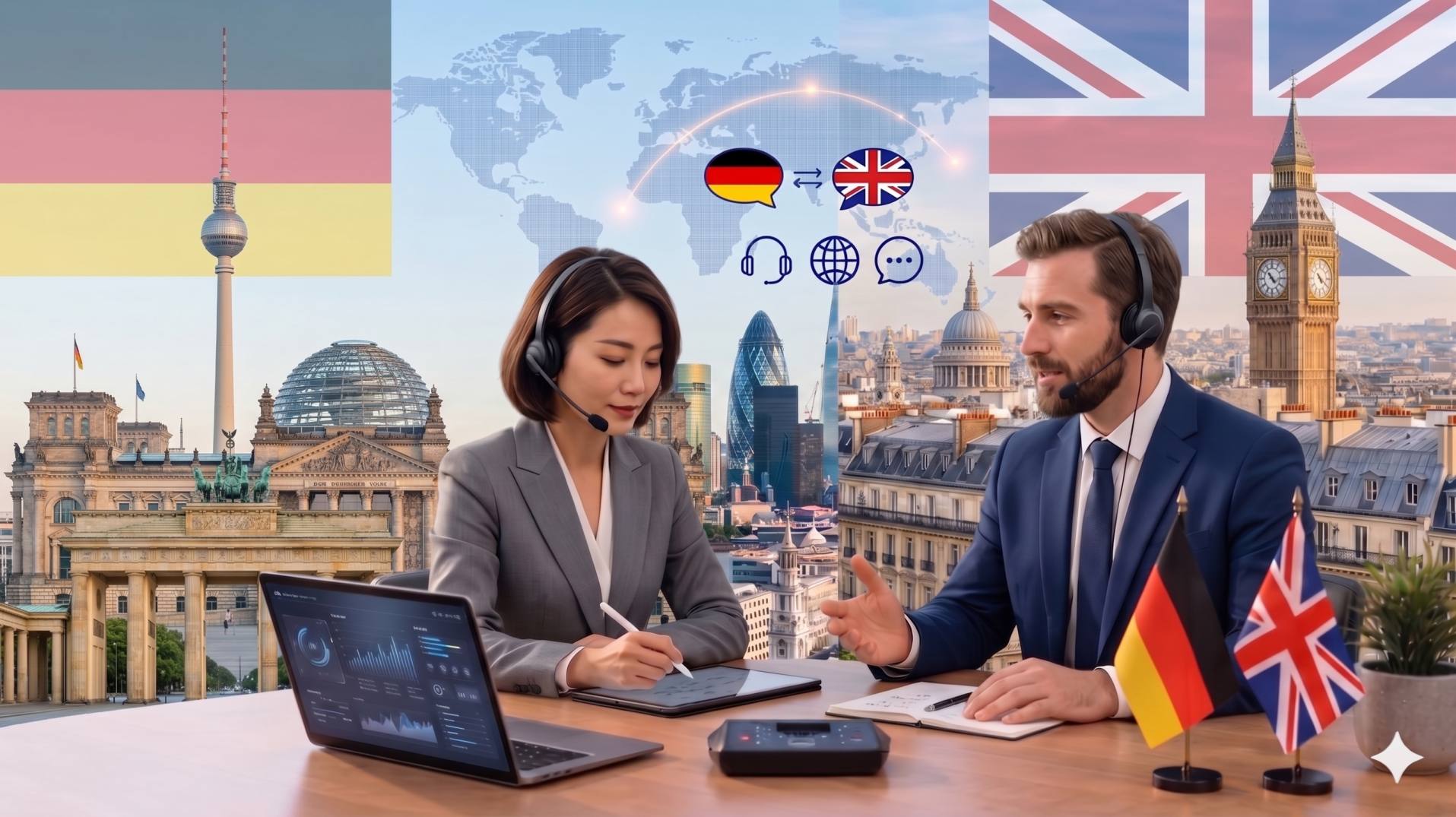
Securing a qualified German interpreter in Eastbourne is paramount for effective communication across a multitude of professional sectors within the United Kingdom. Whether navigating the complexities of the UK’s legal system, ensuring patient safety within the National Health Service (NHS), or facilitating international business dealings, the need for precise and culturally sensitive interpretation cannot be overstated. Eastbourne, a vibrant coastal town in East Sussex, is served by key healthcare providers including the East Sussex Healthcare NHS Trust (https://www.esht.nhs.uk/) and the Sussex Partnership NHS Foundation Trust (https://www.sussexpartnership.nhs.uk/), both of which operate under stringent NHS England Language Access guidelines. These guidelines underscore the critical role of professional interpreters in ensuring equitable access to healthcare for all patients, regardless of their linguistic background. This document outlines the essential considerations for engaging German interpretation services in Eastbourne, focusing on UK legal, medical, and business contexts, and highlighting the importance of adhering to UK professional standards.
Translation vs Interpretation
While often used interchangeably in casual conversation, translation and interpretation are distinct linguistic disciplines, each requiring a unique skill set and adherence to specific professional standards within the UK. Interpretation involves the real-time, spoken rendition of meaning from one language to another. This is crucial in live settings such as court hearings, medical consultations, business meetings, and conferences. A professional German interpreter in Eastbourne must possess not only fluency in both German and English but also a deep understanding of the cultural nuances, idiomatic expressions, and subject-specific terminology relevant to the context. Professional bodies like the National Register of Public Service Interpreters (NRPSI) (https://www.nrpsi.uk/) and the Diploma in Public Service Interpreting (DPSI) set the benchmark for public service interpreters in the UK, ensuring a high standard of competence and ethical conduct. Conversely, translation deals with the written word, converting documents, websites, and other textual materials from one language to another. This process allows for more time for research, editing, and proofreading to ensure accuracy and fidelity to the source text. For businesses and legal professionals in Eastbourne requiring written German documents translated, engaging a qualified German translator in Eastbourne is essential. The Chartered Institute of Linguists (CIOL) (https://www.ciol.org.uk/) and the Association of Translation Companies (ATC) (https://www.atc.org.uk/) represent professional standards in the translation industry, offering guidance and accreditation for translation services.
Legal Defence, Immigration, and Courtroom Interpretation
The UK justice system, governed by His Majesty’s Courts and Tribunals Service (HMCTS), mandates the provision of qualified interpreters to ensure fair trials and access to justice for individuals who do not speak English as a first language. For German speakers involved in legal proceedings in or around Eastbourne, securing a certified German interpreter in Eastbourne is not merely a convenience but a fundamental right. This applies to all levels of the judicial system, from magistrates’ courts to the Crown Court, and extends to tribunals such as the First-tier Immigration Tribunal. The NRPSI and the DPSI qualification are key indicators of a public service interpreter’s competence and adherence to a strict code of conduct, which includes impartiality, confidentiality, and accuracy. Law firms and legal aid agencies in Eastbourne must ensure that any German interpreter engaged for their clients meets these rigorous UK professional standards. Failure to do so can have serious implications for the outcome of legal cases. The Home Office, through UK Visas and Immigration (UKVI), also requires accurate interpretation for asylum claims, visa applications, and other immigration-related interviews. Professional interpreters play a vital role in ensuring that the nuances of a client’s testimony or application are accurately conveyed to immigration officials, thereby upholding the principles of natural justice. The Royal Courts of Justice in London, as the seat of the Court of Appeal and the High Court, also relies on highly skilled interpreters for complex international cases, underscoring the national importance of this profession.
Healthcare and NHS Patient Safety
Patient safety and effective communication are cornerstones of the NHS. For German-speaking patients in Eastbourne, accessing healthcare services provided by the East Sussex Healthcare NHS Trust and the Sussex Partnership NHS Foundation Trust requires reliable interpretation. NHS England’s Language Access Policy mandates that NHS bodies take all reasonable steps to ensure that patients have access to interpreters and translated information when they need it. This is crucial for informed consent, accurate diagnosis, effective treatment, and overall patient well-being. A professional German interpreter working within the NHS must not only be linguistically proficient but also understand medical terminology and the sensitive nature of healthcare interactions. They must adhere to the principles of confidentiality, as stipulated by UK GDPR, and maintain professional boundaries. The Care Quality Commission (CQC) (https://www.cqc.org.uk/), the independent regulator of health and social care in England, inspects services to ensure they are safe, effective, caring, responsive, and well-led. The availability of competent language support is a key factor in assessing the ‘responsive’ and ‘effective’ domains. Engaging interpreters who are registered with the NRPSI or hold a DPSI qualification ensures a level of professional accountability and competence that aligns with NHS requirements. Furthermore, understanding the specific needs of patients, such as those with mental health conditions being treated by the Sussex Partnership NHS Foundation Trust, requires interpreters with specialised training and sensitivity. The use of unqualified or informal interpreters, such as family members, can lead to misunderstandings, errors in diagnosis, and compromised patient care, which is unacceptable under UK healthcare standards.
Technical Interpretation Modalities
The effectiveness of interpretation services hinges on selecting the appropriate modality for the specific situation. For a German interpreter in Eastbourne, understanding these modalities is key to providing seamless communication. Consecutive interpretation is commonly used in one-on-one meetings, doctor’s appointments, and smaller business discussions. The interpreter listens to a segment of speech, then renders it into the target language after the speaker has finished. This allows for a natural flow of conversation but can extend the duration of the interaction. Simultaneous interpretation is employed in larger settings like conferences, seminars, and formal presentations. Here, the interpreter speaks almost concurrently with the source speaker, often using specialised equipment such as soundproof booths and headsets. This requires intense concentration and is typically performed by teams of interpreters who switch roles every 20-30 minutes. Escort interpretation, also known as liaison interpretation, facilitates communication in more informal settings, such as factory tours, site visits, or business negotiations where the interpreter acts as a bridge between parties, often providing a degree of cultural mediation. Finally, remote interpretation, including telephone interpreting (OPI) and video remote interpreting (VRI), has become increasingly prevalent, offering flexibility and rapid access to interpreters. This modality is particularly useful for urgent situations or when in-person interpretation is logistically challenging or cost-prohibitive. For all these modalities, adherence to professional standards set by bodies like the NRPSI and CIOL is crucial to ensure accuracy, impartiality, and confidentiality, regardless of the mode of delivery.
Economic and Social Fabric of Eastbourne
Eastbourne’s economy is diverse, with key sectors that benefit significantly from professional German language services. Understanding these local economic drivers helps in appreciating the demand for skilled interpreters and translators.
Corporate and Industry
While Eastbourne may not be a primary hub for large multinational corporations, it hosts a range of small and medium-sized enterprises (SMEs) and has a growing professional services sector. Businesses involved in international trade, manufacturing, or those seeking to expand into German-speaking markets require accurate communication for contracts, negotiations, marketing materials, and technical documentation. The presence of German companies with UK operations or UK companies looking to engage with German partners necessitates professional German translation and interpretation services. Adherence to UK contract law and business etiquette is paramount, and skilled linguists ensure that these are respected in all cross-cultural communications. The Federation of Small Businesses (FSB) (https://www.fsb.org.uk/) provides resources for local businesses, highlighting the importance of effective communication in market expansion.
Tourism
As a popular seaside resort, Eastbourne attracts visitors from across the globe, including a notable number from Germany. The tourism sector, encompassing hotels, restaurants, attractions, and visitor information centres, benefits from German language support. Providing information in German, whether through translated brochures, websites, or on-site interpretation for tour groups, enhances the visitor experience and boosts local revenue. The English Riviera Tourism Company, while not specific to Eastbourne, represents the broader UK tourism industry’s approach to international visitors, where language services are a key component of visitor engagement.
Legal Infrastructure
Eastbourne has a network of solicitors’ firms and legal professionals serving the local community and beyond. These firms frequently encounter clients or legal matters involving German speakers, requiring the services of qualified legal interpreters and translators. Matters ranging from property transactions and family law to criminal defence and immigration cases necessitate precise legal language. The local courts, operating under HMCTS, and the proximity to larger legal centres mean that demand for interpreters familiar with UK legal terminology and procedures is consistent. The Law Society of England and Wales (https://www.lawsociety.org.uk/) sets professional standards for solicitors, and their members rely on accredited interpreters to uphold client confidentiality and ensure effective representation.
NHS Healthcare
The healthcare infrastructure in Eastbourne, centred around the East Sussex Healthcare NHS Trust, serves a diverse population. The provision of accessible healthcare for German-speaking residents and visitors is a critical service. This includes general practitioners (GPs), hospitals, and specialist clinics. The need for interpreters in consultations, emergency situations, and for accessing health information is ongoing. Ensuring that the NHS meets its legal and ethical obligations to provide language support is vital for patient safety and equitable care, as overseen by the CQC and NHS England.
Local Infrastructure and Transport
Eastbourne’s infrastructure supports its economic and social functions, influencing the logistics of providing interpretation services. The town is well-connected by road, primarily via the A22 and A27, facilitating travel for interpreters within the region and to surrounding areas. Public transport includes a regular train service connecting Eastbourne to London and other major cities, managed by operators like Southern Railway. Bus services within the town and to neighbouring communities are operated by companies such as Stagecoach. For interpreters travelling to client sites, these transport links are essential. The availability of reliable transport ensures that interpreters can reach courtrooms, hospitals, business premises, and private residences promptly. Furthermore, the town’s digital infrastructure, including broadband availability, supports the growing trend of remote interpretation services, allowing for efficient communication solutions even when physical presence is not feasible. The East Sussex County Council (https://www.eastsussex.gov.uk/) oversees local infrastructure development and public services, playing a role in the overall accessibility and functionality of the region.
In conclusion, the demand for professional German interpretation services in Eastbourne is multifaceted, driven by the requirements of the UK’s legal, healthcare, and business sectors. Engaging a qualified German interpreter in Eastbourne who adheres to UK professional standards, such as those set by the NRPSI, is essential for ensuring accuracy, confidentiality, and compliance. Whether for critical court proceedings, vital NHS consultations, or important business negotiations, professional interpretation bridges linguistic divides and upholds the principles of justice, safety, and effective communication within the United Kingdom. We are committed to providing expert German interpretation services tailored to the specific needs of UK professional buyers, law firms, NHS trusts, and government departments operating in and around Eastbourne.