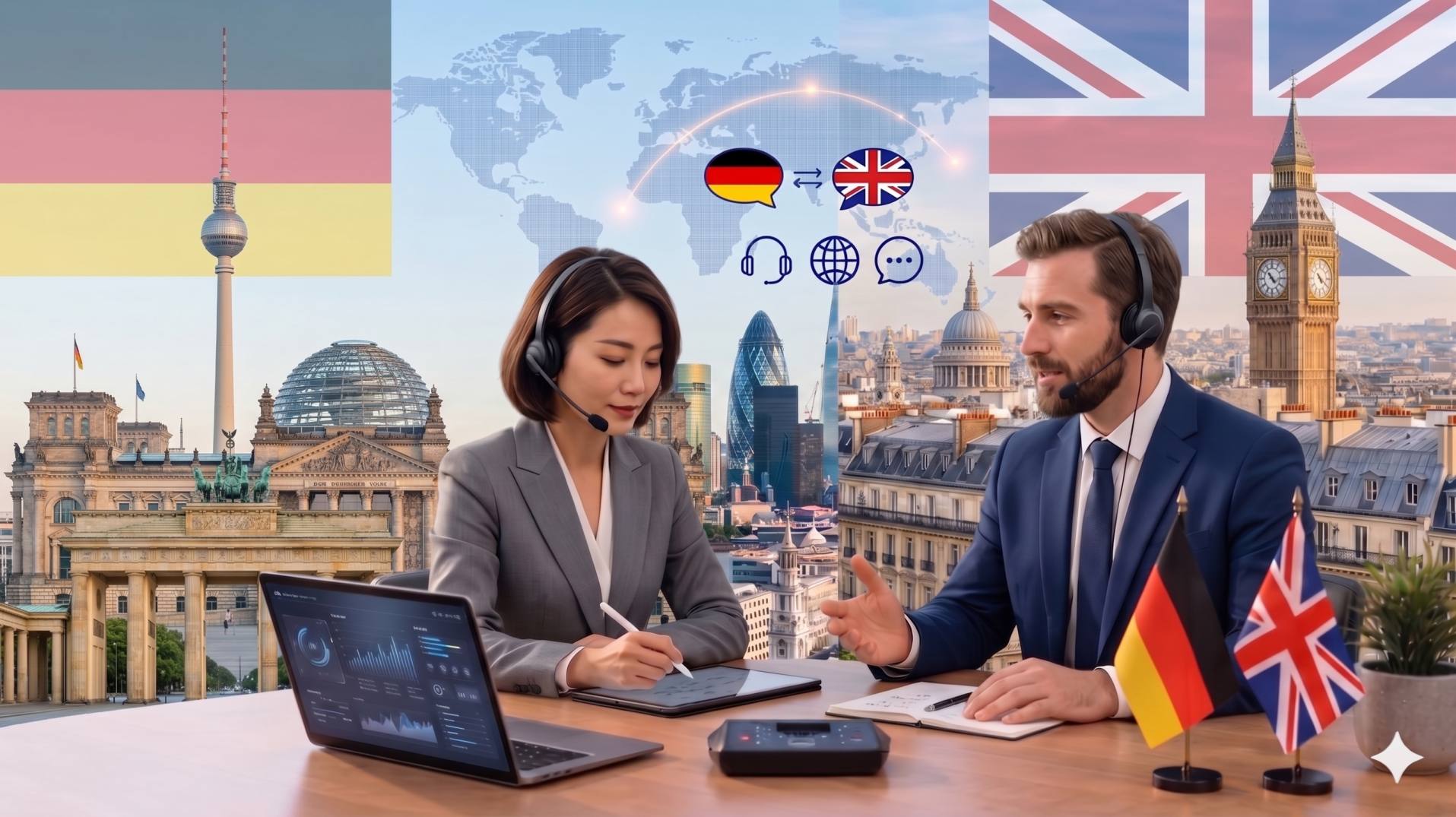
Securing a qualified German interpreter in Grimsby is paramount for effective communication across a multitude of professional sectors within the United Kingdom. Whether engaging with His Majesty’s Courts and Tribunals Service (HMCTS), navigating the complexities of the National Health Service (NHS) with trusts such as the United Lincolnshire Hospitals NHS Trust or the Hull University Teaching Hospitals NHS Trust, or facilitating international business dealings, the need for precise and culturally nuanced interpretation is undeniable. This service is not merely about language conversion; it is about ensuring accuracy, maintaining confidentiality, and upholding the stringent professional standards expected by UK institutions and regulatory bodies. For businesses and public services in Grimsby, access to accredited German interpreters is a critical component of operational integrity and client satisfaction, ensuring that all parties, regardless of their linguistic background, receive equitable and professional treatment under UK law and healthcare guidelines.
Translation vs Interpretation
While often used interchangeably in casual conversation, translation and interpretation are distinct disciplines, each requiring a unique skill set and adhering to different professional standards. Understanding this difference is crucial when seeking linguistic support, particularly for critical applications such as legal proceedings or medical consultations. A German translator in Grimsby works with written text, converting documents, reports, websites, and other written materials from German to English or vice versa. This process allows for meticulous review, editing, and proofreading to ensure the highest degree of accuracy and fidelity to the source material. Professional translators often specialise in specific fields, such as legal, medical, or technical translation, possessing in-depth knowledge of the relevant terminology and conventions within that domain. Membership in professional bodies like the Chartered Institute of Linguists (CIOL) signifies a commitment to professional development and ethical practice in translation.
Conversely, an interpreter facilitates spoken communication in real-time. This can occur in various settings, from face-to-face meetings and court hearings to telephone calls and video conferences. Interpretation demands not only fluency in both languages but also exceptional listening skills, a strong memory, cultural awareness, and the ability to think quickly and accurately under pressure. The primary keyword, German interpreter in Grimsby, highlights the need for immediate linguistic mediation. Professional interpreters are often accredited by bodies such as the National Register of Public Service Interpreters (NRPSI) or hold qualifications like the Diploma in Public Service Interpreting (DPSI), ensuring they meet the rigorous standards required for public service provision in the UK. The distinction is vital; a document requiring translation cannot be effectively handled by an interpreter, and a live conversation requiring interpretation cannot be adequately managed by a translator working solely on written text. For legal and medical contexts, the accuracy and impartiality of a qualified interpreter are non-negotiable.
Legal Defence, Immigration, and Courtroom Interpretation
The UK’s legal system is built on principles of justice, fairness, and the right to a fair trial, all of which are fundamentally dependent on clear communication. For individuals who do not speak English as a first language, accessing justice requires the support of qualified legal interpreters. In Grimsby, as across the UK, the His Majesty’s Courts and Tribunals Service (HMCTS) mandates the provision of interpreters in criminal and civil proceedings where a language barrier exists. This ensures that defendants, witnesses, and victims can fully understand the proceedings, present their case, and provide testimony without impediment. The Ministry of Justice oversees the framework for legal aid and court services, which includes provisions for interpretation.
Immigration law is another area where the role of a German interpreter is critical. Individuals seeking to enter, remain, or naturalise in the UK must engage with the UK Visas and Immigration (UKVI), part of the Home Office. Applications, interviews, and appeals often require accurate interpretation to ensure that all information provided is precise and understood. Failure to provide adequate interpretation can have severe consequences for an individual’s immigration status. The First-tier Tribunal (Immigration and Asylum) also relies heavily on the services of professional interpreters to ensure fair hearings. Professional interpreters working in the legal sphere must adhere to strict codes of conduct, maintaining impartiality, confidentiality, and accuracy. Accreditation by the NRPSI or holding a DPSI qualification is often a prerequisite for working in these sensitive environments, guaranteeing a high standard of competence and ethical practice.
Healthcare and NHS Patient Safety
Patient safety and equitable access to healthcare are cornerstones of the UK’s National Health Service. For German-speaking patients in Grimsby and the surrounding areas, effective communication with healthcare professionals is essential for accurate diagnosis, treatment, and overall well-being. The Care Quality Commission (CQC), the independent regulator of health and social care in England, emphasises the importance of effective communication in ensuring high-quality care. NHS trusts are legally and ethically obligated to provide interpretation services to patients who require them, as outlined in NHS England’s Language Access guidelines.
When a patient cannot communicate effectively in English, the presence of a qualified German interpreter is vital. This ensures that the patient fully understands medical advice, treatment options, and consent forms, and that healthcare professionals receive accurate information about the patient’s symptoms and medical history. Services such as those provided by the United Lincolnshire Hospitals NHS Trust and other regional providers must ensure that interpreters are not only linguistically competent but also understand the specific medical terminology and the sensitive nature of healthcare interactions. Adherence to UK GDPR is paramount, ensuring patient confidentiality is maintained at all times. Professional interpreters working within the NHS are expected to uphold the same rigorous standards of impartiality and accuracy as those in the legal sector, often holding qualifications recognised by bodies like the NRPSI or equivalent.
Technical Interpretation Modalities
The effective delivery of interpretation services relies on employing the appropriate modality for the specific context. Different situations call for different approaches, and understanding these technical distinctions ensures that communication flows seamlessly and accurately. For a German interpreter in Grimsby, proficiency in several key modalities is essential:
- Simultaneous Interpretation: This is the most demanding form, where the interpreter speaks the target language almost concurrently with the source language speaker, typically with only a few seconds’ delay. It requires sophisticated equipment (booths, headsets, microphones) and is commonly used in large conferences, international summits, and parliamentary sessions where real-time communication is critical.
- Consecutive Interpretation: In this mode, the interpreter listens to a segment of speech (a sentence or a few sentences) and then renders it into the target language. This is often used in smaller meetings, press conferences, and legal depositions where direct, turn-by-turn communication is more practical. It requires excellent memory and note-taking skills.
- Escort Interpretation (Liaison Interpretation): This involves facilitating communication between two or more parties who speak different languages in informal settings, such as business meetings, factory tours, or social events. The interpreter acts as a bridge, ensuring smooth dialogue and cultural understanding.
- Remote Interpretation (Telephone/Video): With advancements in technology, remote interpretation has become increasingly common. This involves providing interpretation services via telephone or video conferencing platforms. It offers flexibility and cost-effectiveness, particularly for situations where an in-person interpreter is not readily available or necessary. This modality requires strong technical acumen and adherence to data protection regulations, especially when dealing with sensitive information in legal or medical contexts.
Each modality requires a distinct skill set and often specific technological support. Professional interpreters must be adept at assessing the needs of a situation and selecting the most appropriate interpretation method to ensure clarity, accuracy, and efficiency. For corporate clients and public bodies in Grimsby, understanding these options allows for better planning and resource allocation for their German language communication needs.
Economic and Social Fabric of Grimsby
Grimsby, a significant port town in North East Lincolnshire, possesses a rich industrial heritage and a dynamic contemporary economy. Its strategic location on the Humber Estuary has historically made it a hub for trade and industry, and this continues to shape its economic landscape. Understanding the local economic and social fabric is crucial for businesses and organisations seeking to engage effectively with the community and its international partners, necessitating professional linguistic support when German is involved.
Corporate and Industry
Historically renowned for its fishing industry, Grimsby has diversified significantly. Today, it is a major centre for food processing, with numerous companies operating large-scale production facilities. The town also benefits from its proximity to renewable energy projects, particularly offshore wind farms in the North Sea, attracting significant investment and creating a demand for skilled labour and international collaboration. German companies have shown interest in the UK’s renewable energy sector, and effective communication through qualified German interpreters is vital for joint ventures, supply chain management, and technical consultations. Professional German translation services are also essential for navigating contracts, technical specifications, and regulatory compliance within these industries.
Tourism
While perhaps not as prominent as some coastal resorts, Grimsby and its surrounding areas offer attractions that draw visitors. The town’s maritime heritage, the National Fishing Heritage Centre, and its role as a gateway to the Lincolnshire Wolds provide opportunities for tourism development. As international travel recovers, attracting German-speaking tourists requires accessible information and services. This includes translated promotional materials, multilingual signage, and potentially interpreters for guided tours or visitor services. Ensuring a welcoming environment for all visitors, including those from Germany, enhances the town’s appeal and economic contribution from tourism.
Legal Infrastructure
Grimsby is served by a local court system under the purview of His Majesty’s Courts and Tribunals Service (HMCTS). This includes facilities that handle a range of legal matters, from criminal cases to civil disputes. The presence of local legal practices, including solicitors and barristers, means that there is a consistent need for accurate legal interpretation and translation. For German nationals involved in legal proceedings in Grimsby, whether as defendants, witnesses, or victims, access to accredited German interpreters is a fundamental right. Law firms in Grimsby that handle international cases or serve diverse communities will also require reliable German language support to effectively represent their clients and comply with UK legal standards.
NHS Healthcare
The healthcare provision for Grimsby falls under the responsibility of various NHS bodies, including trusts that serve the wider Lincolnshire and Humber regions. For instance, the United Lincolnshire Hospitals NHS Trust and potentially services commissioned through North East Lincolnshire Clinical Commissioning Group (now integrated into NHS Humber and North Yorkshire ICB), ensure that residents have access to medical services. For German-speaking patients, accessing these services requires overcoming language barriers. The provision of qualified German interpreters is crucial for consultations, hospital stays, and emergency care, ensuring patient safety and adherence to the principles of informed consent and equitable treatment. The Care Quality Commission‘s standards emphasise effective communication, making professional interpretation a vital component of healthcare delivery in Grimsby.
Local Infrastructure and Transport
Grimsby’s infrastructure plays a key role in its connectivity and economic activity. The town is served by a network of roads, including the A180, which provides a direct link to the M180 motorway and subsequently to the national motorway network. This facilitates the movement of goods and people, supporting the logistics and distribution sectors vital to the region’s food processing and manufacturing industries. Public transport options include local bus services and a railway station offering connections to major cities such as Manchester, Sheffield, and London King’s Cross, managed by operators like Northern Trains.
The Port of Grimsby is a significant asset, handling a variety of cargo and serving as a base for offshore energy operations. Its continued development is crucial for the local economy. For international businesses and individuals requiring German language services, Grimsby’s transport links are important. German investors, suppliers, or clients visiting Grimsby will rely on these connections. Ensuring that communication is seamless, whether for business negotiations, site visits, or logistical coordination, requires professional interpretation and translation services. The availability of a skilled German interpreter in Grimsby ensures that these interactions are productive and efficient, reinforcing the town’s position as a key economic player in the region.
Conclusion
In conclusion, the demand for professional linguistic services in Grimsby is multifaceted, spanning critical sectors such as legal, healthcare, and commerce. Engaging a qualified German interpreter in Grimsby is not merely a matter of convenience but a necessity for upholding legal rights, ensuring patient safety, and fostering robust business relationships within the UK’s regulatory framework. By prioritising accredited interpreters and translators, organisations and individuals can guarantee accuracy, confidentiality, and adherence to the highest professional standards mandated by UK institutions. Whether navigating the complexities of HMCTS, ensuring clarity in NHS consultations, or facilitating international trade, expert linguistic support is indispensable. We are committed to providing precise and reliable German interpretation and translation services tailored to the specific needs of Grimsby and the wider UK professional landscape.