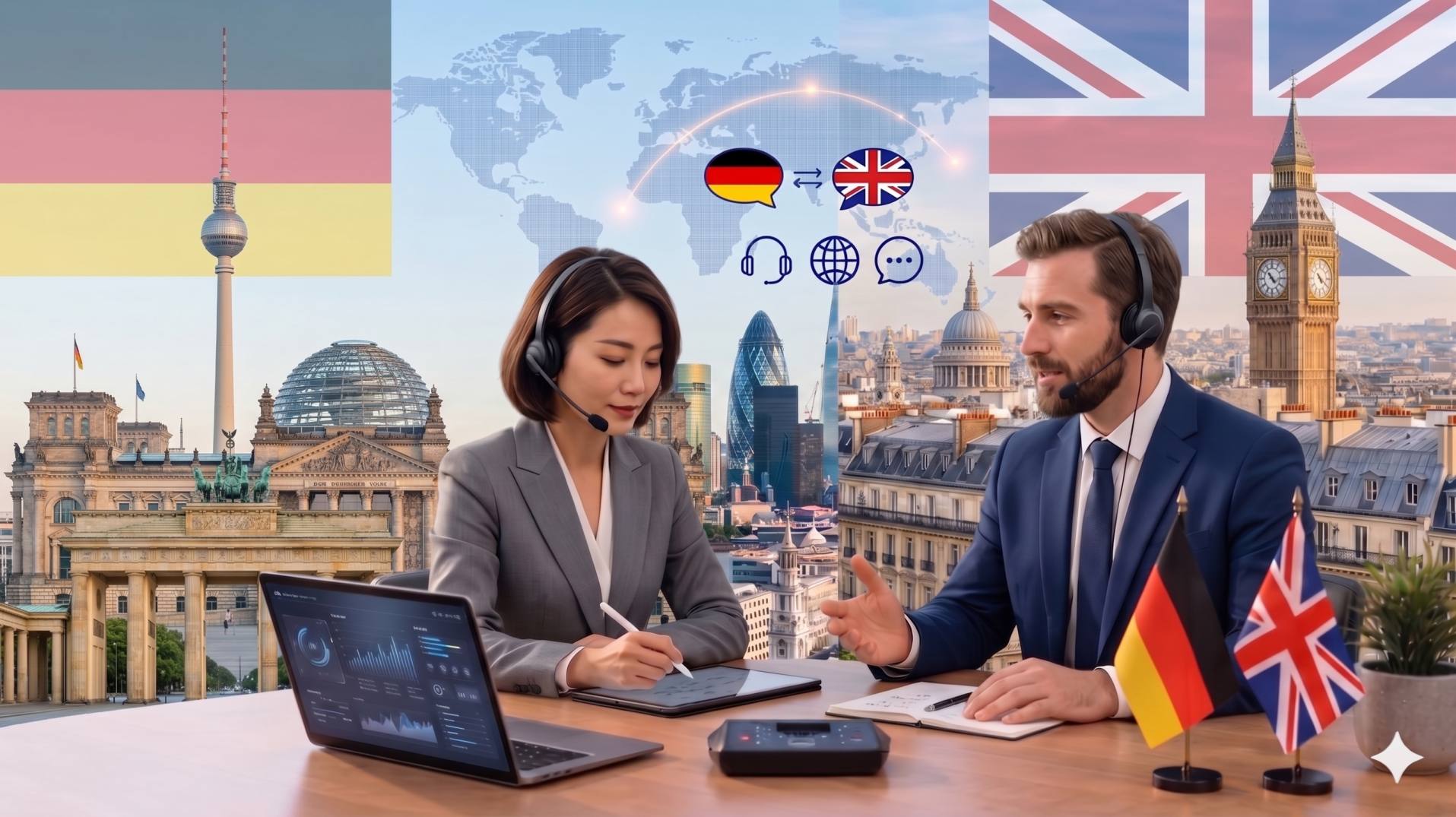
Securing a qualified German interpreter in Midlothian is paramount for effective communication across various sectors within the UK’s professional landscape. Whether engaging with the National Health Service (NHS) for critical medical consultations, navigating the complexities of His Majesty’s Courts and Tribunals Service (HMCTS), or facilitating international business dealings, the need for precise and culturally nuanced interpretation is undeniable. Midlothian, a region rich in history and increasingly integrated into the UK’s economic framework, benefits from a growing demand for specialised language services. For residents and businesses requiring German language support, access to accredited interpreters is crucial for ensuring clarity, accuracy, and compliance with UK standards. The NHS Lothian, which serves the Midlothian area, alongside the Scottish Borders NHS Foundation Trust, are key institutions where professional interpretation plays a vital role in patient care and safety, ensuring that all individuals, regardless of their linguistic background, receive equitable access to healthcare. This commitment extends across all public services, underscoring the importance of professional language provision.
Translation vs Interpretation
While often used interchangeably, translation and interpretation are distinct linguistic disciplines, each requiring a unique skill set and approach. Interpretation involves the live, oral conversion of spoken or signed language from one language to another. This process demands not only linguistic proficiency but also exceptional listening skills, memory recall, cultural awareness, and the ability to think and respond instantaneously. A German translator in Midlothian, conversely, works with written texts, converting documents, websites, or other written materials from German to English or vice versa. The precision required in translation allows for more time for research, editing, and refinement, whereas interpretation is an immediate, real-time service. In professional settings, particularly within legal and medical contexts in the UK, the distinction is critical. Misunderstandings arising from inadequate interpretation can have severe consequences, impacting legal outcomes, patient safety, and business agreements. Therefore, engaging certified professionals is essential. The National Register of Public Service Interpreters (NRPSI) and the Diploma in Public Service Interpreting (DPSI) are key UK qualifications that signify a high level of competence for interpreters working in public services, including the NHS and HMCTS. Professional bodies like the Chartered Institute of Linguists (CIOL) and the Association of International Interpreters and Translators (AIIC) also set rigorous standards for both translators and interpreters, ensuring quality and ethical practice across the UK.
Legal Defence, Immigration, and Courtroom Interpretation
The UK’s legal system, governed by principles of natural justice and fairness, mandates that all individuals have access to justice, irrespective of their language proficiency. For German speakers involved in legal proceedings within Midlothian and across the UK, the role of a qualified German interpreter is indispensable. This is particularly true in matters handled by His Majesty’s Courts and Tribunals Service (HMCTS), which oversees a vast array of judicial functions, from criminal trials to civil disputes and family law. The requirement for accurate interpretation is enshrined in UK law, ensuring that defendants, witnesses, and legal professionals can fully understand proceedings and communicate effectively. The Home Office and UK Visas and Immigration (UKVI) also rely heavily on professional interpreters for asylum claims, visa applications, and other immigration-related interviews. A failure to provide adequate interpretation can lead to miscarriages of justice, challenges to legal decisions, and potential breaches of human rights legislation. Professional interpreters working in this domain must adhere to strict codes of conduct, often holding qualifications recognised by bodies such as the NRPSI or DPSI. These qualifications ensure they possess the necessary legal terminology, understand courtroom etiquette, and maintain strict confidentiality. The First-tier Immigration Tribunal, for instance, frequently requires skilled interpreters to ensure the integrity of its hearings. Law firms in Midlothian and throughout the UK that represent clients with German language needs must partner with agencies or freelance interpreters who meet these stringent professional standards, ensuring their clients’ rights are protected and that proceedings are conducted with the utmost fairness and accuracy, in line with UK legal traditions.
Healthcare and NHS Patient Safety
Patient safety and equitable access to healthcare are cornerstones of the UK’s National Health Service (NHS). For German-speaking patients in Midlothian, effective communication with healthcare professionals is not merely a matter of convenience but a critical component of safe and effective medical care. The NHS Lothian, which provides services to the Midlothian population, along with other regional NHS trusts, operates under strict guidelines regarding language access, as mandated by NHS England’s Language Access guidelines and broader UK healthcare policy. These guidelines emphasize the importance of using qualified interpreters for patients who have limited English proficiency, ensuring that diagnoses, treatment plans, and consent processes are fully understood. The Care Quality Commission (CQC) also plays a role in overseeing the quality of care provided by NHS trusts and independent healthcare providers, with effective communication being a key aspect of their inspections. Professional German interpreters working within the NHS must possess not only linguistic skills but also a deep understanding of medical terminology, cultural sensitivities related to health, and the ethical responsibilities inherent in healthcare settings. Adherence to UK GDPR principles is also paramount, ensuring patient confidentiality is maintained at all times. The use of unqualified interpreters, family members, or ad-hoc bilingual staff can lead to serious misunderstandings, incorrect medication administration, delayed diagnoses, and compromised patient outcomes. Therefore, NHS trusts and healthcare providers in Midlothian are increasingly investing in professional language services to uphold their commitment to patient safety and to comply with UK legal and regulatory frameworks. Engaging a certified German interpreter in Midlothian for NHS appointments ensures that vital medical information is conveyed accurately, fostering trust and improving the overall patient experience.
Technical Interpretation Modalities
The effective delivery of interpretation services hinges on selecting the appropriate modality to suit the specific context and requirements of the communication. For German language interactions in Midlothian, several technical interpretation modes are commonly employed, each with its distinct application:
- Simultaneous Interpretation: This is the most demanding form of interpretation, where the interpreter speaks the target language almost concurrently with the source language speaker, typically with a slight delay of a few seconds. It requires specialised equipment, such as soundproof booths, microphones, and headsets, and is ideal for large conferences, international meetings, and parliamentary sessions where seamless, real-time communication is essential. The interpreter’s ability to process, memorise, and render speech simultaneously is a testament to their high level of skill and training, often holding qualifications from bodies like the CIOL or AIIC.
- Consecutive Interpretation: In this mode, the interpreter listens to a segment of speech, then renders it into the target language after the speaker has finished. This requires excellent note-taking skills (using a system of symbols and abbreviations) and a strong memory. Consecutive interpretation is well-suited for smaller meetings, one-on-one discussions, legal depositions, and medical consultations where the flow of conversation is less rapid and direct interaction is key. It does not require specialised equipment, making it a more flexible option for various settings.
- Escort Interpretation (Liaison Interpretation): This involves the interpreter accompanying a client or group to facilitate communication in various settings, such as business meetings, factory tours, site visits, or social events. The interpreter acts as a bridge between parties, often interpreting in both directions in a consecutive manner. This mode is crucial for building rapport and ensuring smooth interpersonal communication in cross-cultural exchanges.
- Remote Interpretation (Video/Telephone Interpretation): With advancements in technology, remote interpretation has become increasingly prevalent. This allows clients to connect with interpreters via video conferencing platforms (like Zoom, Microsoft Teams) or telephone lines. It offers significant flexibility, cost-effectiveness, and rapid access to interpreters for situations where an on-site presence is not feasible or necessary. This modality is particularly useful for routine medical appointments, customer service interactions, and quick business calls, adhering to UK GDPR for data security.
The choice of modality directly impacts the effectiveness and efficiency of communication, and professional interpreters in Midlothian are adept at advising clients on the most suitable option for their specific needs, ensuring compliance with UK professional standards.
Economic and Social Fabric of Midlothian
Midlothian, situated to the south of Edinburgh, is a region with a dynamic economic profile and a rich cultural heritage. Its strategic location and evolving industrial landscape necessitate robust communication channels, making the role of professional German interpreters vital for its continued growth and integration within the broader UK economy.
Corporate and Industry
The region hosts a diverse range of industries, from advanced manufacturing and technology to renewable energy and creative sectors. As businesses in Midlothian increasingly engage with international markets, particularly within the European Union and beyond, the demand for German language services in corporate settings rises. This includes facilitating negotiations, translating technical documentation, supporting international marketing efforts, and ensuring compliance with UK trade regulations. Professional interpreters and translators are essential for fostering strong business relationships, securing foreign investment, and enabling local companies to compete on a global stage. The presence of skilled German linguists supports the region’s ambition to attract and retain international talent and businesses, contributing to its economic vitality.
Tourism
Midlothian boasts significant historical and natural attractions, including its famous castles and scenic landscapes, drawing visitors from across the globe. German-speaking tourists represent a valuable segment of the visitor economy. Providing high-quality interpretation and translation services for tourism-related businesses—such as hotels, visitor centres, tour operators, and heritage sites—enhances the visitor experience, encourages repeat visits, and boosts local revenue. Clear communication through German language materials and on-site interpretation ensures that German visitors can fully appreciate the region’s offerings, contributing to Midlothian’s reputation as a welcoming destination within the UK.
Legal Infrastructure
While Midlothian’s legal services are often supported by Edinburgh’s larger infrastructure, the local presence of legal professionals and the need to interact with His Majesty’s Courts and Tribunals Service (HMCTS) mean that German language support is crucial. This includes assisting German nationals involved in civil litigation, criminal defence, or property transactions. Law firms operating in or serving Midlothian must have access to accredited German interpreters to ensure their clients’ cases are handled with fairness and accuracy, upholding the principles of justice within the UK legal framework. The availability of qualified interpreters is a key factor in ensuring access to justice for all residents and visitors.
NHS Healthcare
The National Health Service (NHS) is a critical service for all residents of Midlothian. As mentioned, NHS Lothian serves the area, and ensuring that German-speaking patients can communicate effectively with medical professionals is a priority for patient safety and quality of care. This involves providing interpreters for GP appointments, hospital visits, specialist consultations, and emergency situations. The accurate conveyance of medical information, symptoms, and treatment instructions by a professional German interpreter is vital for effective diagnosis and treatment, aligning with the NHS’s commitment to equitable healthcare for all UK citizens and residents.
Local Infrastructure and Transport
Midlothian benefits from its proximity to Edinburgh, offering good transport links and access to essential services. The region is served by a network of roads, including major routes connecting it to the wider Scottish and UK transport infrastructure. Public transport options, such as bus services and local train lines, facilitate movement within Midlothian and to neighbouring areas. For businesses and individuals requiring German interpretation services, this accessible infrastructure ensures that interpreters can reach various locations efficiently, whether for on-site assignments at corporate offices, legal chambers, or healthcare facilities. The integration of Midlothian into the UK’s national transport network supports the seamless delivery of professional language services, reinforcing its role as a connected and accessible part of the UK economic landscape. Reliable transport is fundamental for the timely arrival of interpreters at critical appointments, whether for HMCTS proceedings, NHS consultations, or urgent business meetings, underscoring the practical importance of local infrastructure for professional services.
Conclusion
In conclusion, the provision of professional German interpretation and translation services is a critical element supporting the economic, legal, and social well-being of Midlothian and its residents within the United Kingdom. From ensuring fair trials in UK courts and safeguarding patient safety within the NHS to facilitating international commerce and enhancing the visitor experience, the need for accurate and culturally competent linguistic support is paramount. Engaging a certified German interpreter in Midlothian is not merely a logistical requirement but a strategic imperative for any organisation or individual seeking to communicate effectively and ethically within the UK’s regulatory and professional frameworks. By prioritising qualified language professionals, businesses, legal firms, and healthcare providers in Midlothian can uphold the highest standards of service, foster stronger relationships, and contribute to the region’s continued prosperity as an integral part of the UK.