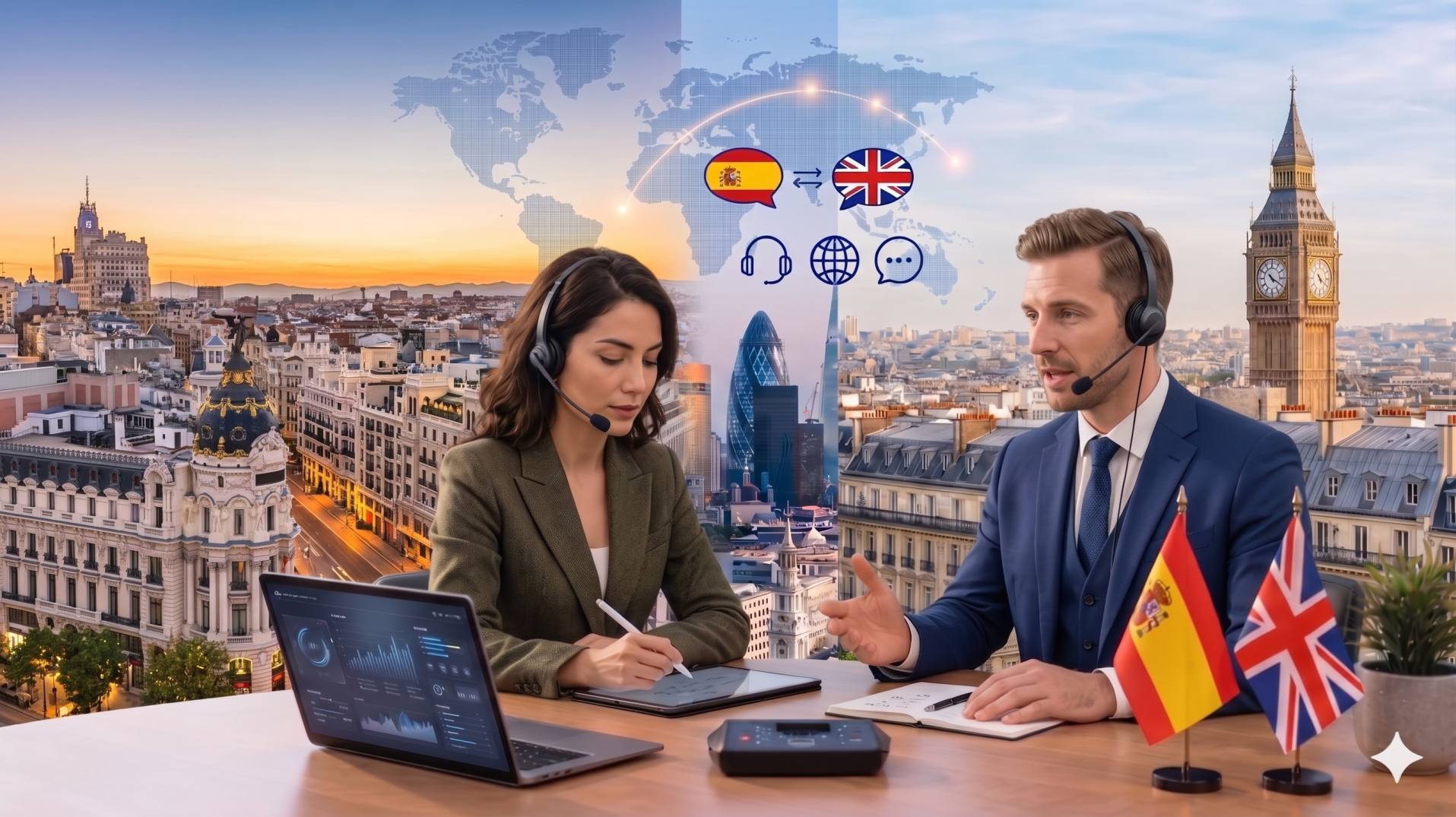
Securing a qualified Spanish interpreter in Doncaster is paramount for effective communication across a multitude of professional sectors, from legal proceedings and healthcare consultations to business negotiations and public services. In a diverse economic landscape like that of Doncaster, the need for accurate, culturally sensitive, and legally compliant interpretation is not merely a convenience but a fundamental requirement for justice, patient safety, and commercial success. This service ensures that individuals who speak Spanish can fully access vital services, understand their rights and obligations, and participate effectively in all aspects of UK life. For residents and businesses in Doncaster, access to professional Spanish interpretation is facilitated by a network of highly skilled linguists who adhere to stringent UK professional standards. This is particularly crucial when interacting with key local healthcare providers such as the Doncaster and Bassetlaw Teaching Hospitals NHS Foundation Trust and the Yorkshire and Humber Pathology Network, ensuring that language barriers do not impede the quality or safety of patient care.
Translation vs Interpretation
While often used interchangeably, translation and interpretation are distinct linguistic disciplines, each requiring specialised skills and adhering to different professional standards. A professional Spanish translator in Doncaster works with written text, converting documents, websites, and other written materials from Spanish to English or vice versa. This process demands meticulous attention to detail, an understanding of subject-specific terminology, and the ability to convey nuance and tone accurately in the target language. Translators often use sophisticated translation memory software and glossaries to ensure consistency and accuracy, especially for technical or legal documents. Conversely, a professional Spanish interpreter in Doncaster facilitates spoken communication in real-time. This involves listening to a speaker in one language and rendering their message accurately and fluently in another. The interpreter must possess not only linguistic proficiency but also exceptional listening skills, a strong memory, and the ability to remain neutral and objective. Professional bodies in the UK, such as the National Register of Public Service Interpreters (NRPSI), set rigorous standards for public service interpreters, ensuring they meet the highest benchmarks for competence and ethical conduct. For legal and public service contexts, holding qualifications recognised by the NRPSI or equivalent bodies like the Diploma in Public Service Interpreting (DPSI) is often a prerequisite, underscoring the critical nature of accurate interpretation in these fields.
Legal Defence, Immigration, and Courtroom Interpretation
The UK legal system, governed by principles of natural justice and fairness, mandates that all individuals, regardless of their language proficiency, have access to justice. For Spanish speakers involved in legal matters in Doncaster, this translates to the essential need for qualified interpreters. His Majesty’s Courts and Tribunals Service (HMCTS) operates under strict guidelines to ensure that court proceedings are accessible to all. This includes providing professional interpreters for criminal trials, civil litigation, family law cases, and tribunal hearings. The His Majesty’s Courts and Tribunals Service (HMCTS) relies on interpreters who are not only fluent in Spanish and English but also understand legal terminology and courtroom etiquette. Professional interpreters often hold qualifications such as the DPSI or are registered with the NRPSI, ensuring they meet the rigorous standards required for public service provision. The Home Office and UK Visas and Immigration (UKVI) also require accurate interpretation for asylum claims, visa applications, and interviews. The First-tier Immigration Tribunal, part of HMCTS, hears appeals against immigration decisions, and the presence of a qualified Spanish interpreter is vital for appellants to present their case effectively. The Home Office mandates that all communication, especially concerning immigration status, is clear and understood by all parties. Failure to provide adequate interpretation can lead to miscarriages of justice, unlawful detentions, or flawed decisions, with significant consequences for individuals and their families. Professional interpreters play a crucial role in upholding the integrity of the UK’s legal and immigration systems, ensuring that language is not a barrier to fundamental rights and due process. The Courts and Tribunals Judiciary website provides further information on the structure and operation of the UK’s judicial system.
Healthcare and NHS Patient Safety
Patient safety and effective communication are cornerstones of the National Health Service (NHS). In Doncaster, where a significant Spanish-speaking population exists, the provision of professional Spanish interpretation services is critical for delivering equitable and high-quality healthcare. The Care Quality Commission (CQC), the independent regulator of health and social care services in England, emphasises the importance of effective communication in ensuring patient safety and well-being. NHS trusts serving Doncaster, such as Doncaster and Bassetlaw Teaching Hospitals NHS Foundation Trust and the South West Yorkshire Partnership NHS Foundation Trust (which provides mental health services in the wider region), are committed to adhering to NHS England’s Language Access guidelines. These guidelines stipulate that patients must be provided with interpretation services when needed, free of charge, to ensure they can understand their diagnosis, treatment options, and consent to procedures. The use of unqualified interpreters, family members, or children to interpret in clinical settings is strictly discouraged due to the risk of misinterpretation, emotional distress, and breaches of confidentiality. Professional interpreters working within the NHS are trained to handle sensitive medical information with discretion and adhere to the principles of the UK General Data Protection Regulation (UK GDPR), ensuring patient confidentiality is maintained. Accurate interpretation in healthcare settings is not only a matter of patient rights but also a legal and ethical imperative, directly impacting treatment outcomes and patient satisfaction. The NHS England website outlines national policies and initiatives related to patient care and access to services.
Technical Interpretation Modalities
The effectiveness of interpretation hinges on selecting the appropriate modality for the specific situation. For a Spanish interpreter in Doncaster, understanding these different modes is crucial for providing seamless communication. Simultaneous interpretation is commonly used in conferences, large meetings, and broadcasts, where the interpreter sits in a soundproof booth and interprets the speaker’s words into a microphone with minimal delay, using headphones to listen and a microphone to speak. This requires intense concentration and is typically performed by a team of two interpreters per language. Consecutive interpretation is more common in smaller settings such as one-on-one meetings, legal consultations, or medical appointments. Here, the interpreter listens to a segment of speech, then renders it into the target language after the speaker has finished. This allows for more detailed note-taking and a slightly more relaxed pace. Escort interpretation (also known as liaison interpretation) is used for business meetings, site visits, or social functions where the interpreter acts as a cultural bridge, facilitating communication between parties who may not share a common language. This role often involves a degree of informal translation and cultural mediation. Finally, remote interpretation, including telephone interpreting (OPI) and video remote interpreting (VRI), has become increasingly prevalent, offering flexibility and rapid access to interpreters. This modality requires reliable technology and skilled interpreters who can adapt to the nuances of remote communication. Each modality demands specific skills and preparation, and professional interpreters are adept at deploying the most suitable technique to ensure clarity and accuracy, whether for a business negotiation or a court hearing.
Economic and Social Fabric of Doncaster
Doncaster’s economy is a dynamic blend of traditional industries and emerging sectors, creating a rich tapestry of opportunities and challenges. The presence of a Spanish-speaking community and the need for professional interpretation services are integral to its continued growth and inclusivity.
Corporate and Industry
Doncaster boasts a diverse industrial base, including advanced manufacturing, logistics, and retail. Companies operating in these sectors, whether local enterprises or international corporations with a presence in the region, often engage with Spanish-speaking markets or employ Spanish-speaking staff. Professional Spanish translation and interpretation services are vital for facilitating international trade, managing supply chains, conducting market research, and ensuring effective internal communication. Accurate translation of contracts, marketing materials, and technical documentation is essential for business success. Furthermore, a skilled Spanish interpreter in Doncaster can facilitate crucial meetings with Spanish-speaking partners, clients, or suppliers, fostering stronger business relationships and ensuring smooth operations. The Doncaster Chamber of Commerce plays a key role in supporting local businesses and promoting economic development, often facilitating connections that may require linguistic support.
Tourism
Doncaster’s rich history and growing tourism sector attract visitors from across the UK and abroad. While English is the primary language, providing information and services in Spanish can enhance the visitor experience for Spanish-speaking tourists. This includes translating tourist information, website content, and signage. Professional interpreters can assist Spanish-speaking visitors in navigating local attractions, hotels, and transport, ensuring they have a positive and memorable experience. This linguistic support can significantly boost the local tourism economy by making Doncaster more accessible and welcoming to a wider international audience. The Visit Doncaster website is a primary resource for tourism information.
Legal Infrastructure
Doncaster’s legal landscape includes various law firms, solicitors’ offices, and legal aid services that cater to a diverse clientele. For Spanish speakers facing legal challenges, access to qualified legal interpreters is non-negotiable. Whether it’s for consultations with solicitors, appearances at His Majesty’s Courts and Tribunals Service (HMCTS) facilities, or interactions with the Home Office regarding immigration matters, accurate interpretation ensures that individuals understand their legal rights and can participate fully in legal processes. The Law Society provides resources and information on legal services across the UK, highlighting the importance of accessible justice for all.
NHS Healthcare
As previously detailed, the NHS in Doncaster, including trusts like Doncaster and Bassetlaw Teaching Hospitals NHS Foundation Trust, serves a population with diverse linguistic needs. Professional Spanish interpreters are indispensable for ensuring that Spanish-speaking patients receive the same standard of care as their English-speaking counterparts. This covers everything from initial GP appointments and hospital admissions to complex surgical procedures and ongoing treatment plans. The commitment to patient safety and adherence to UK GDPR principles means that professional, confidential interpretation is a vital component of healthcare delivery in Doncaster.
Local Infrastructure and Transport
Doncaster’s infrastructure, including its transport network, plays a vital role in its connectivity and economic vitality. The city is a significant transport hub, with excellent rail and road links. Doncaster Station is a major railway interchange, connecting the city to London, Edinburgh, and other key destinations across the UK. The M1, A1(M), and M18 motorways provide extensive road access. For Spanish-speaking individuals and businesses operating within or travelling through Doncaster, clear communication is essential for navigating this infrastructure. This can involve understanding travel information, booking transport, or communicating with transport providers. Professional interpreters can facilitate these interactions, ensuring that language barriers do not impede mobility or business operations. The Doncaster Council’s Transport and Street Parking services page offers information on local transport initiatives.
Conclusion
In conclusion, the demand for a professional Spanish interpreter in Doncaster is driven by the city’s diverse economic activities, its commitment to accessible justice, and its dedication to providing equitable healthcare. Whether you are a legal professional requiring interpretation for court proceedings before HMCTS, a healthcare provider ensuring patient safety under NHS guidelines, a business seeking to expand its reach, or an individual navigating essential public services, engaging a qualified and accredited Spanish interpreter is indispensable. Adherence to UK professional standards, such as those set by the NRPSI and DPSI, guarantees accuracy, confidentiality, and cultural sensitivity. For all your interpretation needs in Doncaster and across the United Kingdom, securing the services of a certified Spanish interpreter ensures that communication is clear, effective, and legally compliant, upholding the principles of fairness and access for all.