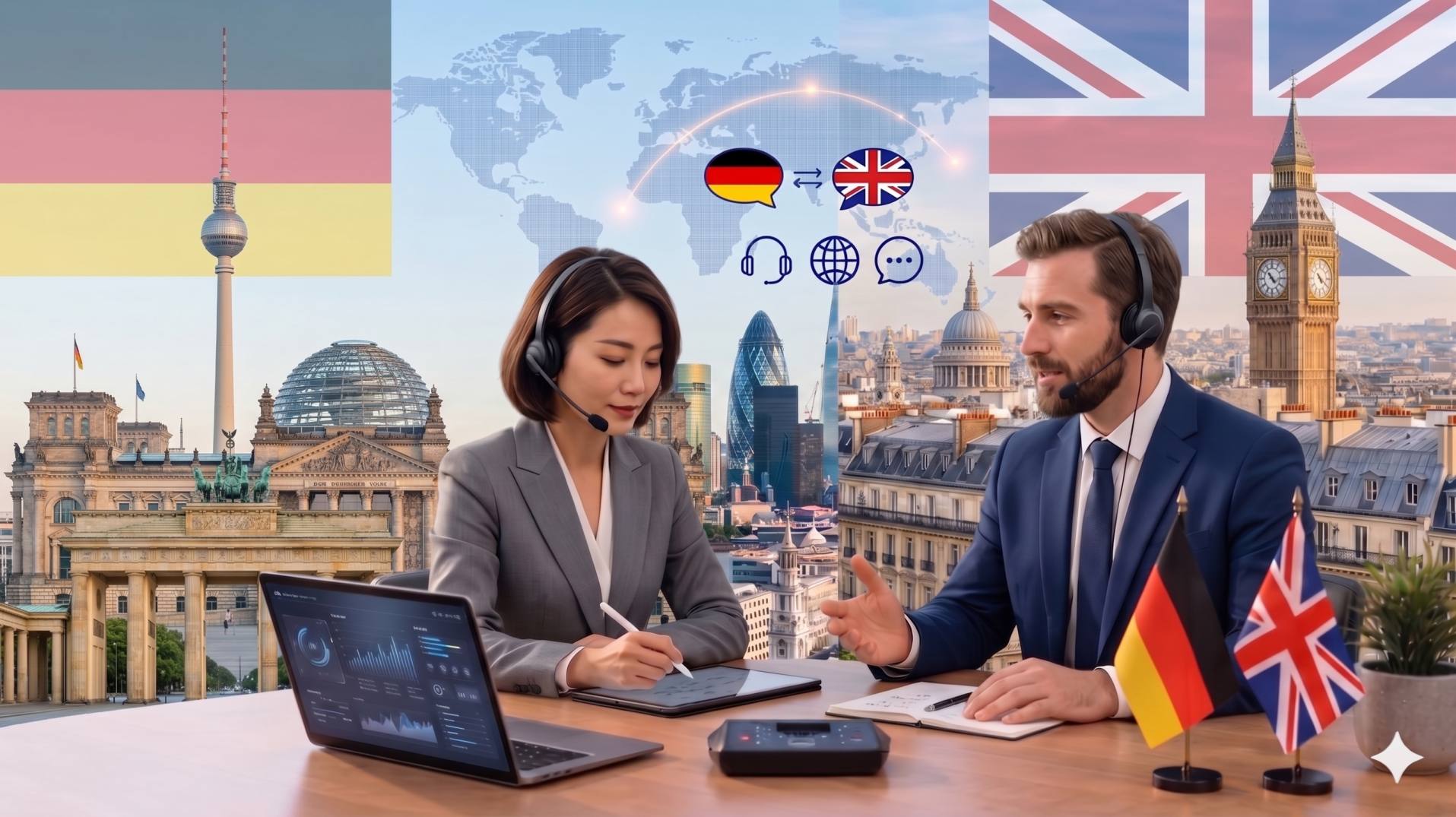
Securing a qualified German interpreter in Monmouthshire is paramount for effective communication across diverse sectors, from legal proceedings and healthcare to business and public services. In a region like Monmouthshire, where understanding and precision are critical, professional interpretation ensures that language barriers do not impede justice, patient safety, or commercial success. This service is vital for individuals and organisations interacting with German-speaking clients, partners, or individuals within the UK’s robust institutional framework. For residents and businesses in Monmouthshire, access to accredited interpreters is facilitated through a network that understands the nuances of both the German language and the specific regulatory and cultural landscape of the United Kingdom. This includes ensuring seamless communication with key NHS providers such as Aneurin Bevan University Health Board and Powys Teaching Health Board, both of which may serve parts of or communities bordering Monmouthshire, adhering strictly to NHS England’s Language Access guidelines and UK GDPR requirements.
Translation vs. Interpretation: Understanding the Distinction
While often used interchangeably, translation and interpretation are distinct linguistic disciplines, each requiring specialised skills and qualifications. A German translator in Monmouthshire works with written text, converting documents, websites, and other written materials from German to English or vice versa. This process allows for meticulous review, editing, and proofreading to ensure accuracy and fidelity to the original meaning. Conversely, a German interpreter in Monmouthshire facilitates spoken communication in real-time. This involves listening to a speaker in one language and rendering their message accurately and fluently in another, often under pressure and with immediate deadlines. Professional interpreters must possess not only linguistic proficiency but also cultural awareness, subject matter expertise, and the ability to maintain impartiality and confidentiality. For legal and medical settings, the distinction is crucial; a certified interpreter is essential for live interactions, whereas a translator handles documentation. Professional standards for interpreters in the UK are overseen by bodies like the National Register of Public Service Interpreters (NRPSI), ensuring a high calibre of service across all public sectors.
Legal Defence, Immigration, and Courtroom Interpretation
The administration of justice in the UK relies heavily on accurate communication, making the role of a qualified German interpreter in Monmouthshire indispensable within the legal system. His Majesty’s Courts and Tribunals Service (HMCTS) mandates the provision of interpreters for individuals who do not speak English fluently, ensuring fair access to justice under UK law. This applies to all levels of the court system, from Magistrates’ Courts to the Crown Court and the High Court. German speakers involved in criminal proceedings, civil litigation, family law matters, or employment tribunals require interpreters who are not only linguistically competent but also understand the specific terminology and protocols of UK courts. Professional interpreters often hold qualifications such as the Diploma in Public Service Interpreting (DPSI) or are registered with the NRPSI, signifying their adherence to a strict code of conduct, including confidentiality and impartiality. This is particularly vital in immigration cases, where individuals may be navigating complex procedures with the UK Visas and Immigration (UKVI) department or appearing before the First-tier Immigration Tribunal. The Home Office also requires accurate interpretation for interviews and assessments. Engaging an interpreter accredited by recognised UK bodies ensures that proceedings are conducted fairly and that all parties understand the evidence, arguments, and judgments presented. The Royal Courts of Justice and other judicial centres across the UK depend on the availability of such skilled professionals to uphold the principles of natural justice.
Healthcare and NHS Patient Safety
Patient safety within the National Health Service (NHS) is a cornerstone of UK healthcare policy, and effective communication is fundamental to achieving this. For German-speaking patients in Monmouthshire, accessing healthcare services requires interpreters who can bridge the language gap, ensuring accurate diagnosis, treatment, and informed consent. NHS trusts are legally and ethically bound to provide language support, as outlined by NHS England’s Language Access guidelines. This commitment is reinforced by the Care Quality Commission (CQC), which inspects healthcare providers on their ability to meet the diverse needs of their patient population, including those with limited English proficiency. A professional German interpreter in Monmouthshire working within the NHS must understand medical terminology and the sensitive nature of healthcare interactions. They play a critical role in consultations with GPs, specialists, and during hospital stays, ensuring patients fully comprehend their medical conditions, treatment options, and medication instructions. Adherence to UK GDPR is also paramount, as interpreters handle highly confidential patient information. The use of unqualified or untrained interpreters can lead to serious misunderstandings, potentially resulting in misdiagnosis, incorrect treatment, or adverse health outcomes. Therefore, engaging interpreters registered with bodies like the NRPSI or holding recognised qualifications ensures that NHS trusts in areas like Monmouthshire uphold their duty of care and provide equitable, safe, and effective healthcare for all patients, regardless of their linguistic background. This commitment extends to mental health services, emergency care, and ongoing treatment plans, where clear communication is non-negotiable.
Technical Interpretation Modalities
The requirement for interpretation services can vary significantly depending on the context, leading to the need for different modalities. A professional German interpreter in Monmouthshire may be engaged for various settings, each demanding a specific approach. Consecutive interpretation is commonly used in one-on-one meetings, doctor’s appointments, or smaller legal consultations. Here, the interpreter listens to a segment of speech, waits for the speaker to pause, and then renders the message in the target language. This allows for a natural flow of conversation but can extend the duration of the interaction. Simultaneous interpretation is typically employed in larger settings such as conferences, international meetings, or court hearings where speed and efficiency are essential. The interpreter, often working from a soundproof booth with specialised equipment, listens to the speaker through headphones and interprets their speech into a microphone with minimal delay, usually within seconds of the original utterance. This requires intense concentration and highly developed skills. Escort interpretation, also known as liaison interpretation, facilitates communication between parties speaking different languages in social or business settings, such as factory tours, site visits, or informal business discussions. The interpreter acts as a cultural bridge, ensuring smooth interaction. In recent years, remote interpretation (also known as telephonic or video interpretation) has become increasingly prevalent, offering flexibility and cost-effectiveness for situations where face-to-face interaction is not feasible. This modality requires reliable technology and skilled interpreters adept at working through audio or video links, adhering to the same professional standards of accuracy and confidentiality as in-person services. Professional bodies like the Chartered Institute of Linguists (CIOL) and the Association of Police and Court Interpreters (APCI) provide frameworks for training and accreditation across these modalities.
Economic and Social Fabric of Monmouthshire
Monmouthshire, a county in Wales bordering England, possesses a unique economic and social landscape that benefits from robust communication infrastructure. Understanding this local context is crucial for businesses and public services seeking to engage with its diverse population and economy.
Corporate and Industry
The economic activity in Monmouthshire encompasses a range of sectors, including agriculture, manufacturing, and a growing presence of small and medium-sized enterprises (SMEs). For businesses operating internationally or engaging with German markets, whether through export, import, or partnerships, professional German interpretation and translation services are vital. Accurate communication in business negotiations, technical discussions, and marketing efforts can significantly impact commercial success. The availability of qualified German interpreters ensures that Monmouthshire-based companies can confidently engage with German counterparts, fostering stronger business relationships and expanding their reach within the European Union and beyond. Professional standards, such as those upheld by the NRPSI and CIOL, ensure that business communications are handled with the utmost professionalism and confidentiality, aligning with UK business practices.
Tourism
Monmouthshire is renowned for its scenic beauty, historical sites, and vibrant market towns, attracting visitors from across the UK and internationally. German tourists form a significant segment of the visitor economy. Providing information and services in German, through translated brochures, websites, and on-site interpretation, enhances the visitor experience and encourages repeat business. Hotels, heritage sites, visitor centres, and local businesses that cater to German-speaking tourists can leverage professional interpretation services to offer a more welcoming and informative environment. This investment in multilingual communication directly supports the local tourism industry, contributing to the economic vitality of towns like Monmouth, Abergavenny, and Chepstow.
Legal Infrastructure
While Monmouthshire may not host major national legal centres, it possesses a local legal infrastructure comprising solicitors’ firms, legal advice centres, and access to His Majesty’s Courts and Tribunals Service (HMCTS) facilities. German speakers involved in legal matters within the county, whether as parties to a dispute, witnesses, or individuals seeking legal advice on matters such as property, family law, or business contracts, require access to qualified German interpreters. These interpreters ensure that legal consultations are understood, court proceedings are fair, and documentation is accurately conveyed, upholding the principles of justice as administered by UK legal bodies. The availability of NRPSI-registered interpreters is crucial for maintaining the integrity of the legal process.
NHS Healthcare
The National Health Service (NHS) is a critical service for all residents of Monmouthshire. For German-speaking individuals, accessing healthcare services, from GP practices to hospital appointments, necessitates clear communication. The Aneurin Bevan University Health Board, which serves a significant portion of the region, and potentially the Powys Teaching Health Board for bordering communities, are committed to providing equitable care. This includes ensuring that patients understand their health conditions, treatment plans, and can provide informed consent. Professional German interpreters are essential in facilitating these vital interactions, ensuring patient safety and adherence to UK healthcare standards and UK GDPR. The CQC’s oversight further underscores the importance of accessible language services within the NHS.
Local Infrastructure and Transport
Monmouthshire benefits from a network of local infrastructure and transport links that connect its communities and facilitate economic activity. Key road networks, including the M4 and A40, provide access to major cities such as Cardiff, Newport, and Bristol, as well as onward connections across the UK. Public transport options, including bus services and nearby train stations, further enhance connectivity. For businesses and individuals requiring German interpretation services, the accessibility of these transport links ensures that interpreters can reach various locations within Monmouthshire and beyond efficiently. Whether for a business meeting in a rural setting, a court appearance in a regional centre, or a medical appointment in a local clinic, reliable transport infrastructure supports the seamless deployment of professional interpreters. This logistical efficiency is crucial for organisations that depend on timely and accurate interpretation to maintain their operations and serve their clients effectively within the UK’s established framework.
Conclusion
In conclusion, the need for professional German interpreter in Monmouthshire services is multifaceted, underpinning effective communication across legal, healthcare, business, and public service domains. Ensuring access to qualified, accredited interpreters is not merely a matter of convenience but a fundamental requirement for upholding justice, patient safety, and economic prosperity within the United Kingdom. Organisations and individuals requiring these specialised linguistic services should prioritise engaging professionals who adhere to the stringent standards set by UK bodies such as the NRPSI and CIOL. By investing in high-quality interpretation, Monmouthshire can continue to foster strong connections, ensure equitable access to essential services, and thrive as a dynamic part of the UK’s economic and social landscape. Contact us today to secure expert German interpretation services tailored to your specific needs in Monmouthshire and across the UK.