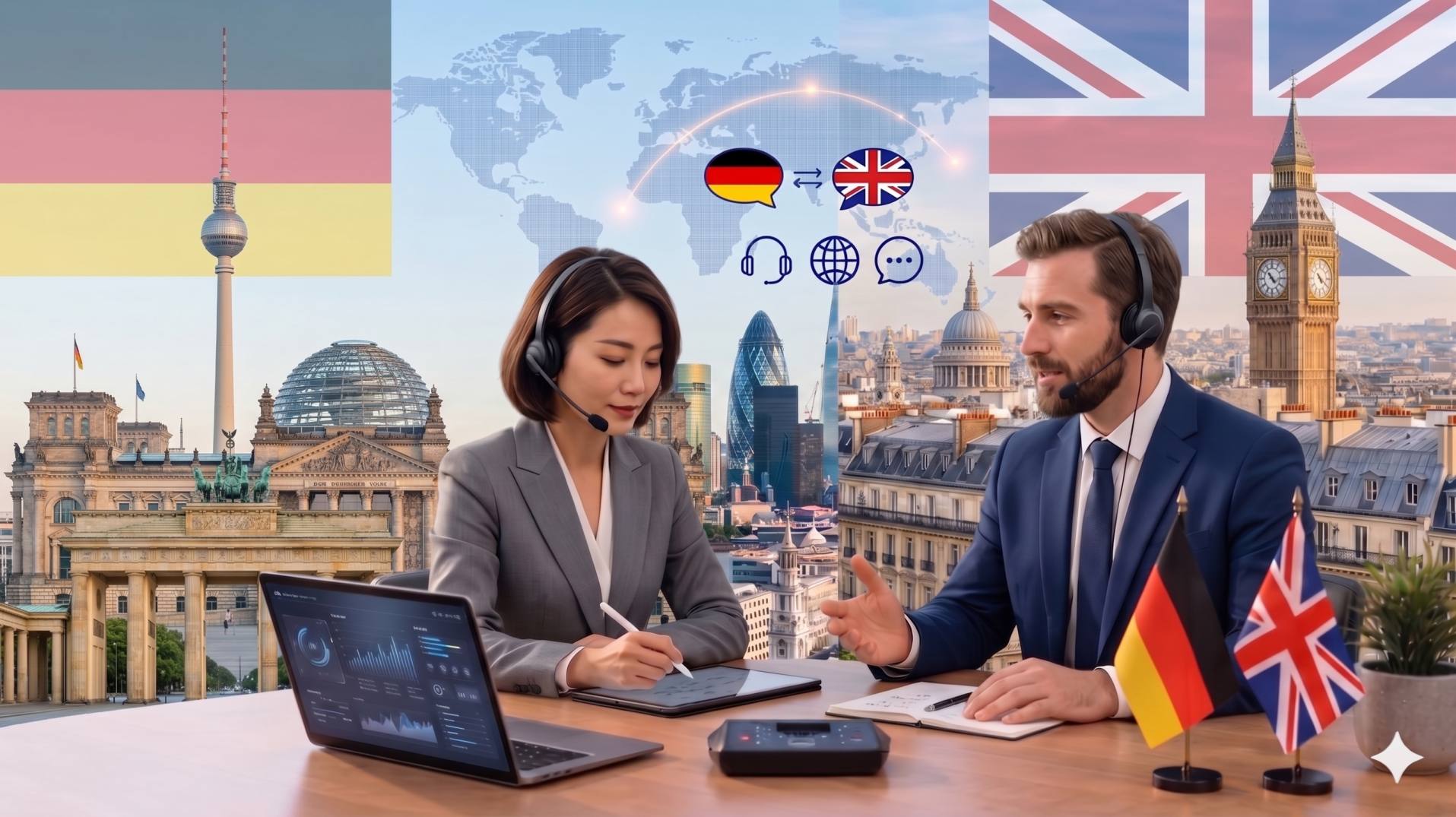
Securing a qualified German interpreter in South Lanarkshire is paramount for effective communication across various sectors, from legal proceedings to healthcare consultations and international business dealings. South Lanarkshire, a region with a dynamic economic landscape and a commitment to accessible public services, relies on skilled language professionals to bridge linguistic divides. For residents and businesses requiring German language support, particularly within the critical healthcare sector, access to professional interpreters is facilitated by the National Health Service. Key NHS trusts serving the area, such as NHS Lanarkshire, and indirectly through regional planning, other neighbouring trusts, ensure that language barriers do not impede patient care. Understanding the nuances of interpretation and translation, and knowing where to find accredited professionals, is essential for ensuring accuracy, confidentiality, and compliance with UK standards.
Translation vs Interpretation
While often used interchangeably, translation and interpretation are distinct linguistic disciplines, each requiring a unique skill set and adhering to different professional standards within the UK. Translation involves the conversion of written text from one language to another. This process allows for careful review, editing, and research, ensuring precision in terminology, particularly crucial for legal documents, technical manuals, and academic papers. Professional translators in the UK often hold qualifications from bodies like the Chartered Institute of Linguists (CIOL), demonstrating their proficiency and adherence to ethical codes. The output of translation is a written document, which can be proofread and finalised before dissemination. This is vital for contracts, reports, and any official documentation where absolute accuracy is non-negotiable.
Interpretation, on the other hand, deals with the spoken word. A German interpreter in South Lanarkshire facilitates real-time communication between individuals speaking different languages. This requires not only linguistic fluency but also exceptional listening skills, memory, cultural awareness, and the ability to think quickly under pressure. Interpreters work in live settings, such as courtrooms, hospitals, business meetings, and conferences. The professional standards for interpreters in the UK are rigorously maintained by organisations like the National Register of Public Service Interpreters (NRPSI) and the Diploma in Public Service Interpreting (DPSI). These accreditations ensure that interpreters possess the necessary qualifications and adhere to a strict code of conduct, guaranteeing impartiality, confidentiality, and accuracy in conveying meaning. The demand for a skilled German translator in South Lanarkshire is significant, covering both written and spoken communication needs.
Legal Defence, Immigration, and Courtroom Interpretation
The UK’s legal system places a strong emphasis on fairness and due process, which inherently requires clear communication for all parties involved, regardless of their language proficiency. For individuals facing legal challenges or engaging with immigration authorities in South Lanarkshire, access to a qualified German interpreter is not merely a convenience but a fundamental right. The His Majesty’s Courts and Tribunals Service (HMCTS) mandates the provision of interpreters in proceedings where a party does not understand English sufficiently. This includes criminal courts, civil courts, family courts, and various tribunals, such as the First-tier Immigration Tribunal.
A German interpreter working within the UK legal framework must be accredited by recognised bodies like the NRPSI or hold a valid DPSI qualification. These accreditations signify that the interpreter has met stringent standards of linguistic competence, ethical conduct, and understanding of legal terminology and procedures. The interpreter’s role is to convey the exact meaning of spoken words from one language to another, without adding, omitting, or altering the content. This impartiality is critical in legal settings to ensure that evidence is presented accurately and that all parties can understand proceedings and participate effectively in their own defence or case. Failure to provide adequate interpretation can lead to miscarriages of justice, and legal professionals, including solicitors and barristers, rely heavily on the accuracy and professionalism of interpreters.
Furthermore, the UK Visas and Immigration (UKVI) section of the Home Office requires precise documentation and communication for visa applications, asylum claims, and other immigration matters. When German nationals or individuals requiring German interpretation interact with UKVI, a certified interpreter ensures that all information exchanged is accurate and understood. This is crucial for the integrity of the immigration process and for ensuring that individuals’ rights and circumstances are correctly represented. The Home Office works closely with accredited interpreters to facilitate these vital communications, ensuring compliance with UK immigration law.
Healthcare and NHS Patient Safety
Patient safety and equitable access to healthcare are cornerstones of the UK’s National Health Service (NHS). In South Lanarkshire, as across the entire UK, the NHS is committed to ensuring that all patients, regardless of their linguistic background, receive high-quality care. This commitment is underpinned by national guidelines and regulations, including those set out by the Care Quality Commission (CQC), which inspects and regulates health and social care services, and NHS England’s Language Access guidelines. For German-speaking patients, the availability of a professional German interpreter is essential for accurate diagnosis, effective treatment, and informed consent.
When a German-speaking patient interacts with healthcare professionals within NHS Lanarkshire or any other NHS trust, the interpreter’s role is to facilitate clear and precise communication. This includes explaining medical conditions, treatment options, medication instructions, and post-operative care. The interpreter must convey not only the words but also the nuances of medical terminology and the emotional context of the conversation, ensuring the patient fully understands their health status and treatment plan. This is particularly critical in emergency situations or when discussing complex medical issues. The interpreter must maintain strict confidentiality, adhering to the principles of the UK General Data Protection Regulation (UK GDPR) and professional codes of conduct.
Professional bodies like the NRPSI and the CIOL provide pathways for interpreters to gain qualifications and accreditations that are recognised within the healthcare sector. NHS trusts are increasingly aware of the importance of using qualified interpreters rather than relying on family members or untrained staff, who may lack the necessary skills, impartiality, or understanding of medical ethics. Using a professional German interpreter ensures that the patient’s voice is accurately heard and understood by clinicians, thereby minimising the risk of medical errors and improving patient outcomes. The provision of language services is a key component of delivering person-centred care, ensuring that all patients in South Lanarkshire can access the healthcare services they need with confidence and understanding.
Technical Interpretation Modalities
Effective communication in professional settings often requires different modes of interpretation, tailored to the specific context and needs of the interaction. A professional German interpreter in South Lanarkshire can provide services across various modalities, each designed for optimal clarity and efficiency.
- Simultaneous Interpretation: This is the most demanding form of interpretation, where the interpreter listens to the speaker and renders the message in the target language with minimal delay, often speaking into a microphone while the original speaker continues. It is commonly used in international conferences, large meetings, and parliamentary sessions where time is critical and participants need to follow the proceedings in real-time. This requires highly specialised skills and often involves the use of soundproof booths and sophisticated audio equipment.
- Consecutive Interpretation: In this mode, the interpreter listens to a segment of speech (a sentence or a few sentences), then pauses to render the message in the target language. This is suitable for smaller meetings, interviews, medical consultations, and legal discussions where direct, turn-taking communication is preferred. It allows for more detailed explanations and questions, and requires less technical equipment than simultaneous interpretation.
- Escort Interpretation (Liaison Interpretation): This type of interpretation facilitates communication between two or more parties who may not share a common language. The interpreter acts as a bridge, interpreting in both directions, often in informal settings such as business negotiations, factory visits, or social events. The interpreter may travel with the client to provide continuous support throughout an engagement.
- Remote Interpretation (Video/Telephone Interpretation): With advancements in technology, remote interpretation has become increasingly prevalent. This allows clients to connect with a German interpreter via phone or video conferencing platforms, regardless of geographical location. This modality is highly flexible and cost-effective, offering rapid access to interpreters for a wide range of situations, from brief phone calls to longer virtual meetings. It is crucial that the chosen platform ensures confidentiality and clear audio quality, adhering to UK data protection standards.
The choice of interpretation modality depends on factors such as the number of participants, the formality of the setting, the urgency of the communication, and the technical resources available. Professional interpretation agencies and freelance interpreters in South Lanarkshire can advise on the most appropriate modality for any given requirement.
Economic and Social Fabric of South Lanarkshire
South Lanarkshire is a region characterised by a diverse economy, a rich cultural heritage, and a strong sense of community. Its economic vitality is supported by a blend of traditional industries and emerging sectors, making it an attractive location for businesses and a vibrant place to live. The presence of a skilled German interpreter is increasingly valuable as the region engages with international markets and diverse populations.
Corporate and Industry
The industrial landscape of South Lanarkshire includes manufacturing, engineering, and technology sectors, alongside a growing service economy. Businesses operating in or trading with German-speaking countries often require German translation and interpretation services for market research, product development, client communication, and international partnerships. Companies seeking to expand into the German market, or those collaborating with German firms, benefit immensely from professional linguistic support to ensure clear understanding of contracts, technical specifications, and business negotiations. The Department for Business and Trade (formerly BEIS) supports UK businesses in international trade, highlighting the importance of effective cross-cultural communication.
Tourism
South Lanarkshire boasts significant natural beauty, historical sites, and cultural attractions, drawing visitors from across the UK and internationally. While German tourism might not be as prominent as some other markets, there is a consistent flow of German-speaking visitors. For hotels, visitor centres, heritage sites, and tour operators, providing information and services in German enhances the visitor experience and supports the local tourism economy. Professional translation of brochures, websites, and signage, along with the availability of interpreters for guided tours or specific visitor needs, contributes to South Lanarkshire’s appeal as a tourist destination.
Legal Infrastructure
The region is served by a robust legal infrastructure, including local solicitor firms and access to courts and tribunals. As discussed earlier, the legal sector has a critical need for accurate German interpretation and translation. Law firms in South Lanarkshire that handle cases involving German nationals, or those dealing with international commercial law, require the services of accredited interpreters and translators to ensure compliance with UK legal standards and to represent their clients effectively before bodies like HMCTS. The presence of qualified German language professionals supports the accessibility and fairness of the justice system for all residents.
NHS Healthcare
The National Health Service is a vital institution in South Lanarkshire, providing essential healthcare services to the local population. As highlighted previously, ensuring that German-speaking patients can fully understand their medical consultations and treatment plans is a priority for NHS Lanarkshire and other healthcare providers. The availability of professional German interpreters is crucial for patient safety, effective treatment, and adherence to UK healthcare regulations. This commitment to language access strengthens the community’s trust in the NHS and ensures equitable healthcare provision.
Local Infrastructure and Transport
South Lanarkshire benefits from well-developed infrastructure, including road networks, public transport, and digital connectivity, which are essential for both residents and businesses. The region is strategically located, with good access to major motorways like the M74, facilitating efficient movement of goods and people. Public transport services, including trains and buses, connect the various towns and villages within South Lanarkshire and link it to larger cities like Glasgow and Edinburgh. This connectivity is vital for the daily lives of residents, including accessing employment, education, and healthcare services.
For businesses requiring the services of a German interpreter or translator, the robust transport links ensure that interpreters can reach meeting venues, courts, or hospitals efficiently across the region and beyond. Remote interpretation services further enhance accessibility, allowing for seamless communication regardless of physical location. The digital infrastructure, including broadband availability, supports the growing use of video conferencing for remote interpretation, making professional language services readily available. The local council, South Lanarkshire Council, plays a key role in maintaining and developing this infrastructure, ensuring the region remains a functional and attractive place to live and work. The availability of reliable transport and communication networks underpins the region’s economic activity and social cohesion, and facilitates the integration of essential services like professional language support.
Conclusion
In conclusion, the need for a professional German interpreter in South Lanarkshire is multifaceted, spanning critical areas such as legal proceedings, healthcare, business, and social integration. Ensuring access to qualified and accredited interpreters is not only a matter of facilitating communication but also a fundamental requirement for upholding justice, patient safety, and economic opportunity within the UK’s regulatory framework. Whether you are a legal firm preparing for court, an NHS trust ensuring patient well-being, or a business engaging in international trade, partnering with reputable language service providers guarantees accuracy, confidentiality, and adherence to the highest professional standards. For all your German interpretation and translation needs in South Lanarkshire and across the UK, seek out certified professionals who understand the complexities of both languages and the specific demands of the UK’s professional environments.