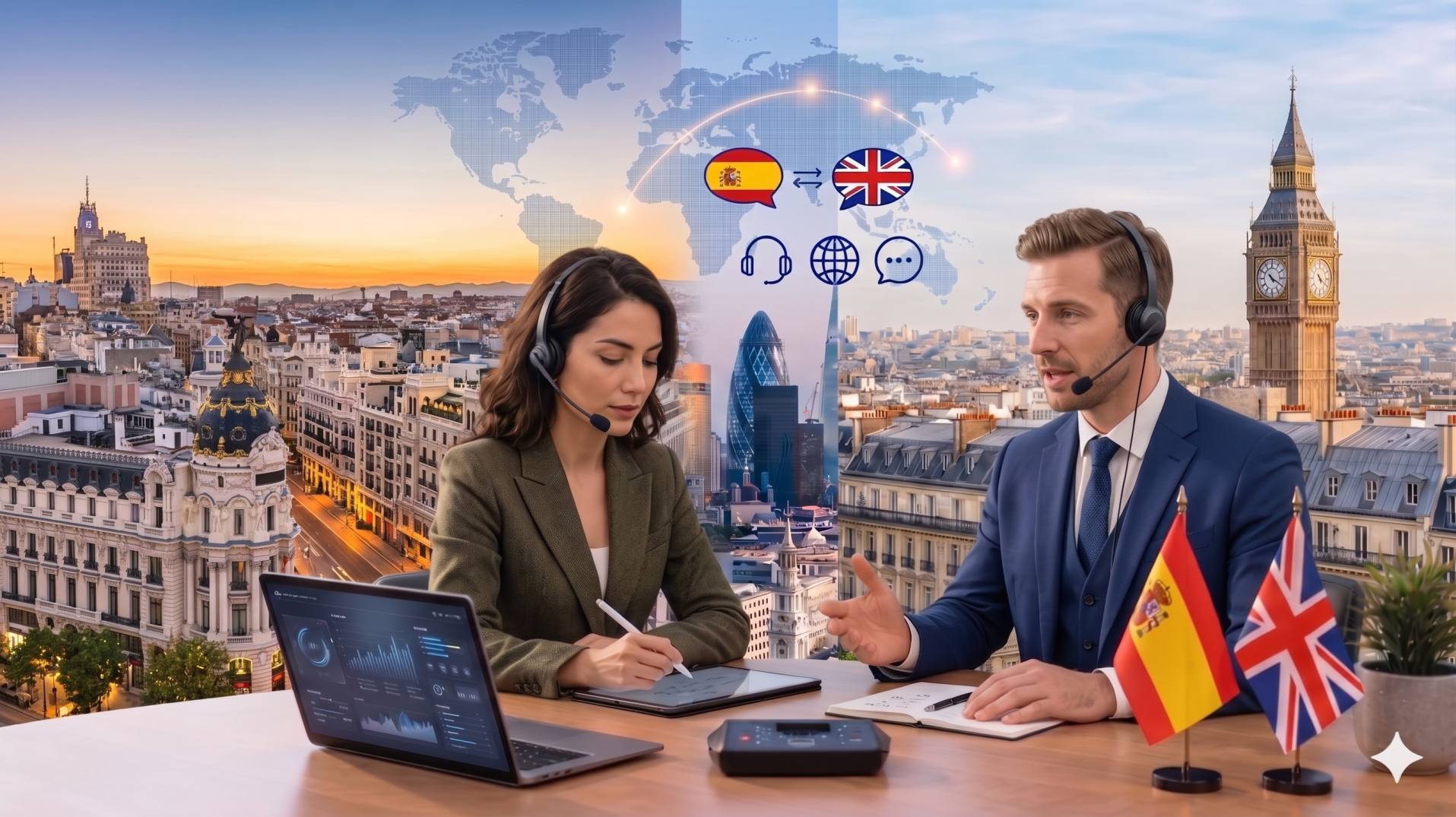

Securing a qualified German interpreter in Southwark is paramount for effective communication across a multitude of critical sectors within the UK’s professional landscape. Whether engaging with His Majesty’s Courts and Tribunals Service (HMCTS), navigating complex healthcare interactions with NHS trusts such as Guy’s and St Thomas’ NHS Foundation Trust or King’s College Hospital NHS Foundation Trust, or facilitating international business dealings, the need for precise and culturally sensitive linguistic support cannot be overstated. This document outlines the strategic importance of professional German interpretation and translation services, specifically within the context of Southwark’s dynamic economic and legal environment, adhering strictly to UK professional standards and institutional frameworks.
Translation vs Interpretation: Precision in Professional Contexts
While often used interchangeably, translation and interpretation serve distinct yet complementary roles, both vital for seamless communication. Interpretation involves the real-time, spoken rendition of a message from one language to another. This requires immediate comprehension, cultural nuance, and the ability to convey meaning accurately and instantaneously. A German translator in Southwark, conversely, works with written text, ensuring that documents, contracts, and official records are rendered faithfully into German or English. For professional services, especially in legal and medical settings, the distinction is critical. Misinterpretation can lead to significant misunderstandings, legal challenges, and compromised patient safety. Professional interpreters and translators adhere to stringent ethical codes and professional standards, often certified by bodies like the National Register of Public Service Interpreters (NRPSI) or holding qualifications such as the Diploma in Public Service Interpreting (DPSI).
Legal Defence, Immigration, and Courtroom Interpretation
The UK’s legal system operates on principles of fairness and access to justice for all, irrespective of language. For individuals and businesses requiring German language services within the legal sphere, the role of a qualified interpreter is indispensable. This is particularly true in matters involving His Majesty’s Courts and Tribunals Service (HMCTS), the Crown Prosecution Service (CPS), and the UK Visas and Immigration (UKVI) department of the Home Office. German speakers involved in criminal proceedings, civil litigation, family law, or asylum claims must have access to interpreters who understand the specific terminology and procedural nuances of UK law. The NRPSI sets the benchmark for public service interpreters, ensuring they possess the necessary linguistic skills, ethical grounding, and understanding of UK legal frameworks. Interpreters working in this domain must be adept at conveying complex legal arguments, witness testimonies, and judicial instructions with absolute fidelity. This includes understanding the distinct requirements for interpretation in various courts, from Magistrates’ Courts to the Royal Courts of Justice, and tribunals such as the First-tier Immigration Tribunal. The integrity of legal proceedings hinges on accurate communication, making the engagement of NRPSI-registered or DPSI-qualified German interpreters a non-negotiable requirement for law firms, legal aid agencies, and HMCTS itself. Furthermore, the Home Office and UKVI rely on accurate interpretation for interviews and case assessments, ensuring that all parties understand the proceedings and their rights. The professional standards mandated by bodies like the NRPSI ensure that interpreters are not only linguistically proficient but also impartial and bound by strict confidentiality, a cornerstone of trust in the legal process.
Healthcare and NHS Patient Safety
Patient safety and effective communication are cornerstones of the National Health Service (NHS). In Southwark, where a diverse population necessitates robust language support, German-speaking patients interacting with healthcare providers require interpreters who can bridge linguistic divides with accuracy and sensitivity. The NHS, guided by NHS England’s Language Access guidelines, mandates that providers ensure patients can understand their diagnosis, treatment options, and consent forms. This is particularly crucial when dealing with complex medical information or sensitive discussions. Interpreters working within the NHS must possess not only advanced German and English language skills but also a deep understanding of medical terminology and the UK healthcare system. They must operate with the utmost professionalism, adhering to the ethical principles of impartiality and confidentiality, as stipulated by professional bodies and UK GDPR regulations. The Care Quality Commission (CQC) also emphasises effective communication as a key aspect of high-quality care. For NHS trusts serving Southwark, such as Guy’s and St Thomas’ NHS Foundation Trust and King’s College Hospital NHS Foundation Trust, engaging certified medical interpreters is essential for ensuring equitable access to care and preventing medical errors stemming from miscommunication. The Southwark Council also plays a role in ensuring local health services are accessible to all residents. Professional interpreters facilitate informed consent, explain treatment plans, and ensure that patients’ concerns are fully understood by clinicians, thereby upholding the highest standards of patient care and safety in line with UK GDPR and CQC requirements.
Technical Interpretation Modalities
The effective delivery of German interpretation services in Southwark relies on selecting the appropriate modality to suit the specific context. Each method requires distinct skills and equipment, ensuring that communication flows seamlessly regardless of the setting. Consecutive interpretation is commonly used in one-on-one meetings, doctor’s appointments, or small group discussions. The interpreter listens to a segment of speech, then renders it into the target language once the speaker pauses. Simultaneous interpretation is employed in larger conferences, international meetings, or court proceedings where real-time communication is essential. Interpreters, often working in soundproof booths with specialised equipment, interpret the speaker’s words almost instantaneously as they speak. Escort interpretation (also known as liaison interpretation) facilitates communication between parties speaking different languages in less formal settings, such as business negotiations, site visits, or social events. The interpreter acts as a cultural bridge, ensuring smooth interaction. Increasingly, remote interpretation services are becoming prevalent, utilising telephone or video conferencing platforms. This modality offers flexibility and cost-effectiveness, particularly for urgent or infrequent needs, but requires robust technology and skilled remote interpreters who can maintain accuracy and engagement without physical presence. The choice of modality directly impacts the efficiency and effectiveness of communication, and professional interpreting agencies will advise clients on the best approach based on the event’s nature, number of participants, and venue.
Economic and Social Fabric of Southwark
Southwark, a borough rich in history and dynamism, presents a vibrant economic and social landscape. Its strategic location in Central London, coupled with its diverse population and thriving business sectors, creates a constant demand for professional language services, including German interpretation and translation.
Corporate and Industry
Southwark is home to a significant number of businesses, ranging from multinational corporations to innovative start-ups, particularly in sectors like finance, technology, and creative industries. German companies with a presence in the UK, or UK firms engaging with German markets, require reliable German language support for market entry, contract negotiations, client relations, and internal communications. Professional interpreters and translators ensure that business dealings are conducted with clarity and precision, fostering strong international partnerships and adhering to UK commercial law. The presence of international organisations and the ongoing global economic integration underscore the need for expert linguistic services to navigate the complexities of cross-border commerce.
Tourism
As a major cultural and tourist hub, Southwark attracts visitors from across the globe, including a significant number of German-speaking tourists. While many tourist-facing businesses may have multilingual staff, the need for professional German interpretation can arise in specific contexts, such as guided tours for German corporate groups, specialised historical or cultural events, or for German-speaking individuals requiring assistance with complex travel arrangements or legal matters encountered during their visit. High-quality interpretation enhances the visitor experience and supports the local tourism economy.
Legal Infrastructure
Southwark’s proximity to the legal heart of London means it is well-served by a robust legal infrastructure. Numerous law firms, barristers’ chambers, and legal support services operate within or near the borough. For German-speaking individuals or businesses involved in legal disputes, transactions, or immigration matters within the UK, access to qualified German interpreters is critical. These professionals ensure that legal advice is understood, court proceedings are accessible, and documentation is accurately translated, upholding the principles of justice as administered by His Majesty’s Courts and Tribunals Service (HMCTS) and other UK legal bodies.
NHS Healthcare
The National Health Service (NHS) is a vital component of Southwark’s social infrastructure. With a diverse population, the demand for language services within healthcare settings is substantial. German-speaking patients requiring medical consultations, treatments, or emergency care rely on professional interpreters to communicate effectively with clinicians. This ensures accurate diagnosis, informed consent, and optimal patient outcomes, aligning with the NHS’s commitment to equitable and high-quality care for all residents, as overseen by bodies like the Care Quality Commission (CQC).
Local Infrastructure and Transport
Southwark benefits from excellent local infrastructure and transport links, facilitating the movement of people and goods throughout London and beyond. Major transport hubs, including parts of the London Underground network and extensive bus routes, connect Southwark to other key economic centres. This connectivity is crucial for businesses requiring interpretation services for meetings, site visits, or logistical coordination. Professional interpreters can facilitate communication with transport authorities, logistics partners, and clients, ensuring that operations run smoothly. The efficient functioning of these services is supported by clear communication, often requiring multilingual capabilities, especially in a global city like London. Understanding the local transport network and its operational requirements is often part of the service provided by experienced interpreters working within the corporate and public sectors in Southwark.
Conclusion
For any organisation or individual requiring precise and professional communication in German within Southwark and the wider UK, engaging a certified and experienced German interpreter in Southwark is essential. From the critical demands of legal proceedings under HMCTS and immigration matters with the Home Office, to ensuring patient safety within the NHS, and facilitating seamless international business transactions, the role of expert linguistic services cannot be overstated. Adherence to UK professional standards, such as those set by the NRPSI, and a thorough understanding of the local economic and institutional landscape are hallmarks of superior interpretation and translation services. Ensure your communication is accurate, culturally appropriate, and legally sound by partnering with qualified professionals.