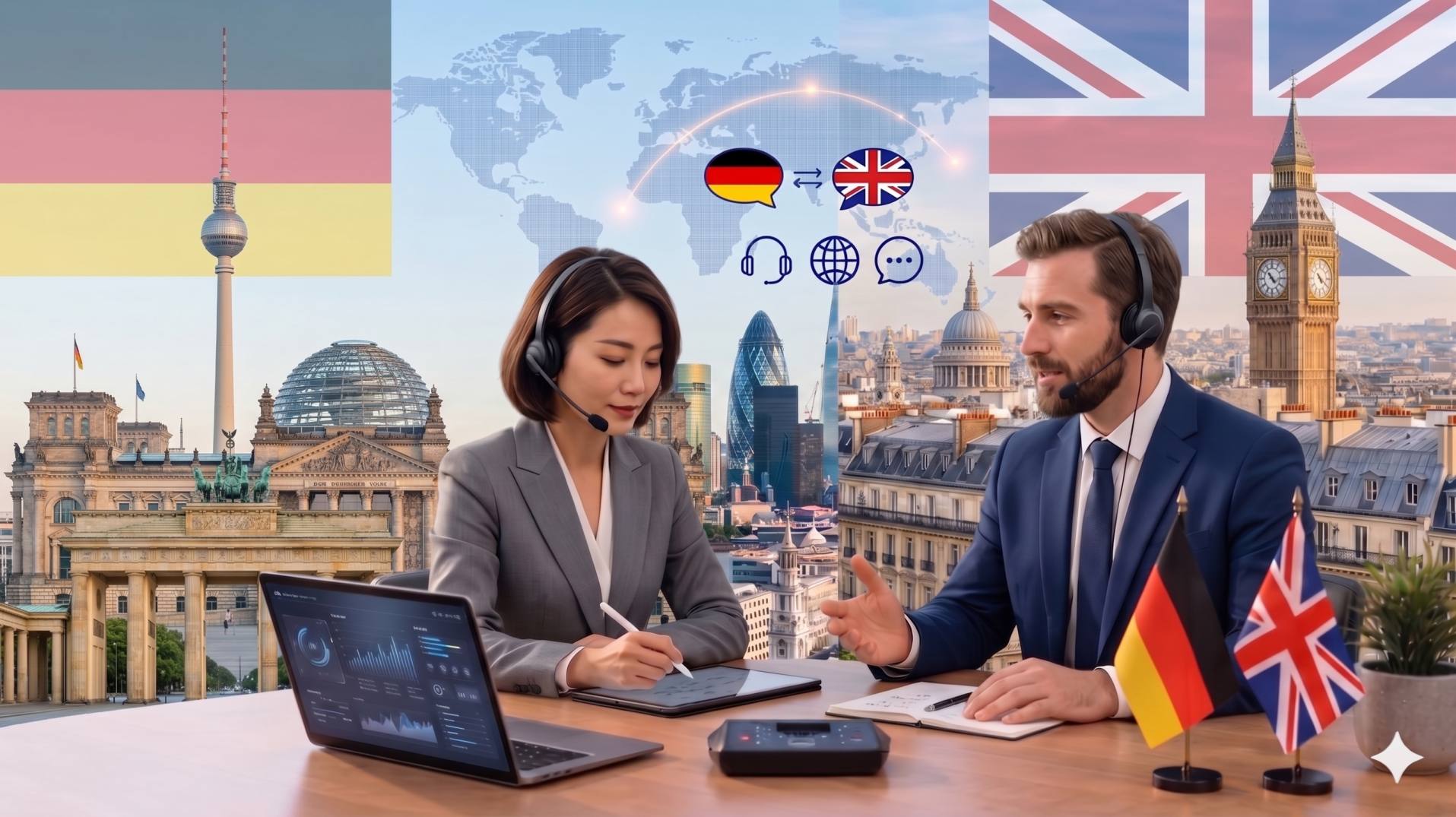
Securing a qualified German interpreter in Southend-on-Sea is paramount for effective communication across critical sectors within the UK’s professional landscape. Whether engaging with legal proceedings, navigating complex healthcare scenarios, or fostering international business relationships, the need for precise and culturally nuanced interpretation cannot be overstated. In Southend-on-Sea, residents and businesses can access vital healthcare services through trusts such as NHS North East London and West Essex ICB (which oversees services in the wider region) and rely on the comprehensive care provided by organisations like the Southend University Hospital NHS Foundation Trust. Ensuring that language barriers do not impede access to justice, healthcare, or economic opportunities is a core objective for public services and private enterprises alike, underscoring the importance of professional German interpretation.
Translation vs Interpretation
While often used interchangeably, translation and interpretation are distinct linguistic disciplines, each requiring specialised skills and qualifications. Interpretation involves the live, oral conversion of spoken language from one tongue to another, demanding immediate comprehension, accurate recall, and fluent delivery. A German translator in Southend-on-Sea, conversely, works with written text, converting documents, websites, or other written materials. The skills for each are not always transferable; an interpreter must possess exceptional auditory processing, memory, and public speaking abilities, often under high-pressure conditions. A translator, on the other hand, requires profound writing proficiency, meticulous attention to detail, and a deep understanding of stylistic conventions in both source and target languages. For legal, medical, and official proceedings, the distinction is critical. For instance, a court requires an interpreter to facilitate real-time dialogue, whereas a solicitor might need a translator to render a contract or witness statement into German. Professional bodies such as the Chartered Institute of Linguists (CIOL) and the National Register of Public Service Interpreters (NRPSI) set rigorous standards for both professions, ensuring competence and ethical conduct. Engaging a certified professional guarantees that the nuances of communication are preserved, preventing misunderstandings that could have significant consequences in sensitive environments.
Legal Defence, Immigration, and Courtroom Interpretation
The UK legal system, governed by His Majesty’s Courts and Tribunals Service (HMCTS), mandates that all parties involved in legal proceedings have access to qualified interpreters when language barriers exist. This is a fundamental right, ensuring fairness and due process under UK law. For individuals facing criminal charges, civil disputes, or immigration matters, a competent German interpreter is indispensable. They facilitate communication between defendants, witnesses, legal counsel, and the judiciary, ensuring that evidence is presented accurately and that all parties understand proceedings. The Home Office and its UK Visas and Immigration (UKVI) department rely heavily on accurate interpretation during interviews and application processes. Similarly, the First-tier Tribunal (Immigration and Asylum Chamber) requires interpreters to ensure that asylum seekers and visa applicants can articulate their cases effectively. Professional interpreters working in this domain often hold qualifications such as the Diploma in Public Service Interpreting (DPSI) or are registered with the NRPSI, signifying their adherence to strict ethical codes and professional standards. These interpreters are trained to maintain impartiality, confidentiality, and accuracy, which are vital in maintaining the integrity of the justice system. The Royal Courts of Justice and various county courts across the UK depend on a pool of skilled linguists to uphold these principles. Failure to provide adequate interpretation can lead to miscarriages of justice, highlighting the critical role of a professional German interpreter in Southend-on-Sea for those interacting with the UK legal framework.
Healthcare and NHS Patient Safety
Patient safety and effective communication are cornerstones of the National Health Service (NHS). The Care Quality Commission (CQC), the independent regulator of health and social care in England, emphasises the importance of accessible communication for all patients, regardless of their language. For German-speaking patients in Southend-on-Sea, accessing healthcare services provided by trusts like the Southend University Hospital NHS Foundation Trust or services commissioned by NHS North East London and West Essex ICB requires professional interpretation. Medical interpreters bridge the communication gap between patients and healthcare professionals, ensuring accurate diagnosis, informed consent, and adherence to treatment plans. This is particularly crucial in emergency situations, when discussing complex medical histories, or when explaining sensitive diagnoses and treatment options. NHS England provides guidelines on language access, stressing the need for qualified interpreters rather than relying on family members, who may lack the necessary impartiality, medical terminology knowledge, or professional training. Adherence to UK GDPR principles also means that patient confidentiality must be strictly maintained by all parties, including interpreters. A professional German interpreter understands the specific medical vocabulary and the cultural nuances that can affect patient understanding and trust. This ensures that German-speaking individuals receive equitable care and can actively participate in their healthcare decisions, aligning with the NHS’s commitment to patient-centred care and the principles of the NHS Constitution.
Technical Interpretation Modalities
The effective delivery of interpretation services relies on selecting the appropriate modality to suit the context. Several technical interpretation modes are employed, each with its own strengths and applications. Consecutive interpretation is common in one-on-one settings, such as medical consultations or legal interviews, where the interpreter listens to a segment of speech, conveys it in the target language, and then allows the speaker to respond. Simultaneous interpretation is used in larger settings like conferences, board meetings, or court proceedings, where the interpreter speaks almost concurrently with the original speaker, often using specialised equipment like booths and headsets. This mode requires intense concentration and rapid processing. Escort interpretation, also known as liaison interpretation, facilitates communication in more informal settings, such as business negotiations, site visits, or social events, where the interpreter acts as a cultural bridge. Finally, remote interpretation, facilitated by telephone or video conferencing, has become increasingly prevalent, offering flexibility and accessibility for situations where in-person presence is not feasible or necessary. This modality requires robust technology and clear audio, but it allows for rapid deployment of interpreters for a wide range of scenarios, from urgent medical calls to international business calls. The choice of modality depends on factors such as the number of participants, the formality of the setting, the technical requirements, and the urgency of the communication. Professional interpreting agencies and qualified interpreters, often affiliated with bodies like the International Association of Conference Interpreters (AIIC) for conference settings, can advise on the most suitable mode for any given requirement.
Economic and Social Fabric of Southend-on-Sea
Southend-on-Sea, a vibrant coastal town in Essex, possesses a dynamic economic and social fabric that benefits from robust professional services, including specialised language support. Understanding the local context is key for businesses and institutions seeking to engage effectively with the diverse population and economic opportunities present.
Corporate and Industry
Southend-on-Sea hosts a growing number of businesses, particularly in sectors like finance, technology, and creative industries. For companies operating internationally or serving a diverse clientele, the ability to communicate in multiple languages is a significant asset. German companies looking to invest or trade within the UK, or UK-based firms seeking to expand into German-speaking markets, require professional German interpretation and translation services. This facilitates smoother negotiations, clearer marketing communications, and stronger business relationships. The presence of skilled interpreters ensures that UK businesses can confidently engage with German partners, and vice versa, fostering economic growth and collaboration. Professional bodies like the Chartered Institute of Linguists advocate for the importance of language skills in the corporate world, recognising their direct impact on commercial success.
Tourism
As a popular seaside resort, Southend-on-Sea attracts visitors from across the UK and internationally. While English is the primary language, providing information and services in other languages, such as German, can enhance the visitor experience for German tourists. This includes translated signage, multilingual information points, and the availability of interpreters for hospitality staff. A positive visitor experience can lead to repeat business and positive word-of-mouth, contributing to the local tourism economy. Ensuring that German-speaking visitors feel welcomed and understood is a key aspect of providing excellent customer service in the hospitality sector.
Legal Infrastructure
Southend-on-Sea is served by a network of legal professionals, including solicitors and barristers who handle a range of matters from conveyancing to criminal defence and family law. For legal practitioners dealing with German-speaking clients or cases involving German nationals, access to qualified interpreters is essential. This ensures compliance with HMCTS requirements and upholds the principles of justice. The availability of interpreters registered with the NRPSI or holding qualifications like the DPSI guarantees that legal proceedings are conducted fairly and accurately, regardless of language barriers. This underpins the integrity of the local legal infrastructure.
NHS Healthcare
The healthcare system in Southend-on-Sea, primarily delivered through the Southend University Hospital NHS Foundation Trust and supported by NHS North East London and West Essex ICB, serves a diverse population. For German-speaking residents or visitors requiring medical attention, professional interpretation is vital for effective patient care. This ensures that patients can communicate their symptoms accurately, understand diagnoses, and provide informed consent for treatments. The NHS’s commitment to equitable access means that language should never be a barrier to receiving high-quality healthcare. Professional interpreters play a crucial role in upholding patient safety and ensuring that all individuals receive the care they need, in line with NHS patient rights and UK GDPR standards.
Local Infrastructure and Transport
Southend-on-Sea benefits from a well-developed local infrastructure that supports its economic and social functions. The town is connected by a robust transport network, including road, rail, and proximity to major airports, facilitating both local and international travel. The Southend-on-Sea City Council plays a key role in managing and developing this infrastructure, ensuring accessibility for residents and businesses. For professional services, particularly those requiring the movement of interpreters or clients, efficient transport links are essential. The availability of reliable public transport and road networks ensures that interpreters can reach courtrooms, hospitals, or business premises promptly. Furthermore, the town’s digital infrastructure supports the increasing demand for remote interpretation services, allowing for seamless communication across geographical boundaries. This integrated approach to infrastructure and transport underpins the smooth operation of essential services, including those that rely on professional language support.
Conclusion
In conclusion, the need for a professional German interpreter in Southend-on-Sea is multifaceted, extending across legal, healthcare, and commercial domains. Ensuring clear, accurate, and culturally sensitive communication is not merely a matter of convenience but a fundamental requirement for justice, patient safety, and economic success within the UK’s regulatory and social framework. Whether you are a legal professional requiring interpretation for court proceedings under HMCTS, an NHS trust aiming to provide equitable care to German-speaking patients, or a business seeking to forge international partnerships, engaging a certified and experienced German interpreter is indispensable. We offer expert interpretation services tailored to meet the stringent standards expected by UK institutions and professional bodies, ensuring your communication objectives are met with precision and integrity. Contact us today to discuss your specific requirements for a German interpreter in Southend-on-Sea.