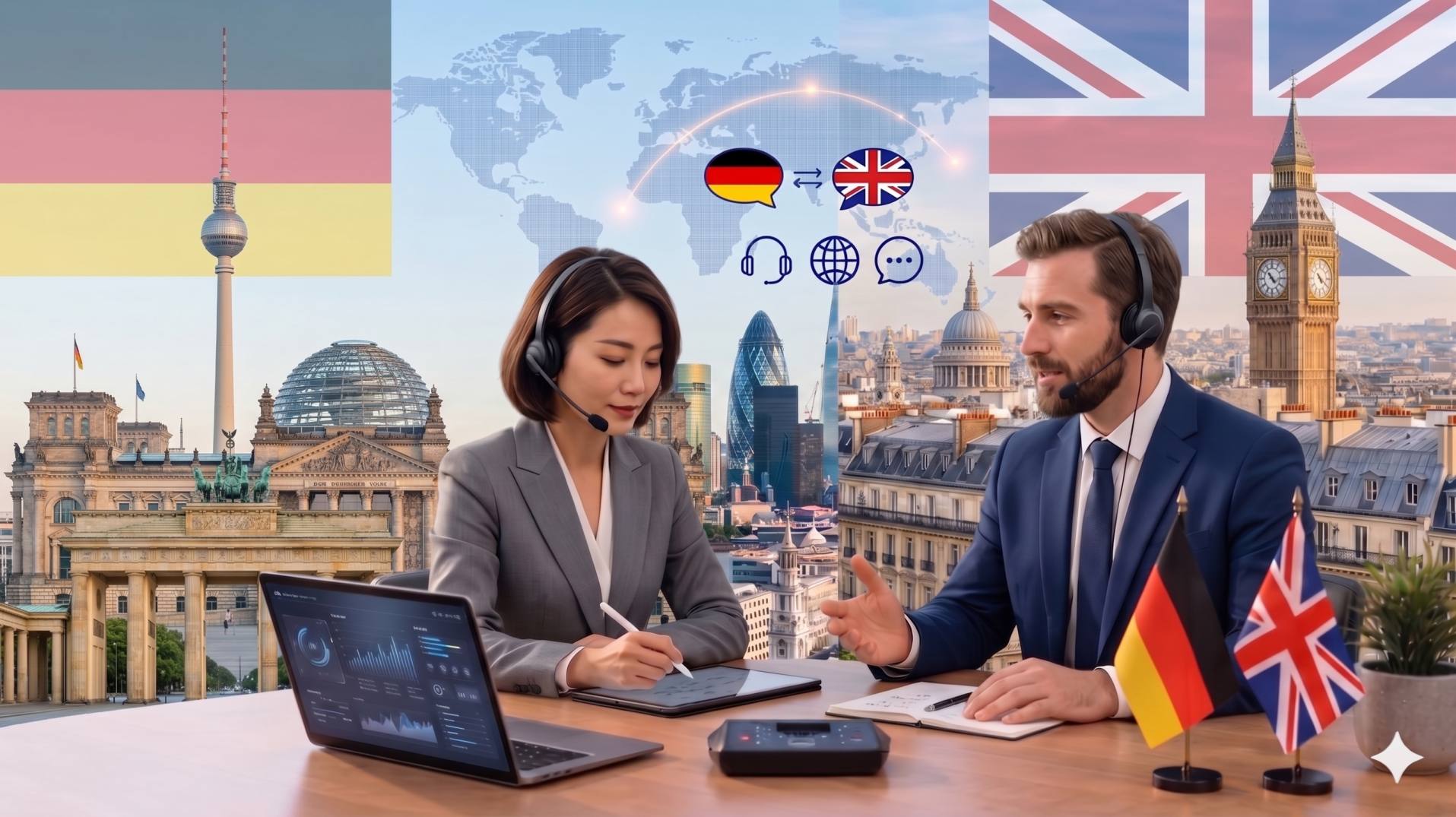
Securing a qualified German interpreter in Tendring is paramount for effective communication across a spectrum of critical sectors within the UK. Whether navigating the intricacies of His Majesty’s Courts and Tribunals Service (HMCTS) proceedings, ensuring patient safety within the National Health Service (NHS), or facilitating international business dealings, the need for precise and culturally attuned linguistic support cannot be overstated. Tendring, a district with a unique economic landscape and a growing international presence, relies on professional interpreters to bridge language divides, upholding legal standards, medical ethics, and commercial integrity. For residents and businesses in Tendring requiring German language services, access to accredited professionals is essential for seamless interaction with UK institutions. This includes vital services provided by the East Suffolk and North Essex NHS Foundation Trust and the Ipswich Hospital NHS Trust, both of which serve the Tendring area and adhere to stringent NHS language access policies.
Translation vs Interpretation: Understanding the Nuances
While often used interchangeably, translation and interpretation are distinct linguistic disciplines, each requiring specialised skills and qualifications. Interpretation involves the real-time, oral conversion of spoken or signed language from one language to another. This demands not only fluency in both the source and target languages but also exceptional listening comprehension, memory recall, and the ability to think quickly under pressure. A professional German interpreter in Tendring must possess these attributes to facilitate live communication in settings such as legal consultations, medical appointments, or business meetings. In contrast, translation deals with the written word, converting documents, texts, and other written materials from one language to another. This process allows for more deliberation, research, and revision to ensure accuracy and fidelity to the original text. For businesses and legal professionals in Tendring, understanding this distinction is crucial when engaging linguistic services. A certified German translator in Tendring will focus on the accuracy of written documents, while an interpreter will focus on the immediate, spoken exchange. Both roles are vital for comprehensive communication strategies, ensuring that all stakeholders, regardless of their primary language, can fully understand and participate in discussions and processes.
Legal Defence, Immigration, and Courtroom Interpretation
The UK’s legal system is built on principles of fairness and access to justice for all. For individuals who do not speak English as a primary language, the provision of qualified interpreters is a fundamental right, particularly within criminal and civil proceedings governed by His Majesty’s Courts and Tribunals Service (HMCTS). The National Register of Public Service Interpreters (NRPSI) sets the benchmark for professional interpreters working in public services, including the legal sector. Interpreters registered with the NRPSI have demonstrated a high level of linguistic proficiency and ethical understanding, often holding qualifications such as the Diploma in Public Service Interpreting (DPSI). This ensures that defendants, witnesses, and legal professionals can communicate accurately and effectively, safeguarding the integrity of the judicial process. In Tendring, as across the UK, cases before HMCTS, including those heard at local magistrates’ courts or county courts, require interpreters for German speakers. This is critical for ensuring that individuals understand charges, can present their defence, and participate fully in proceedings. Furthermore, immigration law is a significant area where German interpretation services are indispensable. Applications to UK Visas and Immigration (UKVI), appeals lodged with the First-tier Immigration Tribunal, and interactions with the Home Office all necessitate clear communication. A professional German interpreter ensures that complex legal terminology is conveyed accurately, preventing misunderstandings that could have severe consequences for individuals’ immigration status. The Royal Courts of Justice and other appellate courts also rely on highly skilled interpreters for complex cases. The adherence to standards set by the NRPSI and the requirements for interpreters to undergo background checks underscore the commitment to maintaining trust and accuracy within the UK’s legal framework. Professional bodies like the Chartered Institute of Linguists (CIOL) also play a role in setting and maintaining professional standards for linguists operating within the UK.
Healthcare and NHS Patient Safety
Patient safety within the National Health Service (NHS) is paramount, and effective communication is a cornerstone of safe and effective care. For German-speaking patients in Tendring, accessing healthcare services requires the availability of qualified interpreters to ensure they can fully understand diagnoses, treatment options, and consent forms. The NHS operates under strict guidelines regarding language access, as mandated by NHS England and overseen by the Care Quality Commission (CQC). These guidelines ensure that all patients, regardless of their linguistic background, receive equitable care. The East Suffolk and North Essex NHS Foundation Trust and the Ipswich Hospital NHS Trust, serving Tendring, are committed to providing language support. This includes utilising professional interpreters who understand medical terminology and adhere to the ethical principles of confidentiality and impartiality, as outlined by UK GDPR. Misunderstandings in a healthcare setting can lead to serious adverse outcomes, including incorrect medication, delayed treatment, or a failure to provide informed consent. Therefore, engaging interpreters who are not only fluent in German and English but also possess specific medical interpreting qualifications, such as those recognised by the NRPSI or through specialised medical interpreter training, is essential. The CQC inspects NHS providers to ensure they meet these standards, including the provision of adequate language services. Professional bodies like the Association of Police and Court Interpreters (APCI) also contribute to the broader landscape of professional standards for interpreters in public service settings. Ensuring that all patient interactions are accurately conveyed protects both the patient and the healthcare provider, upholding the high standards expected of the NHS.
Technical Interpretation Modalities
The effective delivery of interpretation services in Tendring, particularly for professional and technical contexts, often depends on selecting the appropriate modality. Each modality is suited to different situations and requires specific skills from the interpreter. Simultaneous interpretation is perhaps the most demanding, where the interpreter conveys the message in the target language almost as the speaker is speaking, typically using specialised equipment like booths and headsets. This is common in large conferences, international summits, and high-level business meetings where time is critical. Consecutive interpretation involves the interpreter listening to a segment of speech, then rendering it into the target language once the speaker pauses. This is suitable for smaller meetings, one-on-one discussions, and legal depositions where detailed understanding and interaction are key. Escort interpretation, also known as liaison interpretation, facilitates communication between two or more parties speaking different languages in informal settings, such as business negotiations, site visits, or social events. The interpreter acts as a cultural bridge, ensuring smooth dialogue. Finally, remote interpretation, including video remote interpreting (VRI) and over-the-phone interpreting (OPI), has become increasingly prevalent. This modality allows for rapid deployment of interpreters for situations where face-to-face interaction is not feasible or necessary, leveraging technology to connect interpreters with clients across distances. For businesses and organisations in Tendring, understanding these technical modalities ensures that the right type of German interpretation service is selected, optimising communication efficiency and effectiveness. Professional standards for all these modalities are often guided by bodies like the CIOL and the NRPSI, ensuring quality and ethical practice.
Economic and Social Fabric of Tendring
Tendring, a district in Essex, possesses a distinct economic and social character that influences the demand for specialised services, including German interpretation. Understanding this local context is vital for businesses and public services operating within the area.
Corporate and Industry Demands
While Tendring may not be a major industrial hub, its economy is diverse, with sectors such as agriculture, tourism, and a growing number of small and medium-sized enterprises (SMEs). International trade, even at a smaller scale, can necessitate German language support for contract negotiations, supplier communications, or market research. Businesses looking to export to German-speaking markets or attract German investment will find a professional German interpreter or translator invaluable. The proximity to major ports and transport links also facilitates international commerce, increasing the potential need for linguistic services. Adherence to UK business law and standards is crucial, and clear communication ensures compliance.
Tourism and Hospitality
Tendring boasts a significant tourism sector, particularly along its coastline, attracting visitors from across the UK and internationally. While German tourists may not form the largest demographic, their presence contributes to the local economy. For hotels, attractions, and hospitality businesses, providing information and services in German can enhance the visitor experience and attract a wider clientele. This can range from translated brochures and menus to on-site interpretation for guided tours or customer service interactions. Ensuring that German-speaking visitors feel welcome and can navigate local services smoothly is key to maximising tourism revenue.
Legal Infrastructure and Services
The legal landscape in Tendring, like elsewhere in the UK, requires robust language support. Local law firms, particularly those dealing with international clients or cross-border issues, may require German interpreters for client consultations, document review, or court appearances. The presence of HMCTS facilities, even if not directly within Tendring but serving the wider region, means that legal professionals must be prepared for cases involving German speakers. This includes understanding the requirements for certified interpreters and the standards set by bodies like the NRPSI and the DPSI qualification framework.
NHS Healthcare Provision
As previously highlighted, the NHS is a critical service provider in Tendring. The East Suffolk and North Essex NHS Foundation Trust and the Ipswich Hospital NHS Trust are responsible for delivering healthcare to the local population. For German-speaking residents or visitors requiring medical attention, access to qualified medical interpreters is non-negotiable. This ensures that patients can articulate their symptoms, understand medical advice, and provide informed consent, thereby upholding patient safety and the principles of equitable healthcare delivery mandated by NHS England and regulated by the CQC. The application of UK GDPR principles also necessitates careful handling of patient information, which is facilitated by trusted interpreters.
Local Infrastructure and Transport
Tendring’s infrastructure and transport links play a role in its connectivity and accessibility, impacting the ease with which professional services can be accessed. The district is served by a network of roads, including the A120, which provides crucial links to the wider UK motorway network, including connections to London and ferry ports such as Harwich International Port. This connectivity is vital for businesses engaged in international trade and for facilitating the movement of interpreters and clients. Public transport options, including local bus services and National Rail connections from stations like Clacton-on-Sea and Frinton-on-Sea, provide alternatives for travel within the region. For businesses requiring face-to-face interpretation services, understanding these transport links ensures efficient scheduling and logistical planning. Furthermore, the increasing adoption of remote interpretation technologies means that even if physical travel is a consideration, high-quality German interpretation can be delivered seamlessly to any location within Tendring or beyond, connecting local needs with global linguistic expertise.
In conclusion, the demand for a skilled German interpreter in Tendring is driven by the district’s diverse economic activities, its role in the UK’s legal and healthcare systems, and its connectivity. Professional interpretation is not merely a linguistic service; it is a critical enabler of justice, health, and commerce. For businesses, legal firms, and healthcare providers in Tendring, engaging accredited German interpreters ensures compliance with UK standards, enhances operational efficiency, and fosters trust with clients and patients. We are committed to providing expert German interpretation services that meet the rigorous demands of the UK’s professional landscape.