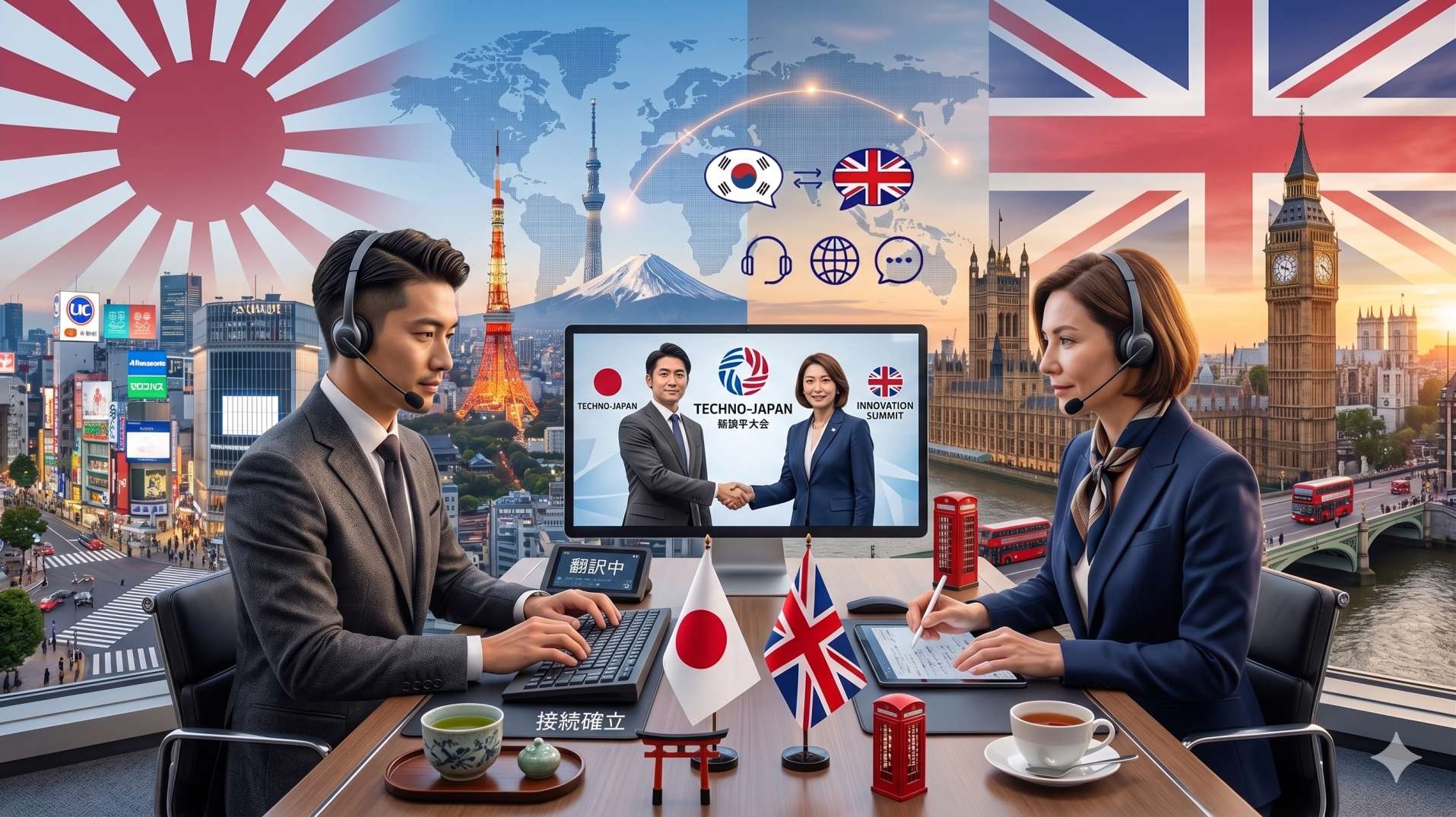
Securing a qualified Japanese interpreter in Kingston upon Hull is paramount for effective communication across diverse professional sectors within the United Kingdom. Whether engaging with His Majesty’s Courts and Tribunals Service (HMCTS), navigating the complexities of the National Health Service (NHS) with trusts such as the Hull University Teaching Hospitals NHS Trust and East Yorkshire Hospitals NHS Trust, or facilitating international business dealings, the need for precise and culturally nuanced interpretation is undeniable. This service ensures that legal proceedings, critical medical consultations, and vital business negotiations are conducted with the utmost accuracy, adhering strictly to UK legal and professional standards.
Translation vs Interpretation
While often used interchangeably in casual conversation, translation and interpretation are distinct disciplines, each requiring specialised skills and qualifications. A Japanese translator in Kingston upon Hull works with written text, converting documents, reports, websites, and other written materials from Japanese to English or vice versa. This process demands a deep understanding of grammar, syntax, and idiomatic expressions in both languages, as well as subject-specific terminology. The output is a written document that accurately reflects the original meaning. Conversely, a Japanese interpreter in Kingston upon Hull facilitates spoken communication in real-time. This involves listening to a speaker in one language and rendering their message accurately and fluently into another language. The interpreter must possess not only linguistic proficiency but also exceptional listening comprehension, memory recall, and the ability to convey tone, intent, and cultural context. Professional interpreters often hold certifications from bodies like the National Register of Public Service Interpreters (NRPSI) or the Diploma in Public Service Interpreting (DPSI), ensuring they meet the rigorous standards required for public service settings, including legal and healthcare environments in the UK.
Legal Defence, Immigration, and Courtroom Interpretation
The UK’s justice system, overseen by His Majesty’s Courts and Tribunals Service (HMCTS), relies heavily on the availability of skilled interpreters to ensure fair trials and access to justice for all individuals, regardless of their linguistic background. For Japanese speakers involved in legal matters in Kingston upon Hull, whether as defendants, witnesses, or victims, access to a qualified Japanese interpreter in Kingston upon Hull is a fundamental right. These interpreters play a crucial role in proceedings before HMCTS, including Magistrates’ Courts, Crown Courts, and various tribunals. They must adhere to strict codes of conduct, maintaining impartiality, confidentiality, and accuracy. The National Register of Public Service Interpreters (NRPSI) sets the benchmark for professional interpreters in the UK, with many legal professionals seeking interpreters registered with the NRPSI or holding the DPSI qualification. This ensures that the nuances of legal arguments, witness testimonies, and judicial instructions are conveyed precisely, upholding the principles of natural justice. Furthermore, in immigration matters, Japanese nationals interacting with the Home Office, UK Visas and Immigration (UKVI), or the First-tier Immigration Tribunal will require expert interpretation to articulate their cases effectively. The accuracy provided by a professional interpreter is vital in these high-stakes situations, where decisions can have profound impacts on an individual’s life in the UK.
Healthcare and NHS Patient Safety
Patient safety within the NHS is a cornerstone of healthcare delivery in the UK, and effective communication is integral to achieving this. For Japanese-speaking patients receiving care from NHS trusts serving Kingston upon Hull, such as the Hull University Teaching Hospitals NHS Trust or East Yorkshire Hospitals NHS Trust, access to professional Japanese interpretation is essential. Misunderstandings can lead to incorrect diagnoses, inappropriate treatment, and adverse patient outcomes. NHS England’s Language Access guidelines mandate that healthcare providers ensure patients can access services in their preferred language. Professional interpreters working within the NHS must not only be linguistically competent but also understand medical terminology and the sensitive nature of healthcare interactions. They are bound by strict confidentiality agreements, in line with UK GDPR principles, and must maintain professional neutrality. The Care Quality Commission (CQC) inspects healthcare services to ensure they are safe, effective, and well-led, with effective communication being a key performance indicator. A certified Japanese interpreter in Kingston upon Hull ensures that patients can fully understand their medical conditions, treatment options, consent forms, and discharge instructions, thereby empowering them to make informed decisions about their health and well-being. This commitment to clear communication underpins the trust between patients and healthcare providers, fostering better health outcomes.
Technical Interpretation Modalities
The requirement for Japanese interpretation in Kingston upon Hull extends across various contexts, necessitating different modalities to suit the specific situation. Simultaneous interpretation is often employed in conferences, large meetings, or court proceedings where participants need to understand the speaker in real-time. The interpreter, typically working from a soundproof booth with specialised equipment, listens to the speaker through a headset and interprets into a microphone, with delegates listening via their own headsets. This requires intense concentration and rapid processing. Consecutive interpretation is more suited for smaller meetings, interviews, or one-on-one discussions. The interpreter listens to a segment of speech, then delivers the interpretation after the speaker has finished their thought. This allows for a more natural conversational flow but takes longer than simultaneous interpretation. Escort interpretation, also known as liaison interpretation, is used to facilitate communication between parties who speak different languages in less formal settings, such as business meetings, site visits, or social events. The interpreter acts as a bridge, enabling smooth interaction and cultural understanding. Increasingly, remote interpretation services are being utilised, allowing clients to connect with interpreters via video or telephone conferencing platforms. This modality offers flexibility and cost-effectiveness, particularly for less critical or urgent communication needs, though it requires reliable technology and a suitable environment for both the interpreter and the participants. The choice of modality depends on the context, the number of participants, the required speed of communication, and the overall objectives of the interaction.
Economic and Social Fabric of Kingston upon Hull
Kingston upon Hull, a city with a rich maritime history and a burgeoning modern economy, presents a dynamic environment for businesses and organisations requiring Japanese language services. Understanding the local economic landscape is crucial for tailoring interpretation and translation services effectively.
Corporate and Industry
Hull’s economy is diversifying, with key sectors including advanced manufacturing, renewable energy (particularly offshore wind), logistics, and digital technology. Japanese companies with operations or interests in these sectors, or UK-based firms looking to engage with Japanese markets, will require expert Japanese interpreter in Kingston upon Hull services for business meetings, contract negotiations, technical training, and product launches. The ability to communicate effectively with Japanese partners, suppliers, and clients is vital for fostering strong business relationships and securing competitive advantages. Professional interpreters can bridge cultural divides, ensuring that business etiquette and communication styles are respected, thereby preventing misunderstandings that could jeopardise commercial agreements.
Tourism
While not historically a primary tourist destination compared to some other UK cities, Kingston upon Hull has been actively developing its tourism sector, particularly following its City of Culture designation. The city offers unique attractions, including The Deep aquarium, the maritime museum, and its historic waterfront. As international tourism, including from Japan, grows, the need for Japanese language support in the hospitality sector becomes more apparent. This includes translation of tourist information, website content, and interpretation services for Japanese visitors interacting with hotels, restaurants, attractions, and transport providers. Ensuring a welcoming and accessible experience for Japanese tourists can significantly enhance the city’s reputation and economic benefits from tourism.
Legal Infrastructure
Kingston upon Hull is served by a robust legal infrastructure, including local law firms and access to HMCTS facilities. For Japanese individuals or businesses involved in legal disputes, property transactions, or requiring legal advice within the UK, access to qualified legal interpreters is indispensable. Law firms in Hull that handle international cases or serve clients with diverse linguistic needs will benefit from partnering with professional Japanese interpretation services. This ensures that all parties fully comprehend legal documentation, court proceedings, and client consultations, upholding the principles of justice and client care as mandated by UK legal professional bodies.
NHS Healthcare
The National Health Service (NHS) is a critical component of life in Kingston upon Hull, providing essential healthcare services to its residents. The Hull University Teaching Hospitals NHS Trust and East Yorkshire Hospitals NHS Trust serve a diverse population, and the need for effective communication with non-English speakers, including Japanese speakers, is a constant requirement. Professional Japanese interpreters ensure that patients can communicate their symptoms, understand diagnoses, and participate in treatment decisions, thereby enhancing patient safety and satisfaction. This commitment to inclusive healthcare aligns with the CQC’s standards for patient care and communication.
Local Infrastructure and Transport
Kingston upon Hull benefits from a well-developed infrastructure that supports its economic and social functions. The city is connected by major road networks, including the A63, providing links to the wider UK motorway system. Public transport within the city is primarily served by buses, with Hull Paragon Interchange serving as a major railway station offering connections to London, Manchester, and other key cities. For international visitors or businesses requiring interpretation services for travel or logistics, understanding these transport links is important. Professional interpreters can assist with navigating travel arrangements, attending meetings at various locations across the city and beyond, and ensuring smooth logistical operations. The presence of reliable infrastructure facilitates the work of interpreters, allowing them to reach clients efficiently across Kingston upon Hull and the surrounding East Riding of Yorkshire region, whether for in-person assignments or to connect remotely to facilitate communication.
In conclusion, engaging a professional Japanese interpreter in Kingston upon Hull is a critical investment for any organisation or individual requiring accurate and culturally sensitive communication within the UK’s professional, legal, and healthcare spheres. By adhering to UK standards and utilising certified professionals, businesses and public services can ensure clarity, compliance, and success in their interactions. Contact us today to discuss your specific Japanese interpretation needs in Kingston upon Hull and across the United Kingdom.