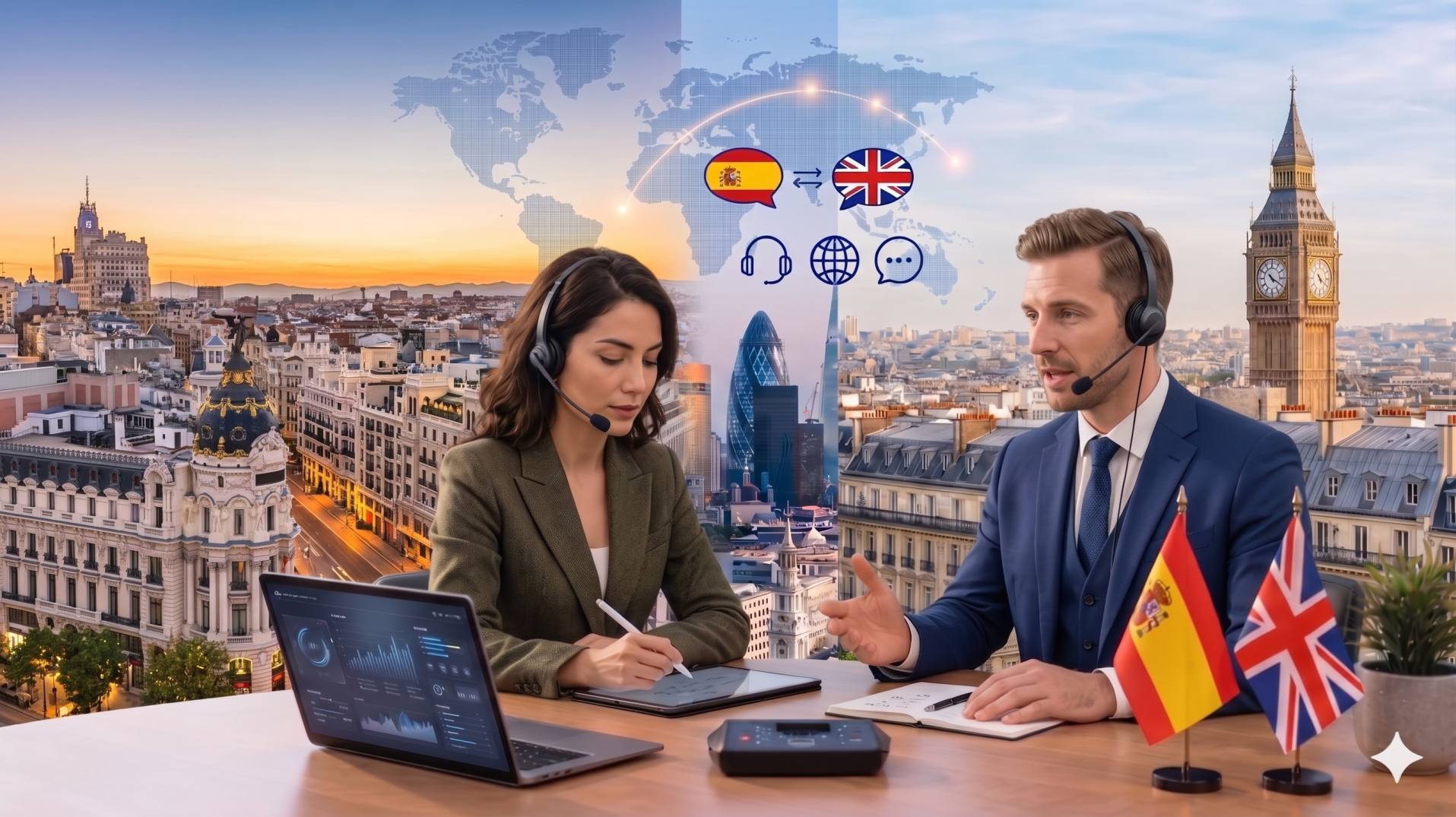
Securing a qualified Norwegian interpreter in Derby is paramount for effective communication across critical sectors, including legal proceedings, healthcare appointments, and business negotiations within the United Kingdom. The demand for specialised linguistic support in Derby, a city with a dynamic economic landscape and diverse population, underscores the necessity of accessing accredited professionals who understand the nuances of both Norwegian and the UK’s regulatory and cultural frameworks. Ensuring accurate and impartial interpretation is not merely a matter of convenience but a legal and ethical imperative, particularly when dealing with sensitive information within the purview of His Majesty’s Courts and Tribunals Service (HMCTS), the National Health Service (NHS), and various government departments. For residents and businesses in Derby, engaging with services provided by trusts such as the Derby and Burton Hospitals NHS Foundation Trust (https://www.dbth.nhs.uk/) and the Midlands Partnership University NHS Foundation Trust (https://www.mpft.nhs.uk/) requires seamless communication, which is facilitated by professional interpreters adhering to stringent UK standards.
Translation vs Interpretation: Understanding the Distinction
While often used interchangeably, translation and interpretation are distinct linguistic disciplines, each requiring a unique skill set and adherence to specific professional standards. Interpretation involves the real-time, oral conversion of spoken or signed language from one language to another. This demands not only fluency in both Norwegian and English but also the ability to process information rapidly, maintain neutrality, and understand the cultural context of the communication. A professional Norwegian interpreter in Derby must be adept at conveying not just words, but also tone, intent, and emotion accurately. Conversely, translation deals with the written word, converting text from a source language to a target language. This process allows for more deliberation, research, and revision to ensure accuracy and stylistic fidelity. For legal documents, medical records, or business contracts, a Norwegian translator in Derby is essential. However, in live settings such as court hearings, medical consultations, or business meetings, the role of the interpreter is indispensable. Professional bodies in the UK, such as the National Register of Public Service Interpreters (NRPSI) (https://www.nrpsi.uk/) and the Chartered Institute of Linguists (CIOL) (https://www.ciol.org.uk/), set the benchmarks for both professions, ensuring that practitioners meet rigorous standards of competence, ethics, and confidentiality. Understanding this distinction is crucial for corporate buyers and public sector organisations in Derby when commissioning linguistic services, ensuring they engage the correct specialist for their specific needs.
Legal Defence, Immigration, and Courtroom Interpretation
The UK’s justice system, governed by principles of fairness and due process, mandates that all individuals, regardless of their linguistic background, have access to justice. For Norwegian speakers involved in legal matters in Derby, this means access to qualified interpreters is a fundamental right. His Majesty’s Courts and Tribunals Service (HMCTS) oversees a vast network of courts and tribunals across England and Wales, and the requirement for accurate interpretation in these settings is non-negotiable. Whether it is a criminal trial at the Crown Court, a civil dispute in the County Court, or an immigration hearing before the First-tier Tribunal (Immigration and Asylum Chamber), the presence of a skilled Norwegian interpreter is vital. These interpreters must not only possess impeccable linguistic skills but also a thorough understanding of legal terminology, courtroom etiquette, and the specific procedures of HMCTS. Professional standards are often dictated by bodies like the NRPSI, which accredits interpreters who have passed rigorous examinations, including the Diploma in Public Service Interpreting (DPSI). The DPSI qualification, in particular, signifies a high level of competence in legal settings. Immigration law, a complex and ever-evolving area, also heavily relies on accurate interpretation. Individuals navigating the UK Visas and Immigration (UKVI) application process, or those seeking asylum, often require Norwegian interpretation for interviews, appeals, and submissions to the Home Office. Failure to provide adequate interpretation can lead to miscarriages of justice, impacting individuals’ rights and the integrity of the legal process. Law firms in Derby and surrounding areas must partner with reputable interpreting agencies or directly engage NRPSI-qualified interpreters to ensure compliance with legal obligations and to provide the best possible defence for their Norwegian-speaking clients. The Royal Courts of Justice, though located in London, sets precedents that apply nationwide, reinforcing the need for consistent, high-quality interpretation services across all UK jurisdictions.
Healthcare and NHS Patient Safety
Patient safety and effective communication are cornerstones of the National Health Service (NHS) in the UK. For Norwegian-speaking patients in Derby, accessing healthcare services without linguistic barriers is essential for receiving appropriate diagnosis, treatment, and care. The NHS has a legal and ethical obligation to provide language assistance to patients who need it, as outlined by NHS England’s Language Access guidelines and the Health and Care Professions Council (HCPC) standards. The Care Quality Commission (CQC), the independent regulator of health and social care in England, also emphasizes the importance of effective communication in ensuring patient safety and quality of care. A Norwegian interpreter plays a crucial role in bridging the communication gap during consultations with GPs, specialists, hospital admissions, and during diagnostic procedures. Misunderstandings arising from inadequate interpretation can have severe consequences, leading to incorrect medication, delayed treatment, or a failure to obtain informed consent. Professional interpreters working within the NHS must adhere to strict codes of confidentiality, mirroring the principles of patient privacy enshrined in UK law and the UK General Data Protection Regulation (UK GDPR). They must also be aware of medical terminology and the specific protocols of NHS trusts. For Derby residents, this means that when accessing services from the Derby and Burton Hospitals NHS Foundation Trust or the Midlands Partnership University NHS Foundation Trust, they can expect trained professionals to facilitate clear communication. Interpreters are often required for a range of scenarios, from routine check-ups and emergency room visits to complex surgical procedures and mental health assessments. The availability of qualified Norwegian interpreters ensures that all patients, irrespective of their English proficiency, can fully participate in their healthcare decisions and receive care that is both effective and respectful of their needs. The professional standards for medical interpreters are often aligned with those of public service interpreting, ensuring a high level of accuracy and impartiality.
Technical Interpretation Modalities
The effective delivery of interpretation services relies on selecting the appropriate modality to suit the specific context and requirements of the communication. For Norwegian-speaking clients in Derby, understanding these modalities is key to ensuring seamless interaction. Consecutive interpretation is perhaps the most common form, where the interpreter listens to a segment of speech, then renders it into the target language once the speaker pauses. This is ideal for one-on-one meetings, small group discussions, and medical consultations where detailed, turn-by-turn communication is needed. Simultaneous interpretation, on the other hand, involves the interpreter speaking at the same time as the source speaker, typically using specialised equipment like booths and headsets. This is essential for large conferences, international summits, and high-stakes legal proceedings where minimising time delays is crucial. It requires intense concentration and a high degree of linguistic and technical proficiency. Escort interpretation, also known as liaison interpretation, facilitates communication between parties speaking different languages in informal settings, such as business meetings, factory tours, or social events. The interpreter acts as a cultural bridge, ensuring smooth interaction and understanding. Finally, remote interpretation, facilitated by advancements in technology, allows interpreters to provide services via telephone (Video Remote Interpreting – VRI) or over the internet. This modality offers flexibility and can be particularly useful for urgent situations or when on-site interpreters are unavailable. For a Norwegian interpreter in Derby, proficiency in these various modalities, coupled with an understanding of the specific sector’s demands—be it legal, medical, or commercial—is crucial for providing a comprehensive service. Professional bodies like the International Association of Conference Interpreters (AIIC) (https://aiic.net/) provide guidance on best practices for various interpretation settings, underscoring the technical expertise required.
Economic and Social Fabric of Derby
Derby, a city with a rich industrial heritage and a forward-looking economy, presents a vibrant environment where linguistic services play an increasingly important role. The presence of a skilled Norwegian interpreter in Derby is integral to supporting the city’s diverse economic activities and social cohesion.
Corporate and Industry
Derby has a strong presence in advanced manufacturing, particularly in the aerospace and automotive sectors, with major companies like Rolls-Royce and Toyota having significant operations in the region. International collaboration, supply chain management, and global market engagement are common. Norwegian businesses looking to invest, partner, or trade with companies in Derby will require professional Norwegian translation and interpretation services for meetings, contract negotiations, technical specifications, and marketing materials. Ensuring clear communication avoids costly misunderstandings and fosters strong business relationships, aligning with the UK’s commitment to international trade. The Department for Business and Trade (https://www.gov.uk/government/organisations/department-for-business-and-trade) encourages such international engagement, highlighting the need for reliable linguistic support.
Tourism
While perhaps not its primary driver, tourism contributes to Derby’s economy, attracting visitors interested in its industrial history, the nearby Peak District National Park, and cultural attractions. Norwegian tourists or business visitors may require interpretation services for guided tours, hotel services, or local information. Providing accessible information and services in multiple languages, including Norwegian where demand exists, enhances the visitor experience and supports local hospitality businesses. This aligns with the broader UK tourism strategy to attract international visitors.
Legal Infrastructure
Derby hosts a range of legal practices, including solicitors and barristers’ chambers, serving both local and national clients. The city’s courts, under the purview of HMCTS, handle diverse cases. For Norwegian nationals residing in or interacting with the legal system in Derby, access to qualified Norwegian interpreters is essential for navigating criminal proceedings, civil litigation, family law matters, and immigration cases. Law firms in Derby must ensure they meet their obligations under UK law to provide interpreters when necessary, upholding the principles of justice and fairness as administered by His Majesty’s Courts and Tribunals Service.
NHS Healthcare
As previously detailed, the NHS trusts serving Derby, such as the Derby and Burton Hospitals NHS Foundation Trust and the Midlands Partnership University NHS Foundation Trust, cater to a diverse patient population. Ensuring that Norwegian-speaking patients can communicate effectively with healthcare professionals is a critical aspect of patient care and safety. This involves providing access to interpreters for consultations, treatment explanations, and emergency situations, adhering to the standards set by NHS England and the CQC. The Care Quality Commission (CQC) (https://www.cqc.org.uk/) consistently highlights communication as a key factor in the quality of care.
Local Infrastructure and Transport
Derby benefits from a well-developed infrastructure that supports its economic and social functions. Its strategic location in the East Midlands provides excellent connectivity. The city is served by a major railway station, Derby Station, which is a key hub on the West Coast Main Line and East Midlands Railway, offering direct services to London, Manchester, Birmingham, and other major cities. This connectivity is vital for business travellers and individuals requiring access to national services, including legal and healthcare appointments in other regions. Road networks are also robust, with the A38, A50, and A52 providing easy access to the M1 and M6 motorways, facilitating freight and passenger transport. For international visitors or those arriving from abroad, East Midlands Airport (EMA) is located nearby, offering cargo and passenger flights. The availability of reliable public transport within the city, including bus services, further enhances accessibility. For a Norwegian interpreter in Derby, this robust infrastructure ensures ease of travel to various locations for assignments, whether it’s a court appearance, a hospital visit, or a corporate meeting. The efficiency of local transport networks indirectly supports the seamless provision of essential services, including professional interpretation, to the residents and businesses of Derby.
In conclusion, the need for a professional Norwegian interpreter in Derby is multifaceted, spanning the critical domains of law, healthcare, and business. Ensuring access to accredited and experienced interpreters is not just about facilitating conversation; it is about upholding legal rights, ensuring patient safety, and fostering economic opportunities within the UK’s regulatory framework. Organisations and individuals requiring these vital linguistic services should prioritise engaging professionals who adhere to the stringent standards set by UK bodies such as the NRPSI and are familiar with the specific operational contexts of HMCTS, the NHS, and UK businesses. By doing so, they contribute to a more inclusive, equitable, and efficient society in Derby and beyond.