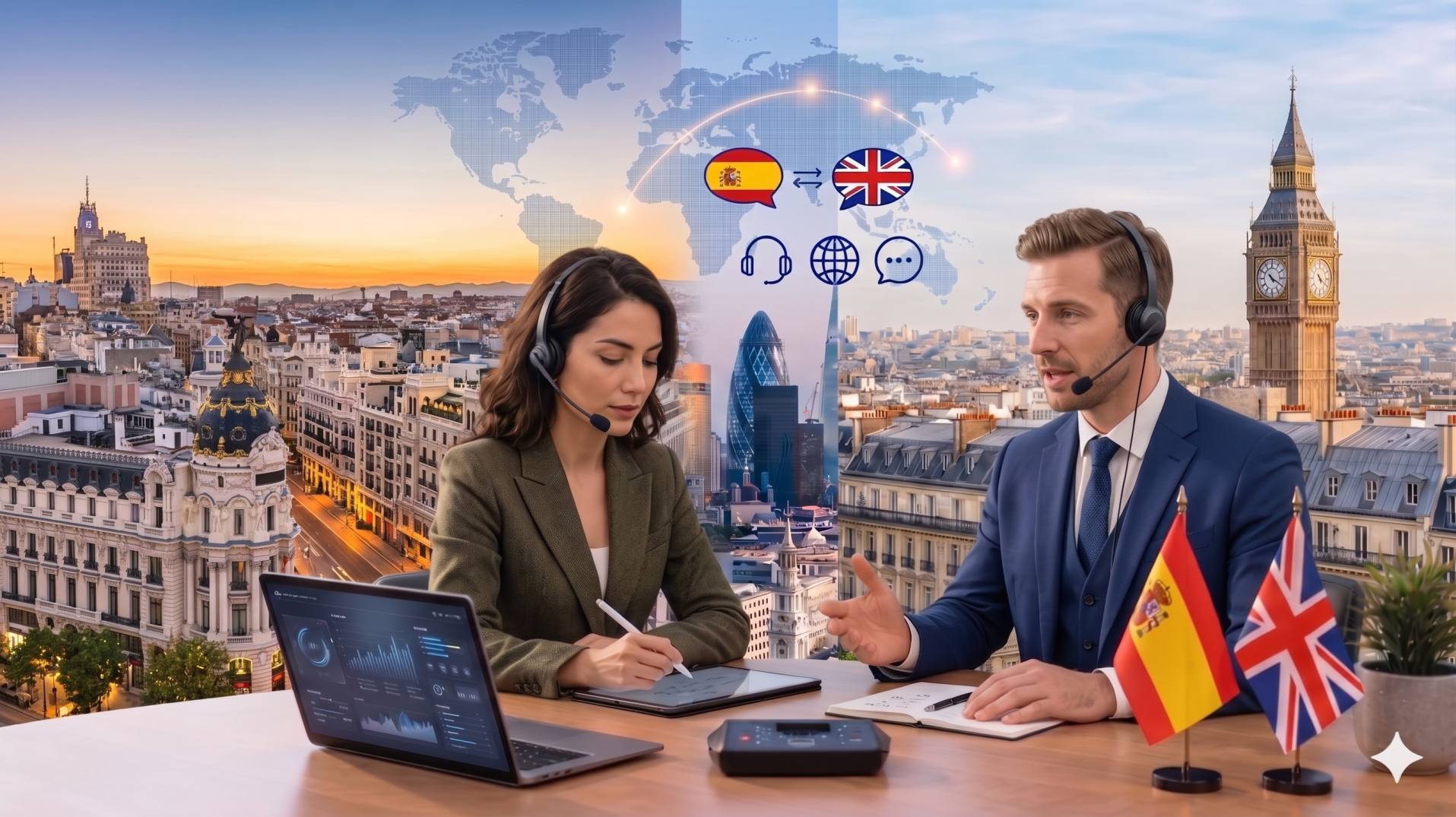
Securing a qualified Norwegian interpreter in Kingston upon Hull is paramount for effective communication across vital sectors, including legal, healthcare, and business. In a city like Kingston upon Hull, which boasts a dynamic economic landscape and serves a diverse population, the need for accurate linguistic support is ever-present. Whether engaging with His Majesty’s Courts and Tribunals Service (HMCTS) for legal proceedings, navigating the complexities of the UK’s National Health Service (NHS) with trusts such as the Hull University Teaching Hospitals NHS Trust and the Humber Teaching NHS Foundation Trust, or facilitating international business relations, professional interpreters bridge critical communication gaps. This ensures that all parties, regardless of their native tongue, can understand and be understood, upholding standards of fairness, safety, and efficiency mandated by UK law and professional bodies.
Translation vs Interpretation
While often used interchangeably, translation and interpretation are distinct linguistic disciplines, each requiring specialised skills and adherence to different professional standards. Interpretation involves the live, oral conversion of spoken or signed language from one language to another. This requires not only a deep understanding of both the source and target languages but also cultural nuances, the ability to think quickly, and maintain accuracy under pressure. A Norwegian translator in Kingston upon Hull, conversely, works with written texts, converting documents, websites, or other written materials. The skills for translation include meticulous attention to detail, strong writing abilities in the target language, and often, specialised knowledge in a particular field. For legal, medical, or business contexts in the UK, the distinction is crucial. For instance, in a courtroom setting, an interpreter is needed to facilitate live dialogue, whereas a legal document would require a translator. Professional bodies like the National Register of Public Service Interpreters (NRPSI) and the Chartered Institute of Linguists (CIOL) set stringent standards for both professions, ensuring competence and ethical conduct. The accuracy and fidelity required in public service interpretation are non-negotiable, particularly when dealing with sensitive information or legal rights.
Legal Defence, Immigration, and Courtroom Interpretation
The UK’s legal system, governed by principles of natural justice and due process, mandates that individuals have access to justice, irrespective of their language proficiency. For Norwegian speakers involved in legal matters in Kingston upon Hull and across the UK, access to qualified interpreters is a fundamental right. His Majesty’s Courts and Tribunals Service (HMCTS) relies heavily on professional interpreters to ensure fair hearings. This includes criminal courts, civil courts, family courts, and various tribunals under the HMCTS umbrella. Interpreters must be proficient not only in Norwegian and English but also understand legal terminology and procedures specific to the UK. The NRPSI maintains a register of qualified interpreters, and many legal professionals seek interpreters listed on this register or holding qualifications such as the Diploma in Public Service Interpreting (DPSI), which is a benchmark for public service interpreters in the UK. Immigration law is another critical area where interpretation is vital. Individuals seeking asylum, applying for visas, or facing deportation proceedings often require interpreters for interviews with the Home Office, UK Visas and Immigration (UKVI), and hearings at the First-tier Immigration Tribunal. The accuracy of interpretation in these settings can have life-altering consequences, making the selection of a certified and experienced interpreter essential. Law firms in Kingston upon Hull and throughout the UK regularly engage Norwegian interpreters to represent their clients effectively in all stages of legal proceedings, from initial consultations to final judgments delivered from institutions like the Royal Courts of Justice.
Healthcare and NHS Patient Safety
Patient safety and effective communication are cornerstones of the National Health Service (NHS) in the UK. For Norwegian-speaking patients in Kingston upon Hull, accessing healthcare services requires clear and accurate interpretation to ensure they understand diagnoses, treatment plans, and consent forms. The Hull University Teaching Hospitals NHS Trust and the Humber Teaching NHS Foundation Trust, along with other NHS providers, are committed to providing language support in line with NHS England’s Language Access guidelines and the UK’s adherence to the UK General Data Protection Regulation (UK GDPR). Interpreters working within the NHS must not only be linguistically competent but also understand medical terminology and the sensitive nature of healthcare interactions. They are bound by strict confidentiality agreements and professional codes of conduct, often verified by bodies like the NRPSI. The Care Quality Commission (CQC) also plays a role in ensuring that healthcare providers offer accessible services, which includes effective communication for all patients. Misunderstandings due to language barriers can lead to incorrect diagnoses, medication errors, and a breakdown of trust between patients and healthcare professionals. Therefore, engaging a professional Norwegian interpreter is not merely a matter of convenience but a critical component of patient care and safety within the UK healthcare framework. The availability of qualified interpreters ensures that all patients receive equitable treatment and can actively participate in their own healthcare decisions.
Technical Interpretation Modalities
The nature of the communication dictates the most appropriate interpretation modality. For a Norwegian interpreter in Kingston upon Hull, understanding these different modes is crucial for providing effective service. Simultaneous interpretation is used in conferences, large meetings, or broadcasts where the interpreter speaks almost concurrently with the speaker, often using specialised equipment like booths and headsets. This requires intense concentration and is typically performed by highly experienced linguists. Consecutive interpretation is more common in smaller meetings, one-on-one discussions, or legal consultations, where the interpreter speaks after the source speaker has finished a segment of speech. This allows for more reflection and note-taking. Escort interpretation, also known as liaison interpretation, facilitates communication between parties who speak different languages in social or business settings, such as factory tours, site visits, or informal business meetings. The interpreter acts as a cultural bridge, ensuring smooth interaction. In recent years, remote interpretation (also known as Video Remote Interpreting – VRI, or Over-the-Phone Interpreting – OPI) has become increasingly prevalent. This modality allows interpreters to provide services via telephone or video conferencing platforms, offering flexibility and cost-effectiveness, especially for less frequent language pairs or urgent requests. Regardless of the modality, adherence to professional standards set by bodies like the International Association of Conference Interpreters (AIIC) for conference settings and NRPSI for public services, ensures quality and ethical practice across all modes of interpretation.
Economic and Social Fabric of Kingston upon Hull
Kingston upon Hull, a city with a rich maritime history and a resurgent economy, presents a diverse environment where linguistic services are increasingly in demand. Understanding the local economic and social landscape is key to appreciating the need for professional Norwegian interpretation and translation services.
Corporate and Industry
Hull’s economy is diversifying, with strengths in sectors such as advanced manufacturing, renewable energy, and digital technologies. Companies operating in these fields, especially those with international ties or Scandinavian business partners, require seamless communication. This can range from negotiating contracts and technical specifications to internal team communications and marketing materials. A skilled Norwegian interpreter can facilitate these business interactions, ensuring that commercial agreements are precise and misunderstandings are avoided, thereby fostering stronger international business relationships. The presence of a skilled Norwegian translator in Kingston upon Hull also supports local businesses looking to expand into Norwegian markets or attract Norwegian investment.
Tourism
Kingston upon Hull has been actively developing its tourism sector, attracting visitors with its maritime heritage, cultural attractions like the University of Hull‘s proximity to cultural sites, and its vibrant city centre. While English is the primary language, providing information and services in multiple languages, including Norwegian, can enhance the visitor experience for Norwegian tourists. This includes translated visitor guides, hotel services, and restaurant menus. Professional interpretation can also assist in managing international delegations or business tourism events hosted in the city.
Legal Infrastructure
The city is served by a network of legal professionals and institutions that handle a wide array of cases. From local solicitors’ firms to branches of larger national practices, the demand for interpreters in family law, criminal defence, and civil litigation is constant. The presence of HMCTS facilities means that Norwegian speakers involved in legal proceedings can access justice through qualified interpreters, ensuring compliance with UK legal standards and the principles of fair trial. The His Majesty’s Courts and Tribunals Service (HMCTS) oversees these operations, and their reliance on accredited interpreters underscores the importance of this service.
NHS Healthcare
As mentioned previously, the healthcare system in Kingston upon Hull, encompassing trusts like the Hull University Teaching Hospitals NHS Trust, serves a diverse population. Ensuring that Norwegian-speaking residents can access and understand healthcare services is a priority. This involves interpretation for GP appointments, hospital visits, mental health services, and emergency care, all of which are governed by strict NHS guidelines and UK GDPR regulations to protect patient confidentiality and well-being.
Local Infrastructure and Transport
Kingston upon Hull’s infrastructure supports its economic and social functions. The city benefits from good transport links, including road, rail, and proximity to ports, facilitating both business and personal travel. For businesses requiring interpreters for site visits, factory tours, or meetings with logistics partners, the availability of Norwegian interpreters is essential. The city council, Kingston upon Hull City Council, plays a role in managing and developing the city’s infrastructure, and often engages with diverse communities. Professional interpretation services ensure that communication flows smoothly across all these operational areas, supporting the city’s continued development and integration within the broader UK economy.
In conclusion, the need for a professional Norwegian interpreter in Kingston upon Hull is multifaceted, extending across legal, healthcare, business, and public service domains. Ensuring access to qualified, accredited interpreters is not just a matter of facilitating communication but upholding fundamental rights, ensuring patient safety, and fostering robust economic ties within the UK and internationally. Engaging with certified professionals guarantees accuracy, confidentiality, and adherence to the highest UK standards, making them an indispensable asset for any organisation or individual requiring Norwegian language services in the region.