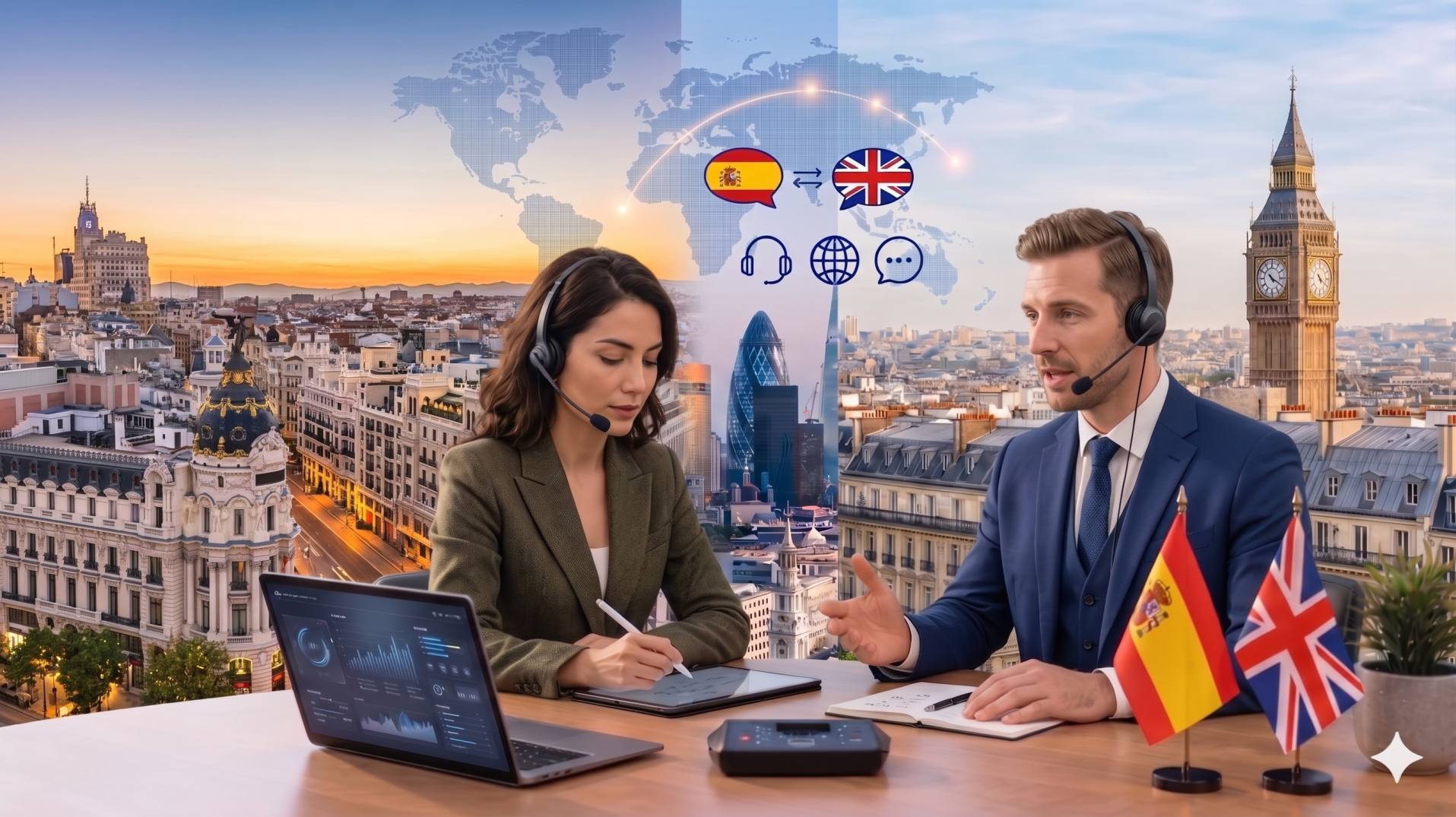
Securing a qualified Spanish interpreter in Barnet is paramount for effective communication across a multitude of sectors, from critical legal proceedings and vital healthcare appointments to complex business negotiations. Barnet, a vibrant borough in North London, benefits from a diverse population and a dynamic economic landscape, necessitating professional language services that adhere to the highest UK standards. This includes ensuring access to accredited interpreters for services within the National Health Service (NHS), such as those provided by the Royal Free London NHS Foundation Trust and the Whittington Health NHS Trust, both of which serve the Barnet area. These services are crucial for patient safety, adherence to UK GDPR, and ensuring equitable access to care for all residents, regardless of their linguistic background. The demand for skilled interpreters underscores the importance of understanding the nuances of language services within the UK’s regulatory and professional framework.
Translation vs Interpretation
While often used interchangeably, translation and interpretation are distinct disciplines, each requiring specialised skills and qualifications. Interpretation involves the live, oral conversion of spoken language from one tongue to another, demanding immediate comprehension, accurate rendering, and cultural sensitivity. A professional Spanish translator in Barnet, conversely, works with written texts, meticulously converting documents, websites, and other materials. The skills required for each are different; interpreters must possess exceptional auditory processing, memory recall, and public speaking abilities, often under high-pressure circumstances. Translators, on the other hand, excel in written proficiency, grammar, syntax, and stylistic adaptation. For legal and medical contexts in the UK, the distinction is critical. For instance, a court document requires translation by a certified translator, while a live testimony or a doctor’s consultation necessitates an interpreter. Professional bodies like the Chartered Institute of Linguists (CIOL) and the National Register of Public Service Interpreters (NRPSI) set stringent standards for both professions, ensuring that individuals seeking language assistance can find qualified and vetted professionals. The NRPSI, in particular, focuses on public service interpreters, a vital resource for sectors like the NHS and His Majesty’s Courts and Tribunals Service (HMCTS).
Legal Defence, Immigration, and Courtroom Interpretation
The UK’s legal system is built on principles of justice and fairness, which are fundamentally undermined if individuals cannot understand proceedings or express themselves adequately. For Spanish speakers involved in legal matters in Barnet and across the UK, access to qualified interpreters is not merely a convenience but a legal right. His Majesty’s Courts and Tribunals Service (HMCTS) mandates the provision of interpreters for defendants, witnesses, and parties in civil and criminal cases where there is a lack of English proficiency. This includes proceedings in Magistrates’ Courts, Crown Courts, and various tribunals. The His Majesty’s Courts and Tribunals Service (HMCTS) works with accredited interpreters, often registered with bodies like the NRPSI or holding qualifications such as the Diploma in Public Service Interpreting (DPSI). Immigration law is another area where expert interpretation is indispensable. The UK Visas and Immigration (UKVI) section of the Home Office, along with the First-tier Immigration Tribunal, relies heavily on accurate interpretation during interviews, appeals, and asylum hearings. A failure to provide competent interpretation can have profound consequences, impacting the outcome of asylum claims, visa applications, and deportation proceedings. Solicitors and barristers in Barnet frequently engage specialist interpreters to ensure their clients’ cases are presented accurately and their rights are protected. The Ministry of Justice oversees the provision of interpreters in courts, ensuring compliance with legal standards and the principles of natural justice. Professionals seeking interpreters for these sensitive environments must ensure they are registered with recognised bodies and possess the necessary security clearances, often verified through the Home Office.
Healthcare and NHS Patient Safety
Patient safety and effective communication are cornerstones of the UK’s National Health Service (NHS). For Spanish-speaking patients in Barnet, accessing healthcare services without a language barrier is critical for accurate diagnosis, treatment, and overall well-being. The NHS has a legal and ethical obligation to provide interpretation services to ensure that all patients can understand their medical conditions, treatment options, and consent forms. This commitment is reinforced by guidelines from NHS England Language Access guidelines and the regulatory oversight of the Care Quality Commission (CQC). The CQC inspects healthcare providers to ensure they meet essential standards of quality and safety, including the provision of effective communication support. Interpreters working within the NHS must not only be linguistically proficient but also understand medical terminology and ethical considerations, such as confidentiality, which are paramount in healthcare settings. Adherence to UK GDPR is also essential, as patient health information is highly sensitive. Interpreters are often required to sign confidentiality agreements and may hold qualifications like the DPSI (Health option) or be registered with the NRPSI. Barnet residents may interact with various NHS trusts, including those mentioned previously, and ensuring the availability of qualified Spanish interpreters is vital for equitable care. Remote interpretation services, facilitated by secure platforms, are increasingly used to bridge geographical gaps and provide timely access to interpreters, ensuring that patients receive the best possible care, irrespective of their language.
Technical Interpretation Modalities
The effective delivery of interpretation services relies on selecting the appropriate modality to suit the context and requirements of the communication. For a Spanish interpreter in Barnet, understanding these modalities is key to providing seamless service. Consecutive interpretation is perhaps the most common, where the interpreter listens to a speaker, waits for them to finish a thought or sentence, and then renders the message in the target language. This is frequently used in one-on-one meetings, doctor’s consultations, and smaller group discussions. Simultaneous interpretation, on the other hand, requires the interpreter to speak concurrently with the speaker, often using specialised equipment like booths and headsets. This is essential for large conferences, international summits, and parliamentary sessions where real-time communication is critical. Escort interpretation (also known as liaison interpretation) involves facilitating communication between two or more parties who speak different languages, often in social settings, tours, or business meetings. The interpreter acts as a bridge, ensuring smooth dialogue and cultural understanding. In recent years, remote interpretation has gained significant traction. This can take various forms, including telephone interpreting (Voice over IP) and video remote interpreting (VRI). VRI, in particular, allows interpreters to see and hear participants via video conferencing platforms, offering a more nuanced experience than telephone interpreting. This modality is particularly useful for situations where an on-site interpreter is not readily available or cost-effective, such as for urgent medical consultations or less formal business meetings. The choice of modality impacts the interpreter’s workload, the required technology, and the overall flow of communication, making it a crucial consideration for any organisation or individual requiring professional language services.
Economic and Social Fabric of Barnet
Barnet’s diverse economy and community create a constant need for professional language services. Understanding the local context helps in appreciating the demand for skilled interpreters and translators.
Corporate and Industry
Barnet boasts a significant business sector, encompassing retail, finance, technology, and professional services. Many companies operating in or engaging with Barnet have international dealings, requiring Spanish language support for market expansion, client relations, and internal communications. This can range from translating marketing materials and contracts to providing interpreters for board meetings and international conferences. The presence of multinational corporations and a thriving small and medium-sized enterprise (SME) landscape means that businesses need reliable language partners to navigate global markets effectively. Professional bodies like the International Association of Conference Interpreters (AIIC) offer insights into the standards expected in high-level corporate interpretation, ensuring professionalism and confidentiality.
Tourism
While perhaps not a primary tourist destination in the same vein as central London, Barnet and its surrounding areas attract visitors for historical sites, cultural events, and business purposes. Spanish-speaking tourists and business travellers benefit greatly from accessible information and services in their native language. This includes translated signage, multilingual websites for local attractions, and interpretation services for guided tours or business engagements. Enhancing the visitor experience through language support can boost local tourism revenue and foster positive international relations.
Legal Infrastructure
Barnet is served by a robust legal infrastructure, including numerous law firms specialising in various fields such as family law, corporate law, and immigration. The borough’s demographic diversity means that legal professionals frequently encounter clients who require Spanish interpretation. Ensuring access to accredited interpreters registered with bodies like the NRPSI is crucial for upholding the principles of justice and ensuring that all individuals, regardless of their language, have equal access to legal representation and fair proceedings within the UK legal framework, including interactions with His Majesty’s Courts and Tribunals Service (HMCTS).
NHS Healthcare
As previously detailed, the NHS trusts serving Barnet, such as the Royal Free London NHS Foundation Trust and Whittington Health NHS Trust, are vital components of the local health ecosystem. The need for qualified Spanish interpreters is constant, ensuring that patients receive comprehensible medical advice, can provide informed consent, and feel supported throughout their healthcare journey. Adherence to NHS England’s language access policies and CQC standards for communication is non-negotiable for patient safety and quality of care.
Local Infrastructure and Transport
Barnet’s connectivity is a significant factor in its economic vitality and accessibility. The borough is well-served by public transport, including the London Underground, Overground, and extensive bus networks, facilitating movement for residents, businesses, and visitors alike. This robust infrastructure ensures that professional interpreters can reach their assignments efficiently, whether it’s a court hearing at the Royal Courts of Justice, a consultation at a local GP surgery, or a business meeting in the commercial heart of the borough. Reliable transport links are essential for the timely delivery of critical services, including interpretation. For businesses and individuals requiring language support, the ease of access to various parts of Barnet and its connection to central London via transport hubs like King’s Cross St Pancras means that a wide range of professional services, including those requiring Spanish interpreters, are readily available. The Transport for London (TfL) network plays a crucial role in maintaining this accessibility, underpinning the smooth operation of many sectors that rely on face-to-face communication.
In conclusion, the demand for a professional Spanish interpreter in Barnet is driven by the borough’s diverse population, dynamic economy, and the UK’s commitment to equal access across legal, healthcare, and corporate sectors. Ensuring that these services are provided by qualified, accredited professionals who understand the specific regulatory and cultural context of the United Kingdom is essential. Whether for navigating the complexities of His Majesty’s Courts and Tribunals Service (HMCTS), ensuring patient safety within the NHS, or facilitating international business, expert interpretation is indispensable. We are committed to providing reliable and high-quality Spanish interpretation services tailored to the unique needs of Barnet and the wider UK professional landscape.