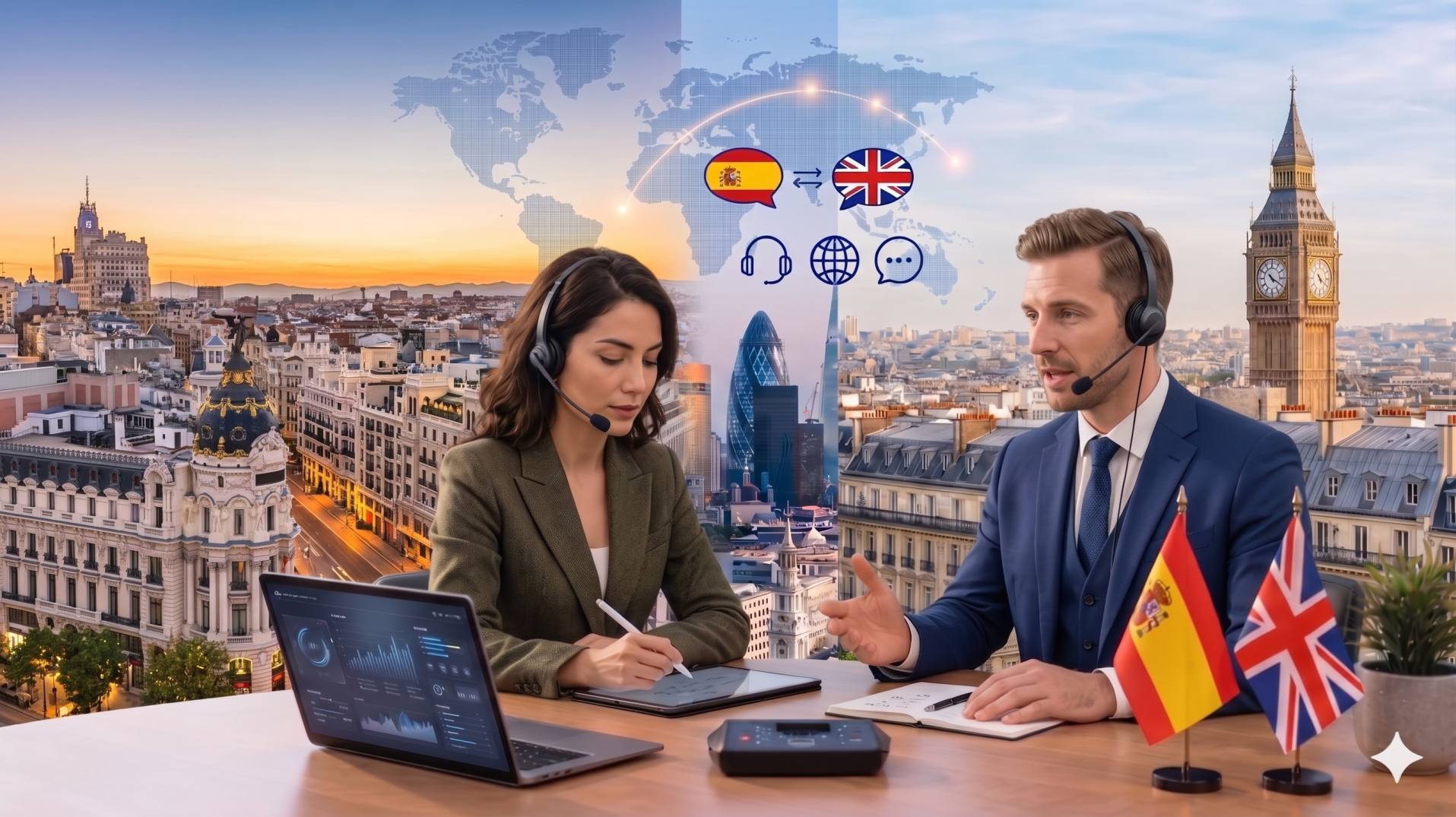
Securing a qualified Spanish interpreter in Glasgow is paramount for effective communication across a multitude of critical sectors within the United Kingdom. Whether engaging with legal proceedings at His Majesty’s Courts and Tribunals Service (HMCTS), accessing vital healthcare services provided by NHS Greater Glasgow and Clyde or NHS Lanarkshire, or navigating complex immigration matters with the Home Office, the need for precise and culturally nuanced interpretation is non-negotiable. Professional interpreters bridge linguistic divides, ensuring clarity, accuracy, and adherence to UK legal and professional standards, thereby safeguarding rights and facilitating seamless interactions for Spanish speakers within the city and beyond.
Translation vs Interpretation
Understanding the distinction between translation and interpretation is fundamental when seeking linguistic support. While both involve conveying meaning from one language to another, they are distinct disciplines requiring different skill sets and methodologies. Translation typically refers to the written word. A Spanish translator in Glasgow works with documents, contracts, websites, and other textual materials, converting them from Spanish to English or vice versa. This process allows for meticulous review, editing, and proofreading to ensure accuracy and stylistic fidelity. Professional translators often specialise in specific fields, such as legal, medical, or technical translation, to guarantee the correct terminology is used. The output is a written document that can be reviewed and referenced. For instance, translating a legal contract requires not only linguistic proficiency but also a deep understanding of UK contract law to ensure the translated document has the same legal standing and implications as the original.
Interpretation, on the other hand, deals with the spoken word in real-time. A Spanish interpreter in Glasgow facilitates live communication between individuals who do not share a common language. This can occur in various settings, from face-to-face meetings and court hearings to telephone calls and video conferences. Interpretation demands exceptional listening skills, a strong command of both languages, cultural awareness, and the ability to think quickly and accurately under pressure. Unlike translation, there is no opportunity for revision once the spoken word has been uttered. The interpreter must convey the speaker’s message immediately and faithfully, maintaining the tone, intent, and nuances of the original speech. Professional interpreters adhere to strict codes of conduct, often regulated by bodies like the National Register of Public Service Interpreters (NRPSI), ensuring impartiality, confidentiality, and accuracy. The demand for skilled interpreters is particularly high in sectors where miscommunication can have severe consequences, such as legal and healthcare environments.
Legal Defence, Immigration, and Courtroom Interpretation
The UK’s justice system relies heavily on the principle of fairness and equal access to justice for all. For individuals who speak Spanish, this principle is upheld through the provision of qualified interpreters in legal settings. Whether appearing before His Majesty’s Courts and Tribunals Service (HMCTS), engaging with the police, or consulting with solicitors, accurate interpretation is a legal right. The Home Office and UK Visas and Immigration (UKVI) also require certified interpreters for immigration applications, asylum interviews, and appeals heard at the First-tier Immigration Tribunal. These proceedings are often complex, involving detailed personal histories, legal arguments, and evidence. A failure to provide an adequate interpreter can lead to miscarriages of justice, wrongful decisions, and significant distress for the individuals involved.
Professional Spanish interpreters working in the legal field must possess a deep understanding of legal terminology, procedures, and the UK legal framework. Many are accredited by the NRPSI or hold qualifications such as the Diploma in Public Service Interpreting (DPSI), demonstrating their competence and adherence to professional standards. These interpreters work in various capacities, including courtroom interpretation during trials, preliminary hearings, and sentencing, as well as providing interpretation for police interviews under caution, client-solicitor consultations, and mediations. The integrity of the legal process, from initial police contact through to final judgment in the Royal Courts of Justice or local Crown Courts, depends on the clarity and accuracy provided by these linguistic professionals. Ensuring that all parties, including defendants, witnesses, and legal counsel, can communicate effectively is a cornerstone of British justice. The Ministry of Justice sets standards for the provision of interpreters, and adherence to these is crucial for maintaining the rule of law.
Healthcare and NHS Patient Safety
Effective communication is a cornerstone of safe and effective healthcare. In Glasgow, the NHS Greater Glasgow and Clyde and NHS Lanarkshire serve a diverse population, including many Spanish speakers. Ensuring these patients can fully understand their medical conditions, treatment options, and discharge instructions is not only a matter of good practice but a legal and ethical imperative. Professional Spanish interpreters play a vital role in NHS settings, facilitating consultations between doctors, nurses, and patients. This ensures informed consent, accurate diagnosis, and adherence to treatment plans, ultimately contributing to better health outcomes and patient safety.
The Care Quality Commission (CQC), the independent regulator of health and social care services in England, and its equivalents in Scotland, Wales, and Northern Ireland, emphasise the importance of effective communication in patient care. NHS England’s Language Access guidelines and similar frameworks across the UK mandate that healthcare providers must ensure patients have access to appropriate language services. This includes providing qualified interpreters for appointments, diagnostic procedures, and hospital stays. Interpreters working within the NHS must not only be linguistically proficient but also understand medical terminology and the sensitive nature of healthcare interactions. They must maintain strict confidentiality, adhering to the principles of UK GDPR and NHS data protection policies. The use of unqualified interpreters, such as family members or friends, is strongly discouraged as they may lack the necessary skills, impartiality, or understanding of medical ethics, potentially leading to serious errors. Professional Spanish interpreters ensure that patients receive equitable care, regardless of their primary language, upholding the fundamental principles of the National Health Service.
Technical Interpretation Modalities
The specific needs of a situation dictate the most appropriate interpretation modality. Professional Spanish interpreters in Glasgow are skilled in a range of techniques to facilitate communication effectively:
- Simultaneous Interpretation: This is the most demanding form of interpretation, where the interpreter speaks almost concurrently with the speaker, often using specialised equipment like booths and headsets. It is commonly used in large conferences, international meetings, and parliamentary sessions where real-time communication is essential. The interpreter listens to the speaker through a headset and renders the message in the target language into a microphone, which is then transmitted to the audience.
- Consecutive Interpretation: In this mode, the interpreter waits for the speaker to pause or finish a segment of speech before rendering the message in the target language. This is often used in smaller meetings, court depositions, medical consultations, and one-on-one discussions. It requires excellent memory and note-taking skills.
- Escort Interpretation (Liaison Interpretation): This involves facilitating communication between two or more parties who speak different languages in informal settings, such as business meetings, site visits, or social gatherings. The interpreter often moves with the client, providing a bridge for smooth dialogue and cultural understanding.
- Remote Interpretation (Telephone/Video): With advancements in technology, remote interpretation has become increasingly prevalent. This allows clients to access interpreters via telephone (OPI – Over-the-Phone Interpretation) or video conferencing (VRI – Video Remote Interpretation). This modality is highly flexible and cost-effective, particularly for situations where an interpreter is not immediately available on-site or for geographically dispersed participants. It is widely used by the NHS, legal firms, and businesses across the UK.
Each modality requires specific training and equipment, and the choice depends on factors such as the number of participants, the setting, the urgency, and the budget. Professional interpreting agencies can advise on the most suitable method for any given requirement.
Economic and Social Fabric of Glasgow
Glasgow, a city renowned for its industrial heritage and vibrant cultural scene, is a dynamic economic hub within the UK. Its diverse population and international connections necessitate robust linguistic support services. Spanish speakers contribute significantly to various sectors of the city’s economy and social life, making the availability of professional Spanish interpretation and translation services indispensable.
Corporate and Industry
Glasgow’s economy is increasingly diversified, with strong sectors in financial services, life sciences, advanced manufacturing, and creative industries. Many international companies operate in or have a presence in the city, fostering business relationships with Spanish-speaking countries. Whether for negotiating contracts, holding board meetings, conducting market research, or providing customer support, accurate communication is vital. Professional Spanish interpreters and translators ensure that UK businesses can engage effectively with their Spanish-speaking counterparts, partners, and clients, fostering international trade and investment. Adherence to UK business law and professional standards is maintained through precise communication, facilitated by qualified linguists.
Tourism
As a major tourist destination, Glasgow attracts visitors from around the globe, including a significant number from Spanish-speaking countries. The tourism and hospitality sector, encompassing hotels, restaurants, attractions, and cultural venues, benefits greatly from accessible language services. Providing information, assistance, and services in Spanish enhances the visitor experience, encouraging repeat visits and positive word-of-mouth. Interpreters can assist tour operators, museum guides, and hospitality staff in communicating with Spanish-speaking tourists, ensuring they have a safe and enjoyable stay in the city.
Legal Infrastructure
Glasgow boasts a well-established legal infrastructure, with numerous law firms, chambers, and legal aid organisations serving a diverse clientele. The city’s courts, including those under the purview of HMCTS, handle a wide range of cases, from criminal and civil litigation to family law and commercial disputes. For Spanish-speaking individuals involved in legal matters, either as defendants, witnesses, or parties to a dispute, access to qualified Spanish interpreters is crucial. This ensures they understand proceedings, can communicate effectively with their legal representatives, and receive a fair hearing. The presence of professional interpreters underpins the accessibility and fairness of the justice system within Glasgow.
NHS Healthcare
The healthcare system in Glasgow, primarily delivered by NHS Greater Glasgow and Clyde, serves a large and diverse population. The presence of Spanish-speaking residents and visitors means that healthcare providers must be equipped to offer language support. Professional Spanish interpreters are essential for ensuring that patients can communicate their symptoms accurately, understand diagnoses and treatment plans, and provide informed consent. This is critical for patient safety, effective treatment, and adherence to the high standards of care expected within the UK’s National Health Service. The availability of interpreters supports the NHS’s commitment to equitable access to healthcare for all.
Local Infrastructure and Transport
Glasgow’s robust infrastructure supports its status as a major UK city. The city is served by excellent transport links, including Glasgow Airport, a major international gateway, and extensive rail and bus networks. Navigating these services can be challenging for those unfamiliar with the local language. Professional interpreters can assist Spanish-speaking individuals in understanding travel information, purchasing tickets, and communicating with transport staff, ensuring smoother journeys. This is particularly important for business travellers and tourists who rely on efficient transport to maximise their time in the city. Furthermore, public services across Glasgow, from council offices to emergency services, increasingly recognise the need for language support to serve all residents effectively, adhering to UK standards of public service delivery.
Conclusion
For any organisation or individual requiring precise and reliable communication in Spanish within Glasgow and across the UK, engaging a professional Spanish interpreter in Glasgow is essential. From the critical demands of legal proceedings at HMCTS and immigration interviews with the Home Office, to the vital patient care provided by the NHS, and the nuanced requirements of international business, qualified interpreters ensure accuracy, confidentiality, and cultural understanding. Adhering to UK professional standards set by bodies like the NRPSI and ensuring compliance with UK law and healthcare guidelines is paramount. Do not compromise on clarity; secure expert linguistic services to guarantee effective communication and uphold the integrity of your interactions.