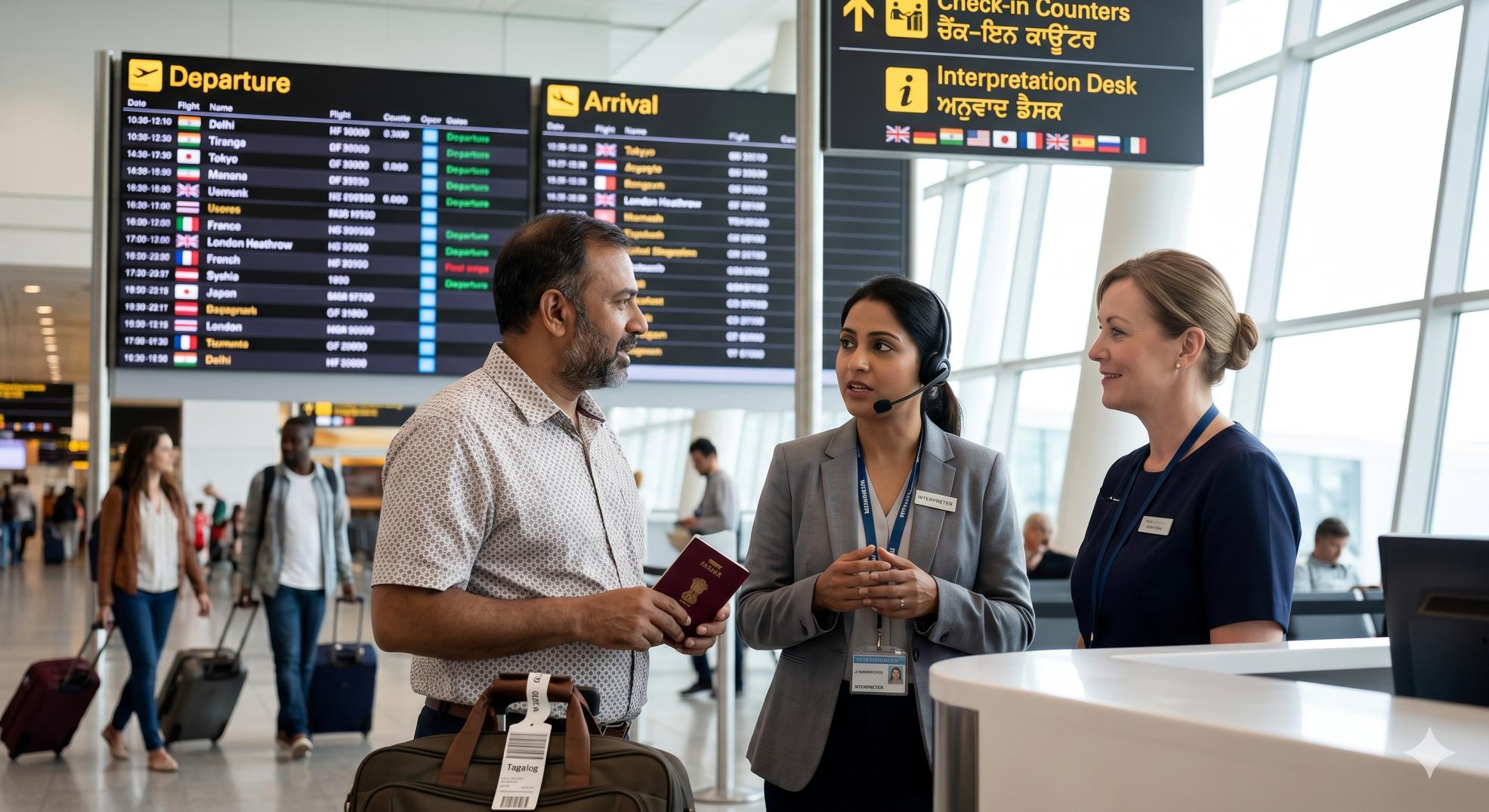
Securing a qualified Arabic interpreter in Bridgend is paramount for effective communication across diverse sectors, from legal proceedings and healthcare consultations to business negotiations and public services. Bridgend, a vibrant town in South Wales, benefits from a growing economy and a commitment to inclusivity, necessitating professional language services that adhere to the highest UK standards. This guide explores the critical role of expert Arabic interpretation and translation within the local context, ensuring clarity, accuracy, and compliance with UK regulations. For residents and businesses in Bridgend, accessing reliable Arabic language support is essential for navigating the complexities of the UK’s legal, medical, and commercial landscapes. Key NHS trusts serving the Bridgend area include Aneurin Bevan University Health Board and Betsi Cadwaladr University Health Board, both of which rely on professional interpreters to ensure equitable access to healthcare for all patients.
Translation vs Interpretation
While often used interchangeably, translation and interpretation are distinct linguistic disciplines, each requiring specialised skills and adherence to UK professional standards. Interpretation involves the real-time, oral conversion of spoken language from one tongue to another, demanding immediate comprehension, cultural nuance, and the ability to convey meaning accurately under pressure. This is crucial in live settings such as courtrooms, medical appointments, or business meetings. A professional Arabic translator in Bridgend, conversely, works with written text, converting documents, websites, or official papers from Arabic to English or vice versa. The process allows for more deliberation, research, and editing to ensure precision. For legal documents, medical records, or corporate contracts, accurate translation is as vital as precise interpretation. Professional bodies in the UK, such as the Chartered Institute of Linguists (CIOL), set rigorous standards for both translators and interpreters, ensuring that practitioners possess the necessary qualifications and adhere to a strict code of conduct. The National Register of Public Service Interpreters (NRPSI), a UK-wide independent body, further accredits interpreters working in public services, guaranteeing their competence and ethical practice.
Legal Defence, Immigration, and Courtroom Interpretation
The UK’s justice system, governed by His Majesty’s Courts and Tribunals Service (HMCTS), mandates that all parties involved in legal proceedings have access to adequate interpretation services. For Arabic speakers in Bridgend, this means that when engaging with the legal system, whether in civil, criminal, or family courts, or before tribunals, a qualified Arabic interpreter is essential. These interpreters must not only possess fluency in Arabic and English but also a deep understanding of legal terminology and procedures as defined by UK law. Professional interpreters working in this field often hold qualifications such as the Diploma in Public Service Interpreting (DPSI) or are registered with the NRPSI. This ensures they are equipped to handle the sensitive and high-stakes nature of legal discourse, from initial police interviews conducted under the Police and Criminal Evidence Act 1984 (PACE), to appearances before the First-tier Immigration Tribunal or the higher courts. The Home Office, through UK Visas and Immigration (UKVI), also requires certified Arabic interpreters for asylum claims and other immigration matters. Accurate interpretation in these contexts is critical for ensuring fair trials, upholding the principles of justice, and facilitating the smooth operation of HMCTS. The Royal Courts of Justice in London, as well as local county courts, all operate under these stringent requirements, underscoring the importance of professional linguistic support for Arabic speakers navigating the UK legal framework.
Healthcare and NHS Patient Safety
Patient safety and equitable access to healthcare are cornerstones of the National Health Service (NHS) in the UK. For Arabic-speaking patients in Bridgend, effective communication with medical professionals is not merely a matter of convenience but a critical component of safe and effective care. The NHS relies heavily on professional interpreters to bridge language barriers, ensuring that patients fully understand diagnoses, treatment plans, and medication instructions. This is particularly important given the diverse range of medical conditions and the complexity of modern healthcare. The Care Quality Commission (CQC), the independent regulator of health and social care in England, emphasises the importance of effective communication in its inspection frameworks. NHS England’s Language Access guidelines further stipulate the need for high-quality interpretation and translation services. Interpreters working within the NHS must adhere to strict confidentiality protocols, aligning with UK GDPR regulations, and possess a thorough understanding of medical terminology. Professional bodies like the NRPSI and CIOL provide qualifications and registration for public service interpreters, including those specialising in medical settings. Accessing a qualified Arabic interpreter in Bridgend ensures that Arabic-speaking patients receive the same standard of care as their English-speaking counterparts, fostering trust and improving health outcomes. This commitment extends to all interactions, from GP appointments at local surgeries to specialist consultations and hospital stays within the relevant NHS trusts serving Bridgend.
Technical Interpretation Modalities
The effective delivery of Arabic interpretation services in Bridgend encompasses various modalities, each suited to different contexts and requirements. Consecutive interpretation is commonly used in one-on-one settings, such as doctor’s appointments or small business meetings, where the interpreter speaks after the primary speaker has finished their segment. Simultaneous interpretation, often employed in larger conferences, legal hearings, or international business negotiations, requires interpreters to translate speech in real-time, typically using specialised equipment like booths and headsets. This modality demands exceptional concentration and rapid processing skills. Escort interpretation, also known as liaison interpretation, facilitates communication between parties speaking different languages in social or business settings, such as factory tours, site visits, or informal meetings. The interpreter acts as a cultural and linguistic bridge. In recent years, remote interpretation, including telephone interpreting (OPI) and video remote interpreting (VRI), has become increasingly prevalent. This modality offers flexibility and cost-effectiveness, allowing access to qualified interpreters regardless of geographical location, which is particularly beneficial for specialised legal or medical consultations. Regardless of the modality, adherence to professional standards set by bodies like the International Association of Conference Interpreters (AIIC) and the NRPSI is crucial for ensuring accuracy and professionalism in all forms of Arabic interpretation.
Economic and Social Fabric of Bridgend
Bridgend’s dynamic economic and social landscape necessitates robust linguistic support to foster integration and facilitate growth. The town’s strategic location in South Wales, coupled with its developing infrastructure, attracts a diverse population and a range of businesses. Professional Arabic interpretation and translation services play a vital role in ensuring that all members of the community can participate fully in economic and social life, and that businesses can operate effectively within the UK’s regulatory framework.
Corporate and Industry
Bridgend hosts a variety of industries, including manufacturing, technology, and professional services. For businesses operating in or engaging with Bridgend, clear communication is key to successful partnerships, client relations, and employee engagement. Whether it’s negotiating contracts with international suppliers, providing customer support to Arabic-speaking clients, or ensuring internal communications are understood by a diverse workforce, professional Arabic interpretation and translation are indispensable. Adherence to UK business law and professional standards ensures that all commercial activities are conducted with integrity and compliance. This includes ensuring that marketing materials, technical documentation, and corporate policies are accurately translated and culturally appropriate for an Arabic-speaking audience.
Tourism
While perhaps not a primary international tourist hub, Bridgend and its surrounding areas, including the scenic coastline and historical sites, attract visitors from various backgrounds. Providing information and services in multiple languages, including Arabic, enhances the visitor experience and supports local tourism businesses. This can range from translated visitor guides and website content to on-site interpretation services for tour groups. A welcoming approach, facilitated by professional language services, can significantly boost the reputation and economic benefits of local tourism.
Legal Infrastructure
Bridgend’s legal infrastructure, like that across the UK, relies on the principles of access to justice for all. This means that Arabic speakers involved in legal matters, from property transactions and civil disputes to criminal proceedings, must have access to qualified interpreters. The local courts and legal aid services, operating under HMCTS guidelines, depend on accredited interpreters registered with bodies like the NRPSI. The presence of skilled Arabic interpreters ensures that legal advice is understood, court proceedings are fair, and justice is accessible to everyone, regardless of their linguistic background. This underpins the integrity of the UK’s legal system within the Bridgend community.
NHS Healthcare
As previously highlighted, the NHS trusts serving Bridgend, such as Aneurin Bevan University Health Board and Betsi Cadwaladr University Health Board, are committed to providing accessible healthcare. The availability of professional Arabic interpreters is crucial for ensuring that Arabic-speaking patients can articulate their health concerns, understand medical advice, and participate actively in their treatment decisions. This commitment to linguistic accessibility is a fundamental aspect of patient-centred care and aligns with the CQC’s standards for quality and safety. Ensuring that medical information is accurately conveyed, adhering to UK GDPR, is paramount for patient well-being and trust in the NHS.
Local Infrastructure and Transport
Bridgend benefits from a well-developed transport network, including road and rail links that connect it to major cities like Cardiff and Swansea, as well as the wider UK. This infrastructure is vital for the movement of goods, services, and people, and it also influences the accessibility of professional services, including interpretation. The presence of reliable public transport and road networks ensures that Arabic interpreters can reach their assignments efficiently, whether they are attending a court hearing at His Majesty’s Courts and Tribunals Service, a medical appointment within the NHS, or a business meeting. Furthermore, digital infrastructure, including reliable internet access, supports the growing demand for remote interpretation services, allowing seamless communication across distances. This integrated approach to infrastructure ensures that Bridgend remains a connected and accessible location for both residents and businesses requiring specialised linguistic support.
In conclusion, the need for a professional Arabic interpreter in Bridgend is multifaceted, spanning critical sectors such as legal defence, healthcare, and commerce. Ensuring access to qualified, accredited interpreters who understand the nuances of UK law, NHS protocols, and professional standards is not just a matter of language proficiency but a fundamental requirement for justice, safety, and economic participation. For businesses, legal firms, and healthcare providers in Bridgend and across the UK, partnering with reputable interpretation services guarantees compliance, enhances communication, and fosters inclusivity. We are committed to providing expert Arabic interpretation and translation services that meet the rigorous demands of the UK’s professional landscape.