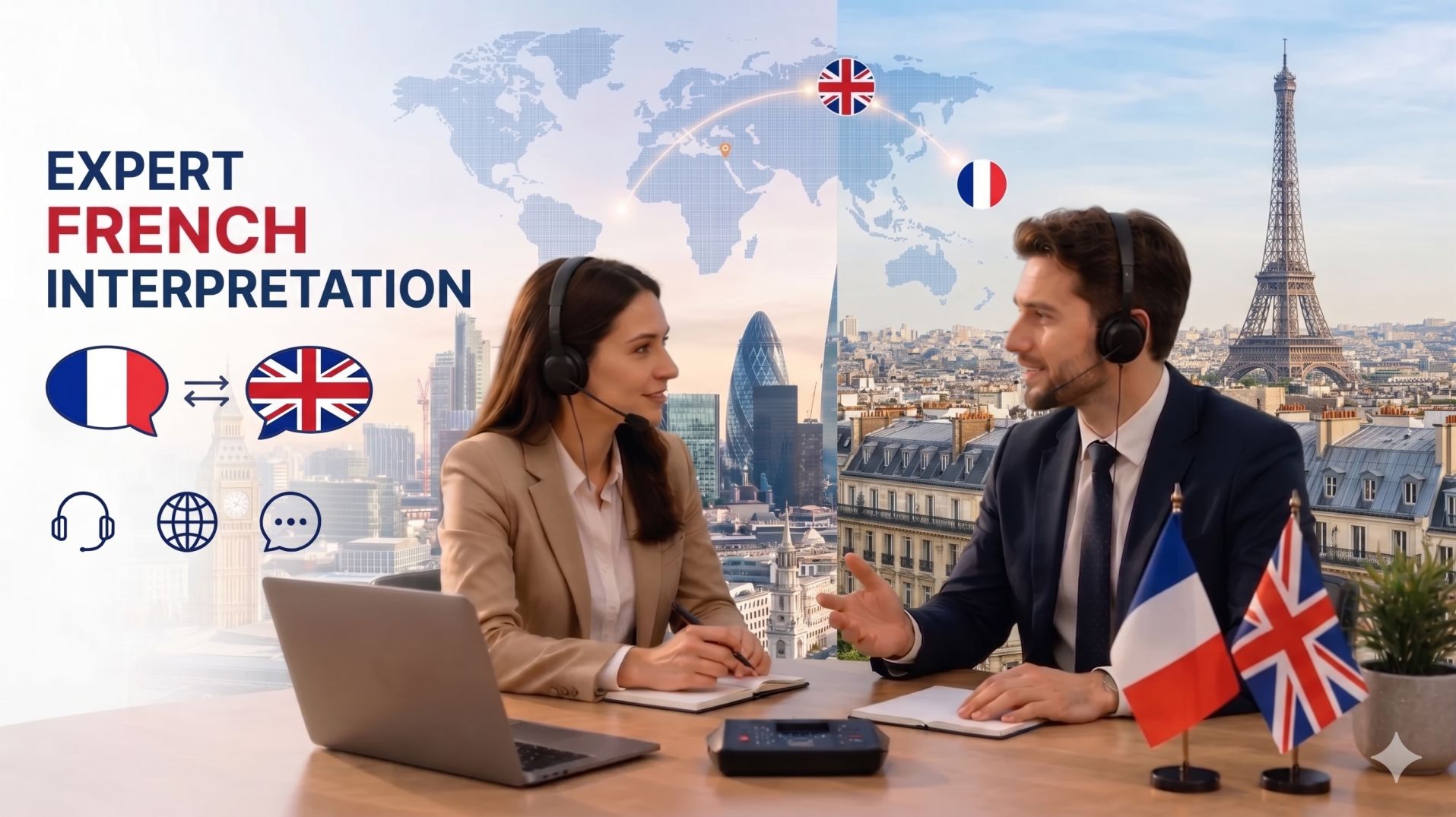
Securing a qualified French interpreter in Bromley is paramount for effective communication across critical sectors within the UK’s professional landscape. Whether engaging with legal proceedings, accessing vital healthcare services, or conducting international business, the need for precise and culturally nuanced interpretation is non-negotiable. Bromley, a vibrant borough in South London, is served by key NHS trusts including Kingston Hospital NHS Foundation Trust and St George’s University Hospitals NHS Foundation Trust, both of which adhere to stringent language access policies to ensure all patients, including French speakers, receive equitable care. This document outlines the strategic importance of professional French interpretation and translation services, focusing on their application within the UK’s legal, healthcare, and commercial frameworks, and highlighting the specific resources available to support these needs in Bromley and beyond.
Translation vs Interpretation
While often used interchangeably, translation and interpretation are distinct disciplines requiring different skill sets and methodologies. Professional French translator in Bromley services focus on the written word, converting documents, websites, and other textual materials from French to English or vice versa. This process demands meticulous attention to detail, an understanding of idiomatic expressions, and the ability to maintain the original tone and intent of the source text. Accuracy is critical, especially in legal and technical documentation where a single misplaced word can have significant consequences. Conversely, interpretation deals with the spoken word in real-time. A skilled French interpreter in Bromley facilitates live communication, whether in face-to-face meetings, telephone conversations, or video conferences. This requires not only linguistic proficiency but also exceptional listening skills, memory recall, cultural awareness, and the ability to think quickly under pressure. The distinction is crucial for corporate buyers, law firms, and public sector bodies to commission the correct service, ensuring that their communication objectives are met effectively and efficiently. For instance, translating a legal contract requires a different approach to interpreting a witness statement in court.
Legal Defence, Immigration, and Courtroom Interpretation
The UK’s justice system relies heavily on the accuracy and impartiality of interpreters to ensure fair trials and access to justice for all. For French speakers involved in legal matters in Bromley, access to accredited interpreters is vital. This includes proceedings before His Majesty’s Courts and Tribunals Service (HMCTS), where interpreters are often required for criminal trials, civil disputes, family law hearings, and tribunal appeals. Professional interpreters must adhere to strict codes of conduct, often regulated by bodies such as the National Register of Public Service Interpreters (NRPSI) or holding qualifications like the Diploma in Public Service Interpreting (DPSI). These qualifications ensure a high standard of competence and ethical practice. In immigration matters, French nationals interacting with the Home Office, UK Visas and Immigration (UKVI), or the First-tier Immigration Tribunal rely on interpreters to articulate their cases clearly. This can range from asylum claims to visa applications and appeals. The accuracy of interpretation in these sensitive contexts directly impacts individuals’ rights and futures. Law firms in Bromley and across the UK frequently require French interpretation for client consultations, evidence gathering, and court appearances. Engaging a certified French interpreter ensures that legal professionals can fully understand their clients and present their cases effectively, upholding the principles of natural justice. The Royal Courts of Justice and other judicial centres across the UK depend on a robust network of qualified interpreters to bridge language barriers and ensure due process.
Healthcare and NHS Patient Safety
Patient safety and effective communication are cornerstones of the National Health Service (NHS). For French-speaking patients in Bromley, accessing healthcare services without a language barrier is a fundamental right. The NHS has established guidelines, often reinforced by NHS England’s Language Access Strategy and local Integrated Care Boards, to ensure that patients can communicate their symptoms, understand diagnoses, and consent to treatments. This is particularly critical when dealing with complex medical information or emergency situations. Qualified French interpreters play an indispensable role in NHS trusts, facilitating consultations between doctors, nurses, and patients. This ensures that medical professionals can accurately assess patient needs and that patients fully comprehend their treatment plans, medication instructions, and post-operative care. The Care Quality Commission (CQC) also emphasises the importance of effective communication in its inspections, recognising that language barriers can lead to misdiagnosis, delayed treatment, and adverse outcomes. Adherence to UK GDPR principles also means that patient confidentiality must be maintained by interpreters, who are bound by professional codes of ethics. Bromley’s local NHS trusts, such as those linked to King’s College Hospital NHS Foundation Trust or Guy’s and St Thomas’ NHS Foundation Trust, are committed to providing accessible services. This includes making arrangements for professional interpreters when needed, ensuring that all patients, regardless of their linguistic background, receive high-quality, safe, and person-centred care. The use of untrained family members or friends as interpreters is strongly discouraged due to potential inaccuracies, bias, and breaches of confidentiality, underscoring the need for professional French interpretation services within the NHS.
Technical Interpretation Modalities
The effective delivery of French interpretation services in Bromley and beyond depends on selecting the appropriate modality for the specific context. Several technical approaches are employed, each suited to different communication scenarios:
- Simultaneous Interpretation: This is the most demanding form, where the interpreter speaks the target language almost concurrently with the source speaker, typically with a slight delay of a few seconds. It requires sophisticated equipment (booths, microphones, headphones) and is commonly used in international conferences, large meetings, and parliamentary sessions where seamless, real-time communication is essential.
- Consecutive Interpretation: Here, the interpreter listens to a segment of speech, then renders it into the target language after the speaker has finished. This requires excellent memory and note-taking skills and is suitable for smaller meetings, legal consultations, medical appointments, and press conferences where the flow of conversation is less rapid.
- Escort Interpretation (Liaison Interpretation): This involves facilitating communication between two or more parties speaking different languages in informal settings, such as business negotiations, site visits, or social events. The interpreter acts as a bridge, often interpreting short segments of speech back and forth, and may also assist with cultural nuances.
- Remote Interpretation (Telephone/Video): With advancements in technology, remote interpretation has become increasingly prevalent. This modality allows clients to connect with interpreters via telephone or video conferencing platforms. It offers flexibility, cost-effectiveness, and rapid access to interpreters, making it ideal for situations where an on-site interpreter is not feasible or necessary, such as routine phone calls, brief meetings, or initial consultations.
Choosing the right modality ensures that the communication objectives are met efficiently, whether for a high-stakes legal deposition, a routine medical check-up, or a crucial business negotiation.
Economic and Social Fabric of Bromley
Bromley, as a significant economic hub within Greater London, possesses a diverse economic and social landscape where French language proficiency can offer distinct advantages. Understanding the local context is key for businesses and organisations seeking to leverage professional interpretation and translation services.
Corporate and Industry
Bromley hosts a range of businesses, from local enterprises to branches of larger corporations, many of which engage in international trade or have dealings with French-speaking markets. Professional French interpretation and translation are essential for securing contracts, managing client relationships, conducting market research, and ensuring compliance with international business standards. The ability to communicate effectively in French can open doors to new markets and strengthen existing partnerships, contributing to the economic vitality of the borough. The Institute of Translation and Interpreting (ITI) and the Chartered Institute of Linguists (CIOL) provide frameworks for professional standards in this sector.
Tourism
While not a primary tourist destination in itself, Bromley’s proximity to central London and its own attractions mean it receives visitors from across the UK and internationally. French tourists and business travellers may require assistance with accommodation, transport, and local services. Professional interpretation can enhance the visitor experience, support local hospitality businesses, and facilitate smoother interactions for French-speaking individuals navigating the area. Ensuring that local businesses and service providers can communicate effectively in French can boost the local tourism economy.
Legal Infrastructure
Bromley has a well-established legal infrastructure, including numerous law firms and access to His Majesty’s Courts and Tribunals Service (HMCTS) facilities. French-speaking individuals requiring legal advice or facing legal proceedings within Bromley benefit immensely from the availability of qualified French interpreters. This ensures that legal rights are understood and protected, and that the justice system operates fairly for all. Law firms specialising in areas such as family law, property, and commercial litigation often require French translation of documents and interpretation for client meetings and court hearings. The presence of accredited interpreters, often registered with NRPSI or holding DPSI qualifications, is crucial for the effective functioning of the local legal services.
NHS Healthcare
As previously detailed, the NHS trusts serving Bromley, such as King’s College Hospital NHS Foundation Trust and St George’s University Hospitals NHS Foundation Trust, are committed to providing accessible healthcare. For French-speaking residents and visitors, professional interpretation services are indispensable for accessing primary care, specialist consultations, hospital services, and emergency care. Accurate communication ensures patient safety, facilitates informed consent, and promotes better health outcomes, aligning with the core principles of the NHS and the standards set by the CQC and NHS England.
Local Infrastructure and Transport
Bromley benefits from robust local infrastructure and transport links, connecting it effectively to Greater London and beyond. This includes a comprehensive road network and reliable public transport services, such as National Rail and London Buses. For businesses and individuals requiring French interpretation or translation, the accessibility of Bromley means that professional services can be readily deployed across various locations. Whether for meetings at corporate offices, consultations at local clinics, or interactions at transport hubs, the logistical ease of access within Bromley and its surrounding areas ensures that language support can be provided efficiently. This integrated infrastructure supports the seamless operation of professional services, including those requiring specialised linguistic expertise, thereby reinforcing Bromley’s position as a well-connected and accessible centre.
In conclusion, the demand for a professional French interpreter in Bromley is driven by the borough’s diverse economic activity, its integral role within the UK’s legal and healthcare systems, and its connectivity. Ensuring access to qualified, accredited interpreters and translators is not merely a matter of convenience but a fundamental requirement for upholding justice, ensuring patient safety, facilitating international commerce, and fostering social inclusion. Organisations and individuals requiring these critical services can rely on the expertise of professional linguists who adhere to the highest UK standards, ensuring clarity, accuracy, and cultural competence in all communications.