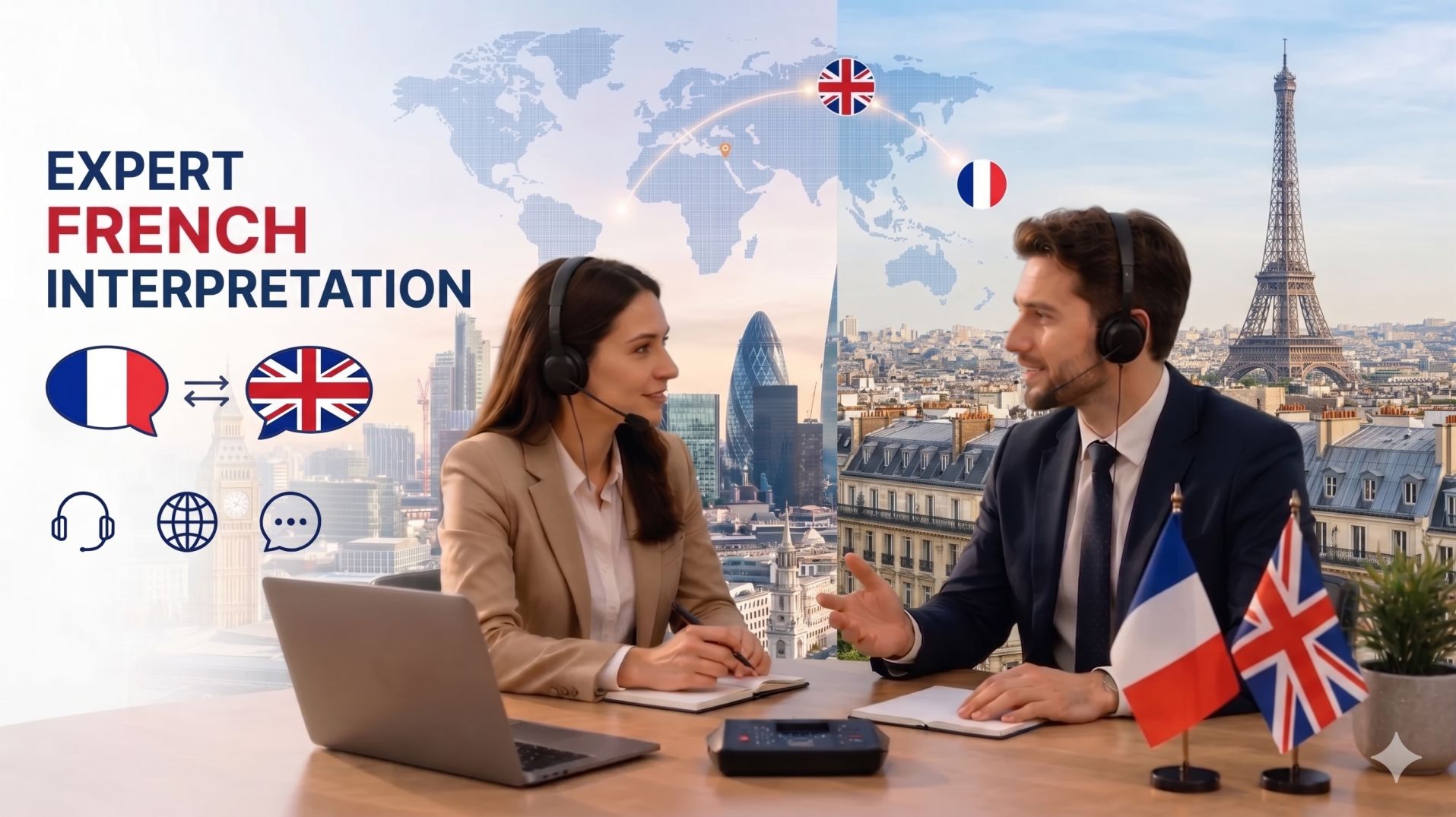
Securing a qualified French interpreter in Westminster is paramount for effective communication across a multitude of critical sectors within the UK’s capital. Westminster, a borough synonymous with government, finance, and international diplomacy, requires precise linguistic support to ensure seamless interactions. Whether navigating the complexities of His Majesty’s Courts and Tribunals Service (HMCTS), engaging with healthcare providers within the National Health Service (NHS), or facilitating international business dealings, the need for accredited and experienced interpreters is undeniable. This service ensures that language barriers do not impede justice, patient care, or economic opportunity, upholding the UK’s commitment to accessibility and fairness for all residents and visitors.
Translation vs Interpretation
While often used interchangeably, translation and interpretation are distinct linguistic disciplines, each requiring specialised skills and adherence to professional standards. Interpretation involves the real-time, oral conversion of spoken or signed language from one language to another. This is crucial in live settings such as courtrooms, medical consultations, or business meetings. A skilled French interpreter in Westminster must possess not only fluency in both French and English but also a deep understanding of cultural nuances, subject-specific terminology, and the ethical codes governing their profession, such as those set by the National Register of Public Service Interpreters (NRPSI). Conversely, translation deals with the written word, converting documents, websites, or other textual materials from one language to another. This process allows for more time for research, editing, and proofreading to ensure accuracy and fidelity to the source text. For businesses and legal professionals in Westminster, understanding this distinction is key to procuring the correct linguistic service. Engaging a professional French translator in Westminster for official documentation, legal contracts, or patient information leaflets ensures that written communications are as accurate and impactful as spoken ones.
Legal Defence, Immigration, and Courtroom Interpretation
The legal landscape in the UK, particularly within Westminster, is intricate and demands absolute precision in communication. For individuals involved in legal proceedings, whether as defendants, witnesses, or victims, access to a qualified French interpreter is a fundamental right. His Majesty’s Courts and Tribunals Service (HMCTS) mandates the provision of interpreters to ensure fair trials and access to justice for those who do not speak English as a first language. This includes proceedings in the Magistrates’ Courts, Crown Courts, and various tribunals. The HM Courts and Tribunals Service oversees a vast network of courts and tribunals, and the need for specialised interpreters, particularly in high-stakes immigration and criminal cases, is constant. Professional interpreters must be registered with bodies like the NRPSI or hold qualifications such as the Diploma in Public Service Interpreting (DPSI), ensuring they meet rigorous standards of competence and ethical conduct. The Ministry of Justice, which oversees HMCTS, is committed to upholding these standards. Furthermore, immigration matters handled by the Home Office and the UK Visas and Immigration (UKVI) department, as well as appeals heard at the First-tier Immigration Tribunal, frequently require expert French interpretation to ensure accurate representation of evidence and testimony. Solicitors and barristers practising in Westminster rely heavily on these services to build robust cases and represent their clients effectively, understanding that misinterpretation can have severe consequences.
Healthcare and NHS Patient Safety
Patient safety and effective communication are cornerstones of the National Health Service (NHS). In Westminster, a borough with a diverse population, ensuring that all patients, including French speakers, can fully understand their medical conditions, treatment options, and care plans is a critical responsibility. The NHS has established guidelines, often referencing Care Quality Commission (CQC) recommendations and NHS England’s Language Access guidelines, to ensure that language barriers do not compromise the quality of care. For French-speaking patients, this means access to qualified medical interpreters during consultations, diagnostic procedures, and hospital stays. Key NHS trusts serving Westminster, such as Chelsea and Westminster Hospital NHS Foundation Trust and Imperial College Healthcare NHS Trust (which serves a wider area including parts of Westminster), are committed to providing these essential services. Interpreters working within the NHS must not only be linguistically proficient but also understand medical terminology and the sensitive nature of healthcare interactions. Adherence to data protection regulations, including UK GDPR, is also paramount, ensuring patient confidentiality is maintained at all times. The NHS Business Services Authority plays a role in supporting language services across the NHS. Accurate interpretation in healthcare settings prevents misunderstandings that could lead to incorrect diagnoses, medication errors, or adverse patient outcomes, thereby directly contributing to patient safety and well-being.
Technical Interpretation Modalities
The effectiveness of interpretation hinges on selecting the appropriate modality for the specific context. For a French interpreter in Westminster, understanding these different modes is essential for delivering optimal service. Simultaneous interpretation is perhaps the most demanding, requiring the interpreter to speak the target language almost concurrently with the source speaker, often using specialised equipment like booths and headsets. This is common in large conferences, international summits, and parliamentary sessions. Consecutive interpretation involves the interpreter listening to a segment of speech and then rendering it in the target language once the speaker has finished. This is suitable for smaller meetings, interviews, and one-on-one discussions where immediate translation is not strictly necessary. Escort interpretation, also known as liaison interpretation, facilitates communication between two or more parties who speak different languages, often in informal settings like business negotiations, site visits, or social events. The interpreter acts as a bridge, ensuring smooth dialogue. In recent years, remote interpretation has gained significant traction, particularly with advancements in technology. This can take the form of Video Remote Interpreting (VRI) or Over-the-Phone Interpreting (OPI), allowing interpreters to connect with clients via digital platforms. While offering flexibility and cost-effectiveness, it is crucial that the chosen platform ensures security and privacy, especially when dealing with sensitive information, and that the interpreter is proficient in using the technology. The Chartered Institute of Linguists (CIOL) and the International Association of Conference Interpreters (AIIC) provide guidance on best practices for various interpretation modalities.
Economic and Social Fabric of Westminster
Westminster is not merely a political and administrative hub; it is a vibrant centre of economic activity and cultural exchange, where French language proficiency plays a significant role. The borough’s unique character necessitates specialised linguistic support across its diverse sectors.
Corporate and Industry
As a global financial centre, London, and by extension Westminster, attracts significant international investment and business. French companies operating in the UK, or UK firms with dealings in French-speaking markets, require seamless communication for mergers, acquisitions, contract negotiations, and client relations. Professional French interpreters and translators are indispensable for ensuring that business objectives are clearly understood and that contractual obligations are precisely defined, adhering to UK commercial law and international business etiquette. The London Chamber of Commerce and Industry often supports businesses engaged in international trade, highlighting the importance of cross-cultural and linguistic competence.
Tourism
Westminster is a global tourist destination, drawing millions of visitors annually. French is one of the most common foreign languages spoken by tourists visiting London. Providing French language services in hotels, museums, attractions, and retail establishments enhances the visitor experience, fostering goodwill and encouraging repeat tourism. Interpreters and multilingual staff are vital for customer service, information provision, and ensuring that international visitors feel welcomed and well-catered for, contributing to the UK’s reputation as a premier global destination.
Legal Infrastructure
The concentration of legal firms, barristers’ chambers, and government bodies in Westminster means a constant demand for legal interpretation and translation. From initial client consultations to High Court proceedings, the accurate conveyance of legal arguments, evidence, and judgments is critical. The Law Society of England and Wales and the Bar Council represent legal professionals who depend on the services of accredited French interpreters to navigate the UK’s complex legal system. The presence of the Royal Courts of Justice further underscores the need for high-calibre linguistic support within the heart of the capital.
NHS Healthcare
As previously detailed, the NHS trusts serving Westminster, such as those within the Central and North West London NHS Foundation Trust, are vital components of the borough’s social infrastructure. Ensuring equitable access to healthcare for French-speaking residents requires readily available, professional interpretation services. This is not merely a matter of convenience but a fundamental aspect of patient care, diagnosis, and treatment adherence, directly impacting health outcomes and upholding the principles of the NHS constitution.
Local Infrastructure and Transport
Westminster’s status as a major international centre is supported by its robust infrastructure and transport network. The borough is served by a comprehensive public transport system, including the London Underground, buses, and national rail services, facilitating movement for residents, workers, and visitors. Key transport hubs and services within Westminster require clear multilingual communication, especially for international travellers. Interpreters can assist in navigating transport information, resolving issues, and ensuring smooth journeys. The Transport for London (TfL) network, while extensive, can be complex, and providing information in multiple languages, including French, is crucial for accessibility. Furthermore, the presence of numerous embassies and international organisations necessitates reliable interpretation services for diplomatic and official communications, underscoring the interconnectedness of language services with the operational efficiency of Westminster’s civic and commercial infrastructure.
Conclusion
For any organisation or individual requiring precise and reliable communication in French within Westminster, engaging a certified and experienced French interpreter in Westminster is not an option but a necessity. From the critical demands of the legal system and the life-saving requirements of healthcare to the nuanced interactions of international business, professional interpretation ensures clarity, accuracy, and adherence to UK standards. We provide expert linguistic services that bridge language divides, uphold professional integrity, and facilitate seamless operations across all sectors. Contact us today to discuss your specific interpretation needs and ensure your message is conveyed with the utmost professionalism and precision.