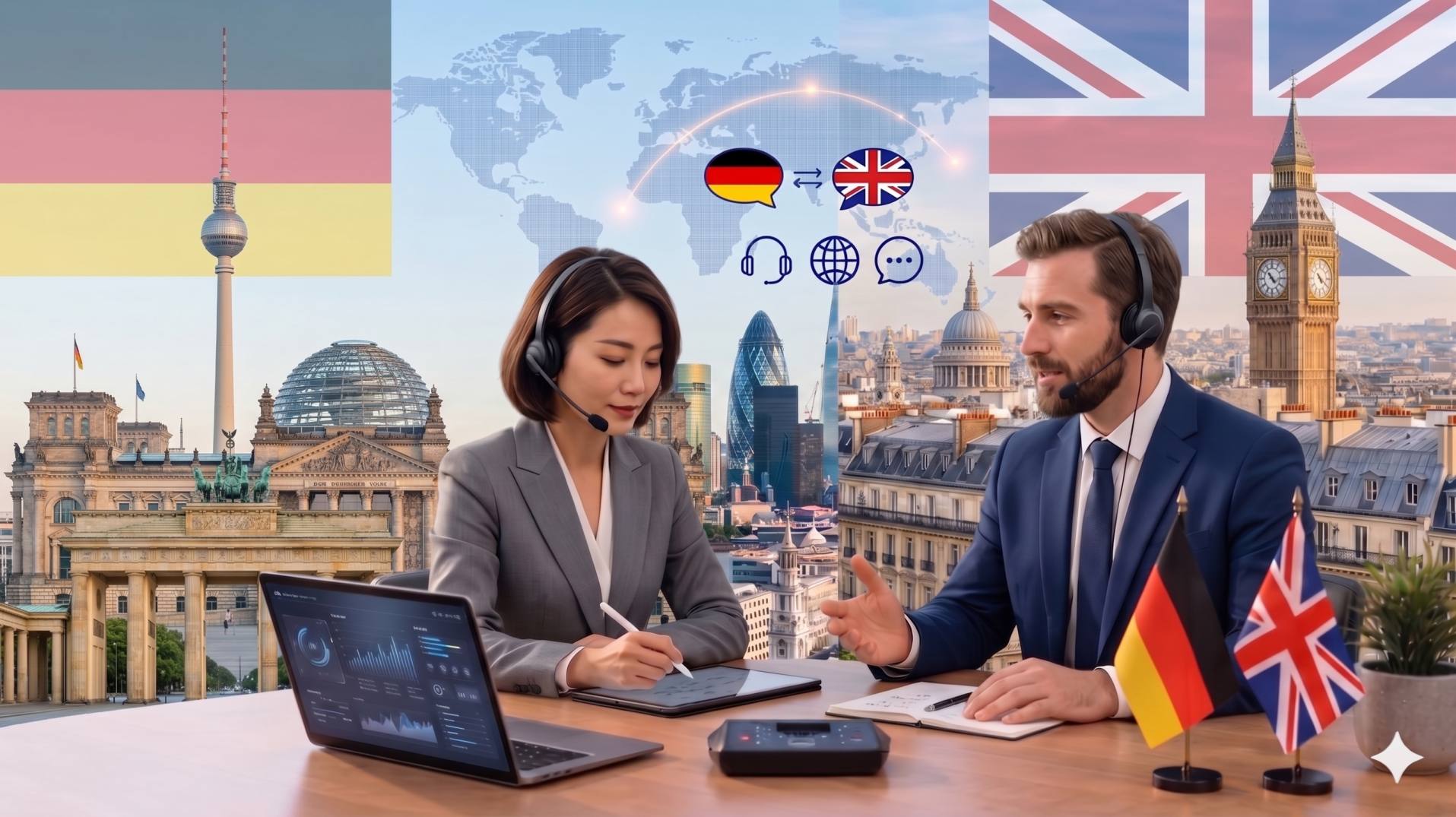
Securing a qualified German interpreter in South Cambridgeshire is paramount for effective communication across a diverse range of professional sectors within the UK. Whether engaging with His Majesty’s Courts and Tribunals Service (HMCTS), navigating the complexities of the National Health Service (NHS) with trusts such as Cambridgeshire Community Services NHS Trust or Cambridge University Hospitals NHS Foundation Trust, or facilitating international business, the need for precise and culturally nuanced interpretation is undeniable. This service ensures that legal proceedings, medical consultations, and commercial agreements are conducted with clarity, accuracy, and adherence to UK professional standards, safeguarding the rights and well-being of all parties involved.
Translation vs Interpretation: Ensuring Precision in Communication
While often used interchangeably, translation and interpretation are distinct disciplines, each requiring specialised skills and adherence to rigorous professional standards. Interpretation involves the live, oral rendition of spoken language from one language to another. This demands not only fluency in both the source and target languages but also exceptional active listening skills, immediate comprehension, and the ability to convey meaning accurately and instantaneously. A professional German interpreter in South Cambridgeshire must possess these attributes, understanding the nuances of tone, register, and cultural context to ensure that the intended message is received without distortion. This is particularly critical in high-stakes environments such as legal hearings or medical appointments, where miscommunication can have severe consequences. Conversely, translation deals with the written word, converting text from one language to another. This process allows for more time for research, editing, and refinement, ensuring a high degree of accuracy in the final document. For businesses and legal professionals operating in South Cambridgeshire, understanding this distinction is key to selecting the appropriate service. For instance, legal contracts or medical reports would require translation, while a court hearing or a patient-doctor consultation would necessitate interpretation. The professional standards governing these fields in the UK are overseen by bodies such as the National Register of Public Service Interpreters (NRPSI) and the Chartered Institute of Linguists (CIOL), ensuring that practitioners meet stringent qualifications and ethical guidelines. Engaging a certified German translator in South Cambridgeshire for written documents ensures that all official paperwork, correspondence, and technical manuals are rendered with the highest fidelity to the original text, supporting the operational efficiency and legal compliance of UK-based organisations.
Legal Defence, Immigration, and Courtroom Interpretation
The administration of justice in the United Kingdom relies heavily on the principle of fairness and equal access to legal processes for all individuals, regardless of their language proficiency. For German speakers involved in legal matters within South Cambridgeshire and across the UK, the availability of qualified interpreters is not merely a convenience but a fundamental right. His Majesty’s Courts and Tribunals Service (HMCTS) mandates the provision of interpreters in proceedings where a party does not understand English sufficiently. This includes criminal trials, civil litigation, family law cases, and various tribunal hearings. A professional German interpreter working within the UK legal system must be accredited by recognised bodies such as the NRPSI or hold a Diploma in Public Service Interpreting (DPSI), demonstrating their competence and adherence to a strict code of conduct. This ensures impartiality, confidentiality, and accuracy, which are vital for the integrity of the judicial process. The His Majesty’s Courts and Tribunals Service (HMCTS) provides guidance on the appointment and use of interpreters, underscoring the importance of their role in ensuring that all parties can understand the proceedings and present their case effectively. In immigration matters, the UK Visas and Immigration (UKVI) section of the Home Office frequently requires German interpretation services. This can range from interviews conducted by UKVI officials to appeals heard before the First-tier Immigration Tribunal. Accurate interpretation is crucial for individuals seeking asylum, applying for visas, or facing deportation proceedings, as misinterpretations can have profound impacts on their legal status and future in the UK. Professional bodies like the International Association of Conference Interpreters (AIIC) also set high standards for professional interpreters, many of whom operate within the legal sector. The Home Office, through UKVI, relies on the accuracy of information provided during interviews, making the role of a skilled German interpreter indispensable. Furthermore, solicitors and barristers in South Cambridgeshire often engage interpreters directly to assist their German-speaking clients during case preparation, consultations, and court appearances. This ensures that legal advice is understood and that clients can fully participate in their own defence. The First-tier Immigration Tribunal, like other judicial bodies, depends on the impartiality and accuracy of interpreters to deliver fair judgments. The NRPSI’s rigorous vetting process, including background checks and language proficiency assessments, ensures that interpreters deployed in these sensitive environments are trustworthy and highly competent, upholding the principles of natural justice within the UK legal framework.
Healthcare and NHS Patient Safety
Patient safety and equitable access to healthcare are cornerstones of the National Health Service (NHS) in the UK. For German-speaking patients in South Cambridgeshire, effective communication with healthcare professionals is essential for accurate diagnosis, appropriate treatment, and informed consent. The NHS operates under strict guidelines, including those set by the Care Quality Commission (CQC), which emphasises the importance of effective communication in delivering safe and high-quality care. NHS England’s Language Access guidelines stipulate that providers must ensure that patients who do not speak English as a first language have access to competent interpreters. This is crucial for a range of services, from routine GP appointments and hospital consultations to emergency care and complex surgical procedures. A professional German interpreter working within the NHS must not only be linguistically proficient but also understand medical terminology and the sensitive nature of healthcare interactions. They must adhere to strict confidentiality agreements, in line with UK GDPR regulations, ensuring that patient information is protected. The NHS Business Services Authority may also be involved in frameworks for language services. Interpreters play a vital role in bridging the communication gap, enabling patients to articulate their symptoms, understand treatment options, and ask questions, thereby fostering a collaborative approach to their care. This is particularly important in South Cambridgeshire, served by trusts like Cambridgeshire Community Services NHS Trust and Cambridge University Hospitals NHS Foundation Trust, where diverse patient populations may require language support. The NHS England framework for language services highlights the need for qualified interpreters who can provide culturally sensitive support. Misunderstandings arising from language barriers can lead to diagnostic errors, delayed treatment, and adverse patient outcomes. Therefore, engaging interpreters who are registered with bodies like the NRPSI or hold equivalent qualifications ensures a high standard of service. The principles of informed consent, a legal requirement in the UK, are impossible to fulfil without clear communication, making the interpreter an integral part of the patient care team. Furthermore, the UK GDPR mandates the protection of personal data, including sensitive health information, and interpreters are bound by these regulations, reinforcing patient trust and privacy.
Technical Interpretation Modalities
The effective delivery of interpretation services in South Cambridgeshire, particularly for professional clients, depends on selecting the appropriate modality to suit the specific context and requirements. Several technical interpretation modes are employed, each with its unique application:
- Simultaneous Interpretation: This is the most demanding form of interpretation, where the interpreter listens to the speaker and renders the message into the target language with minimal delay, often speaking into a microphone while the original speaker continues. It requires highly skilled interpreters, often working in pairs in soundproof booths, and is typically used for large conferences, international meetings, and parliamentary sessions where real-time communication is essential.
- Consecutive Interpretation: In this mode, the interpreter listens to a segment of speech, then pauses to render it into the target language. This is commonly used in smaller meetings, business negotiations, press conferences, and legal depositions where direct interaction and a slightly slower pace are acceptable. It requires excellent memory and note-taking skills.
- Escort Interpretation (Liaison Interpretation): This involves the interpreter accompanying a client or group to provide interpretation during meetings, site visits, or social events. The interpreter acts as a facilitator, facilitating smooth communication between parties who do not share a common language. This is often used in business delegations, factory tours, or diplomatic visits.
- Remote Interpretation (Video/Telephone): With advancements in technology, remote interpretation has become increasingly prevalent. This allows clients to access interpreters via telephone or video conferencing platforms, offering flexibility and cost-effectiveness, especially for situations where an on-site interpreter is not feasible or necessary. This modality is widely used for medical consultations, customer service calls, and business meetings.
Each modality requires interpreters with specific training and experience. For instance, simultaneous interpretation demands exceptional concentration and linguistic agility, while escort interpretation requires strong interpersonal skills and cultural mediation abilities. Professional bodies like the Chartered Institute of Linguists (CIOL) and the International Association of Conference Interpreters (AIIC) provide qualifications and standards that cover these various specialisms, ensuring that interpreters are equipped to handle the diverse demands of the UK professional landscape.
Economic and Social Fabric of South Cambridgeshire
South Cambridgeshire, a region characterised by its blend of rural charm and proximity to the globally renowned innovation hub of Cambridge, presents a dynamic economic and social landscape. Understanding this local context is crucial for professional service providers, including German interpreters and translators, to effectively serve the diverse needs of businesses, institutions, and residents.
Corporate and Industry Landscape
The region is a significant contributor to the UK’s knowledge economy, particularly in sectors such as biotechnology, pharmaceuticals, scientific research, and technology. Numerous science parks and business clusters attract international investment and foster collaborations. Companies operating in these high-value sectors often engage in international partnerships, research collaborations, and global supply chains, necessitating precise German interpretation and translation services for meetings, technical documentation, patent applications, and marketing materials. The presence of world-leading institutions like the University of Cambridge fuels a continuous cycle of innovation and entrepreneurship, creating a demand for linguists who can navigate complex technical and scientific terminology in both German and English, adhering to UK professional standards.
Tourism and Cultural Exchange
While perhaps less prominent than its scientific and corporate sectors, South Cambridgeshire also benefits from tourism, drawing visitors interested in its picturesque villages, historic sites, and proximity to Cambridge city. German-speaking tourists and business travellers may require interpretation services for guided tours, hotel services, and local business interactions. Facilitating smooth communication enhances the visitor experience and supports local businesses in engaging with an international clientele, contributing to the local economy.
Legal Infrastructure
The legal sector in South Cambridgeshire, while perhaps smaller than in major metropolitan centres, is integral to the region’s professional services ecosystem. Law firms in the area serve both local and international clients, dealing with a range of legal matters from corporate law and intellectual property to private client services. The need for German interpreters arises in cases involving German businesses, individuals with assets or legal interests in Germany, or cross-border disputes. Ensuring compliance with UK legal procedures, as overseen by HMCTS, requires interpreters who are not only linguistically adept but also fully conversant with the UK’s legal framework and professional ethics, as certified by bodies like the NRPSI.
NHS Healthcare Provision
The National Health Service (NHS) is a critical component of life in South Cambridgeshire, with residents relying on services provided by trusts such as Cambridgeshire Community Services NHS Trust and Cambridge University Hospitals NHS Foundation Trust. The region’s diverse population means that German-speaking patients may require interpretation services to ensure they receive clear explanations of their health conditions, treatment options, and to provide informed consent. Adherence to CQC standards and NHS England guidelines on language access is paramount for patient safety and equitable care. Professional interpreters play a crucial role in facilitating these vital interactions, ensuring that all patients, regardless of their language, receive the highest standard of care.
Local Infrastructure and Transport
South Cambridgeshire benefits from excellent infrastructure, strategically positioning it within the UK’s transport network. Its proximity to London, via road and rail, facilitates business travel and access to national and international markets. The A14 and M11 motorways provide key arterial routes, connecting the region to major ports and airports, including London Stansted Airport, which is relatively accessible. For German businesses and professionals visiting or operating in South Cambridgeshire, understanding this connectivity is important. Reliable transport links are essential for the smooth operation of businesses, the timely delivery of goods and services, and the efficient movement of people. This includes the availability of public transport options within the district and connections to national rail services, such as those operating from Cambridge station. Professional interpreters often need to travel across the region to meet clients at various business premises, research facilities, or legal offices, making efficient transport links a practical consideration for service delivery. The presence of well-maintained roads and accessible public transport networks supports the overall economic vitality and attractiveness of South Cambridgeshire as a place to conduct business and for international visitors to engage with UK institutions and services.
In conclusion, the demand for a professional German interpreter in South Cambridgeshire is driven by the region’s robust economic activity, its critical role in legal and healthcare systems, and its position within the broader UK infrastructure. Ensuring access to qualified, accredited interpreters is fundamental to upholding UK legal standards, patient safety within the NHS, and the success of international business collaborations. Engaging certified professionals guarantees that communication is accurate, confidential, and culturally appropriate, thereby supporting the integrity and effectiveness of all interactions within this vibrant UK region.