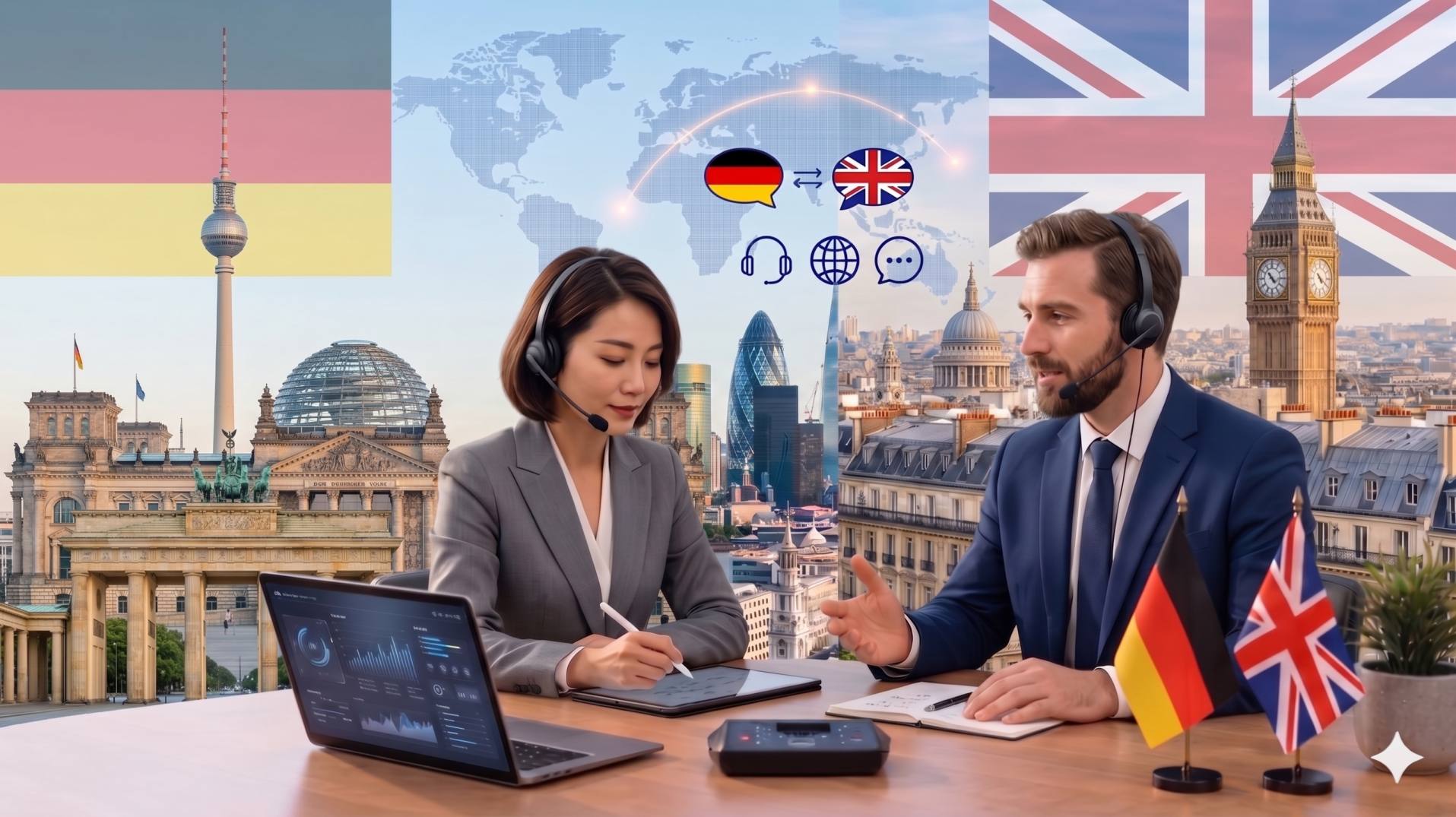
Securing a qualified German interpreter in Wigan town is paramount for effective communication across a multitude of sectors within the UK’s professional landscape. Whether navigating the complexities of His Majesty’s Courts and Tribunals Service (HMCTS), ensuring patient safety within the National Health Service (NHS), or facilitating international business dealings, the need for precise and culturally nuanced interpretation is undeniable. Wigan, a town with a rich industrial heritage and a forward-looking economic strategy, relies on robust communication channels to foster growth and serve its diverse population. This includes ensuring access to vital public services for residents who speak German, as well as supporting businesses engaging with German-speaking markets. For residents requiring German language assistance within the local healthcare system, key NHS trusts such as Bolton NHS Foundation Trust and Wrightington, Wigan and Leigh Teaching Hospitals NHS Foundation Trust are integral to providing comprehensive care, supported by national guidelines on language access.
Translation vs Interpretation: Understanding the Nuances
While often used interchangeably, translation and interpretation are distinct disciplines, each requiring specialised skills and adhering to different professional standards. A German translator in Wigan town typically works with written documents, converting text from German to English or vice versa. This process demands meticulous attention to detail, a deep understanding of grammar, syntax, and idiomatic expressions in both languages, and often requires subject-specific knowledge to ensure accuracy in technical, legal, or medical texts. Translators often utilise translation memory software and glossaries to maintain consistency across large volumes of work. In contrast, a German interpreter in Wigan town facilitates spoken communication in real-time. This role is dynamic and demanding, requiring not only linguistic fluency but also exceptional listening skills, memory retention, cultural awareness, and the ability to convey meaning, tone, and intent accurately between parties. Professional interpreters must adhere to strict codes of conduct, often regulated by bodies like the National Register of Public Service Interpreters (NRPSI), ensuring impartiality, confidentiality, and accuracy in high-stakes environments such as courtrooms, hospitals, and business negotiations. The distinction is critical for corporate buyers, legal professionals, and healthcare providers in Wigan who require specific linguistic support.
Legal Defence, Immigration, and Courtroom Interpretation
The UK’s justice system, overseen by His Majesty’s Courts and Tribunals Service (HMCTS), mandates that all parties have a fair trial, which includes access to competent interpretation services when language barriers exist. For individuals involved in legal proceedings in or around Wigan, whether civil, criminal, or family law matters, the provision of a qualified German interpreter is essential. This is particularly crucial in cases involving the Home Office and UK Visas and Immigration (UKVI), where accurate communication is vital for applications, appeals, and interviews. Professional interpreters working in this domain must possess specific legal terminology knowledge and adhere to the stringent standards set by the NRPSI or hold qualifications such as the Diploma in Public Service Interpreting (DPSI). These qualifications ensure interpreters understand the legal framework, courtroom etiquette, and the ethical obligations of impartiality and confidentiality. Failure to provide adequate interpretation can lead to miscarriages of justice, impacting the integrity of the legal process. Law firms in Wigan and across the North West frequently require the services of specialised German interpreters to represent their clients effectively, ensuring that all evidence, testimonies, and legal arguments are understood without distortion. The Royal Courts of Justice and various regional courts rely on a pool of accredited interpreters to uphold these principles of justice for all citizens and residents.
Healthcare and NHS Patient Safety
Patient safety and effective communication are cornerstones of the National Health Service (NHS) in the UK. For German-speaking patients in Wigan, accessing healthcare services without a language barrier is a fundamental right, as outlined by NHS England’s Language Access guidelines. Interpreters play a critical role in ensuring that patients fully understand diagnoses, treatment options, consent forms, and post-operative care instructions. This is vital for informed decision-making and adherence to medical advice, directly impacting health outcomes. The Care Quality Commission (CQC), the independent regulator of health and social care services in England, emphasises the importance of effective communication in maintaining high standards of care. Interpreters working within the NHS must not only be linguistically proficient but also understand medical terminology and the sensitive nature of healthcare interactions. They are bound by strict confidentiality agreements, aligning with UK GDPR principles, to protect patient privacy. Trusts serving Wigan, such as Wrightington, Wigan and Leigh Teaching Hospitals NHS Foundation Trust and Bolton NHS Foundation Trust, are committed to providing accessible services. This includes facilitating access to qualified German interpreters for consultations, appointments, and emergency situations. The use of unqualified interpreters or relying on family members can lead to serious misunderstandings, potentially resulting in medical errors and compromising patient safety. Therefore, engaging professional German interpreters is a non-negotiable aspect of delivering equitable and high-quality healthcare in Wigan.
Technical Interpretation Modalities
The effective delivery of German interpretation services in Wigan town encompasses various modalities, each suited to different contexts and requirements. Simultaneous interpretation is often employed in conferences, large meetings, or parliamentary settings where speakers talk continuously. Interpreters, typically working in soundproof booths with specialised equipment, translate the speech in real-time, with a slight delay. This mode requires intense concentration and is usually performed by teams of two interpreters who alternate every 20-30 minutes. Consecutive interpretation is more common in smaller meetings, legal depositions, or medical consultations. Here, the interpreter listens to a segment of speech, renders it into the target language, and then pauses, allowing the speaker to continue. This requires excellent short-term memory and note-taking skills. Escort interpretation, also known as liaison interpretation, facilitates communication between parties who speak different languages in informal settings, such as business negotiations, site visits, or social events. The interpreter acts as a bridge, ensuring smooth dialogue and cultural understanding. Increasingly, remote interpretation services are becoming prevalent, utilising telephone or video conferencing platforms. This modality offers flexibility and cost-effectiveness, allowing access to interpreters regardless of geographical location. For businesses and public services in Wigan, understanding these different modes ensures they select the most appropriate and efficient interpretation solution for their specific needs, whether for a high-level corporate negotiation or a routine NHS appointment.
Economic and Social Fabric of Wigan town
Wigan town, situated in Greater Manchester, possesses a dynamic economic and social fabric that benefits significantly from robust linguistic support. The town’s strategic location and its ongoing regeneration efforts attract diverse businesses and foster international connections. Ensuring seamless communication with German-speaking partners, clients, and residents is crucial for maximising these opportunities.
Corporate and Industry
Wigan’s industrial heritage is evolving, with a growing presence in advanced manufacturing, logistics, and digital technologies. Businesses in these sectors often engage with German counterparts for supply chains, technological collaboration, or market expansion. A professional German interpreter in Wigan town can facilitate crucial business meetings, technical discussions, and contract negotiations, ensuring clarity and fostering strong commercial relationships. The presence of skilled German translators is also vital for local companies looking to market their products or services in German-speaking countries, translating websites, marketing materials, and technical documentation to meet UK and international standards. The Growth Hub, part of the Greater Manchester Combined Authority, supports businesses in the region, and access to multilingual communication services can be a key enabler for international trade.
Tourism
While perhaps not as globally renowned as some larger cities, Wigan boasts significant cultural and historical attractions, including its industrial heritage sites and the DW Stadium, home to Wigan Athletic Football Club and Wigan Warriors Rugby League Football Club. As international travel resumes, attracting German tourists requires accessible information and services. Providing German-language materials for heritage sites, visitor centres, and hospitality businesses, alongside the availability of German interpreters for guided tours or visitor assistance, enhances the visitor experience. This can significantly boost the local tourism economy, encouraging repeat visits and positive word-of-mouth referrals. Ensuring that local businesses are equipped to communicate with German visitors contributes to Wigan’s reputation as a welcoming destination.
Legal Infrastructure
Wigan benefits from a well-established legal infrastructure, including local solicitors’ offices and access to regional courts. For German-speaking residents or individuals involved in legal matters within the town, accessing justice requires competent legal interpretation. Law firms specialising in areas such as immigration, family law, or commercial disputes frequently require the services of accredited German interpreters to ensure their clients’ rights are protected and that proceedings are understood. The availability of qualified interpreters, registered with bodies like the NRPSI, is crucial for maintaining the fairness and accessibility of the legal system within the Wigan jurisdiction, ensuring compliance with HMCTS requirements.
NHS Healthcare
The National Health Service (NHS) is a vital service for all residents of Wigan. The town is served by Wrightington, Wigan and Leigh Teaching Hospitals NHS Foundation Trust and is within the catchment area of other regional trusts and the Greater Manchester Integrated Care System (https://www.hscic.uk/services/integrated-care-systems/nhs-greater-manchester-icb). Ensuring that German-speaking patients can communicate effectively with healthcare professionals is paramount for their well-being and safety. This involves providing access to professional German interpreters for consultations, diagnostic procedures, and hospital stays. The commitment to language access by NHS trusts ensures that all patients, regardless of their linguistic background, receive equitable and high-quality care, adhering to CQC standards and UK GDPR regulations.
Local Infrastructure and Transport
Wigan town is strategically located with excellent transport links, facilitating both local and national connectivity. Situated near major motorways like the M6 and M58, it offers easy access for businesses and individuals. The town also has a well-connected railway station providing services to major cities such as Manchester, Liverpool, and London, managed by operators adhering to UK transport regulations. For businesses requiring the services of a German interpreter in Wigan town, the town’s accessible infrastructure means that interpreters can readily travel to client locations, courtrooms, or medical facilities across the region. Furthermore, the increasing availability of remote interpretation technologies means that even businesses with limited physical presence in Wigan can access expert linguistic support. The local council, Wigan Council, plays a role in supporting local infrastructure development and business growth, underscoring the importance of clear communication in all civic and commercial interactions. Reliable transport networks ensure that essential services, including professional interpretation, can be delivered efficiently throughout Wigan and its surrounding areas, supporting the town’s economic vitality and social cohesion.
Conclusion
In conclusion, the demand for professional German interpreter in Wigan town services is multifaceted, underpinning the effective functioning of legal, healthcare, and commercial sectors within the UK. From ensuring fair trials in His Majesty’s Courts and Tribunals Service (HMCTS) to safeguarding patient well-being within the NHS, and facilitating international business growth, the role of a qualified interpreter is indispensable. Wigan’s economic landscape and its commitment to serving a diverse population necessitate reliable and accurate linguistic support. By engaging certified professionals who adhere to the highest UK standards, such as those set by the NRPSI, businesses, legal firms, and public services in Wigan can confidently navigate complex communication challenges, foster stronger relationships, and uphold the principles of accessibility and justice. For your critical communication needs, securing expert German interpretation is a strategic investment in clarity, compliance, and success.
Additional Local Resources
- Wigan Council
- Wrightington, Wigan and Leigh Teaching Hospitals NHS Foundation Trust
- Bolton NHS Foundation Trust
- His Majesty’s Courts and Tribunals Service (HMCTS)
- Home Office
- National Register of Public Service Interpreters (NRPSI)
- UK Visas and Immigration (UKVI)
- Care Quality Commission (CQC)
- NHS Greater Manchester Integrated Care Board