
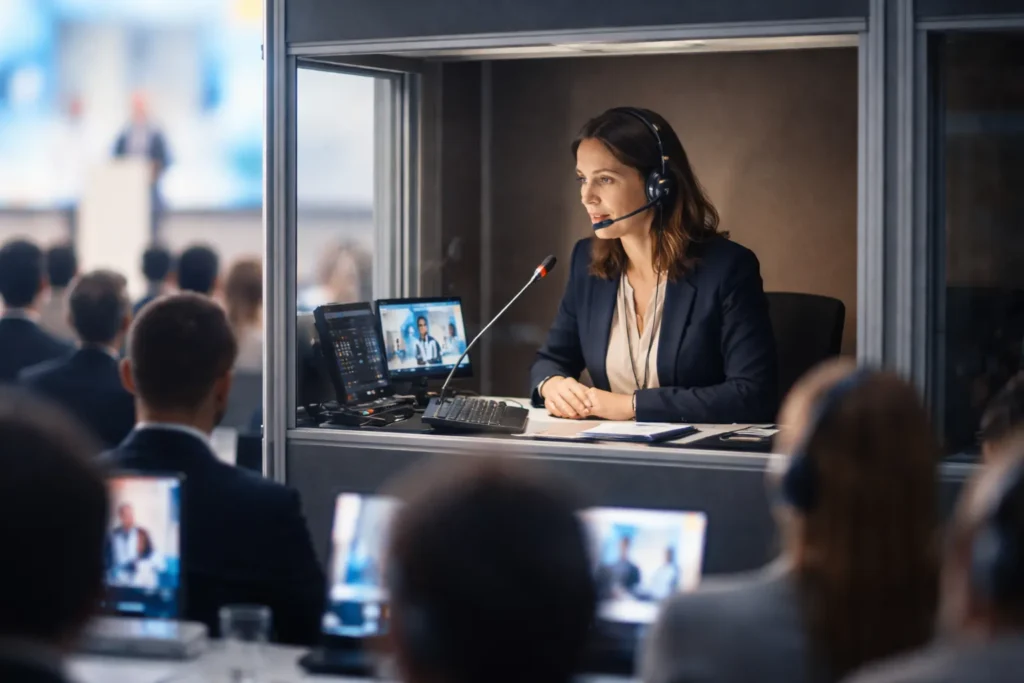
For anyone organizing a multilingual event, simultaneous interpretation cost is rarely a single number — it’s the sum of several moving parts: the languages involved, the length of the event, the equipment required, and the experience of the interpreters themselves. After two decades working as a senior simultaneous interpreter and active member of ABRATES, I’ve seen how often event organizers underestimate this complexity, leading to budget surprises late in the planning process. This guide breaks down exactly what drives simultaneous interpretation cost, so you can plan with confidence from the start.
What Actually Drives the Price
Simultaneous interpretation is, by nature, a high-intensity service. The interpreter listens, processes and speaks in another language almost in real time — a cognitive load that few professions demand at the same sustained level. That alone explains part of the simultaneous interpretation cost: it takes years of training to perform reliably under that kind of pressure, and professionals with recognized credentials, such as ABRATES membership in Brazil, typically charge accordingly.
But the interpreter’s fee is only one piece. Equipment — soundproof booths, audio consoles, microphones and receivers — is non-negotiable for this mode of interpreting, and rental costs scale with the number of languages and the size of the audience. Add to that the duration of the event and the technical complexity of the subject matter, and you start to see why two events with the same number of languages can land at very different price points.
Languages and Duration: The Two Biggest Variables
Language choice has a direct effect on simultaneous interpretation cost. Widely spoken language pairs — English and Spanish, for instance — benefit from a larger pool of qualified interpreters, which tends to keep pricing more competitive. Less common languages, or those with few specialized professionals available in a given market, often carry a premium simply due to limited supply.
Duration is the other major lever. Interpreters are typically booked per day or per half-day session, and longer events bring their own complications: simultaneous work is so demanding that interpreters rotate every 20–30 minutes, meaning multi-day events often require additional professionals to cover shifts without sacrificing quality. Highly technical content — medical, legal, engineering — adds another layer, since interpreters may need preparation time to research terminology in advance, which is often reflected in the final rate.
Equipment: The Infrastructure Behind the Cost
A meaningful share of simultaneous interpretation cost goes toward the technical setup that makes real-time interpreting possible:
- Interpretation booths — soundproofed and climate-controlled, to keep interpreters isolated and comfortable
- Audio consoles and microphones — the link between the speaker, the interpreter, and the distribution system
- Receivers and headphones — distributed to participants so each person can select their language channel
- Transmitters and audio infrastructure — ensuring the signal reaches every corner of the venue
Rental pricing for this equipment depends on how many languages are offered, how long the event runs, and which supplier you work with. Reliable suppliers with on-site technical support are worth the extra consideration — equipment failures mid-event are far more costly than the rental fee itself, both financially and reputationally.
Estimated Price Ranges
The table below offers a general sense of simultaneous interpretation cost by language group and duration. These are reference ranges only — actual quotes depend on region, agency, event complexity and interpreter experience, so always request a tailored proposal.
| Language(s) | Duration | Equipment (per language, per day) | Interpreter Fees (per language, per day) |
|---|---|---|---|
| English / Spanish | Up to 8 hours | $150 – $300 | $1,200 – $2,500 |
| English / Spanish | Up to 12 hours (with overtime) | $250 – $400 | $1,800 – $3,500 |
| French / German / Italian | Up to 8 hours | $200 – $350 | $1,500 – $3,000 |
| French / German / Italian | Up to 12 hours (with overtime) | $300 – $500 | $2,200 – $4,000 |
| Asian Languages (Mandarin, Japanese, Korean) | Up to 8 hours | $250 – $450 | $1,800 – $3,800 |
| Asian Languages (Mandarin, Japanese, Korean) | Up to 12 hours (with overtime) | $350 – $600 | $2,800 – $5,000 |
| Rare or less common languages | Up to 8 hours | Quoted individually (logistics costs may apply) | Starting around $2,500 |
Note: figures are estimates for general guidance. Specialized technical fields, urgent bookings, and agency reputation can all shift these numbers in either direction.
How to Get the Most From Your Budget
Controlling simultaneous interpretation cost without cutting corners on quality starts with planning. Define your required languages and audience size per language early — this prevents over-ordering equipment or channels you won’t use. Booking well ahead of the event also matters: last-minute requests almost always cost more, both because of limited interpreter availability and rushed equipment logistics.
Bundling services tends to help too. Many agencies offer packages that combine interpreters, equipment and technical support as a single line item, which is often more economical than sourcing each piece separately — and simpler to manage on event day. Organizations such as ABRATES can also help connect organizers with vetted, ethical professionals, which reduces the risk of quality issues that end up costing more to fix than to prevent.
Why Qualifications Affect the Price
Not all interpreters charge the same — and that’s not arbitrary. A professional with formal training in translation and interpretation, years of experience in corporate and conference settings, and certifications from bodies like the International Association of Conference Interpreters (AIIC) brings a level of reliability that directly affects simultaneous interpretation cost. These professionals have been vetted through rigorous selection processes and operate under codes of ethics covering accuracy and confidentiality — qualities that matter enormously in settings like diplomatic negotiations, where a mistranslation can have real consequences. Paying more for that credential isn’t a markup — it’s the cost of certainty.
Frequently Asked Questions
What is the average simultaneous interpretation cost for a full-day event? For a common language pair like English or Spanish over an eight-hour day, interpreter fees typically range from roughly $1,200 to $2,500 — and that figure covers the professionals only. Equipment and venue-related costs are separate.
What’s usually included in a simultaneous interpretation quote? Agency quotes generally bundle the interpreter team (interpreters work in pairs for simultaneous work), coordination, and — in full-service packages — equipment rental and on-site technical support. Freelance interpreters typically quote their fee separately from equipment.
Why does simultaneous interpretation cost more than consecutive interpretation? Simultaneous interpreting demands real-time processing and specialized equipment — booths, consoles, headphones — that consecutive interpretation doesn’t require. The combination of technical infrastructure and the intensity of the work itself accounts for the price difference.
What factors push simultaneous interpretation cost higher? Rare languages with limited interpreter availability, highly technical subject matter requiring preparation, multi-day events that need shift coverage, premium equipment requirements, and last-minute bookings are the main cost drivers.
Can I reduce simultaneous interpretation cost without sacrificing quality? Yes — book early, define your language and audience requirements precisely, consider bundled packages from full-service agencies, and choose interpreters with verifiable experience and references. The goal is avoiding waste, not cutting corners on the people and equipment that make the interpretation work.
Conclusion
Simultaneous interpretation cost reflects far more than a single hourly rate — it’s a combination of language availability, event duration, technical infrastructure and the expertise required to make real-time communication feel effortless to your audience. Understood this way, the investment makes sense: quality interpretation isn’t an added expense, it’s what allows your event’s message to land exactly as intended, in every language in the room. If you’re planning an event and want a clear, tailored quote, get in touch — we’ll help you map out exactly what your event needs and what it will cost.
